TL;DR

Get garden gear delivered free with Prime
- Fast, free delivery on millions of items
- Prime Video, Amazon Music and more included
- Member-only deals all year
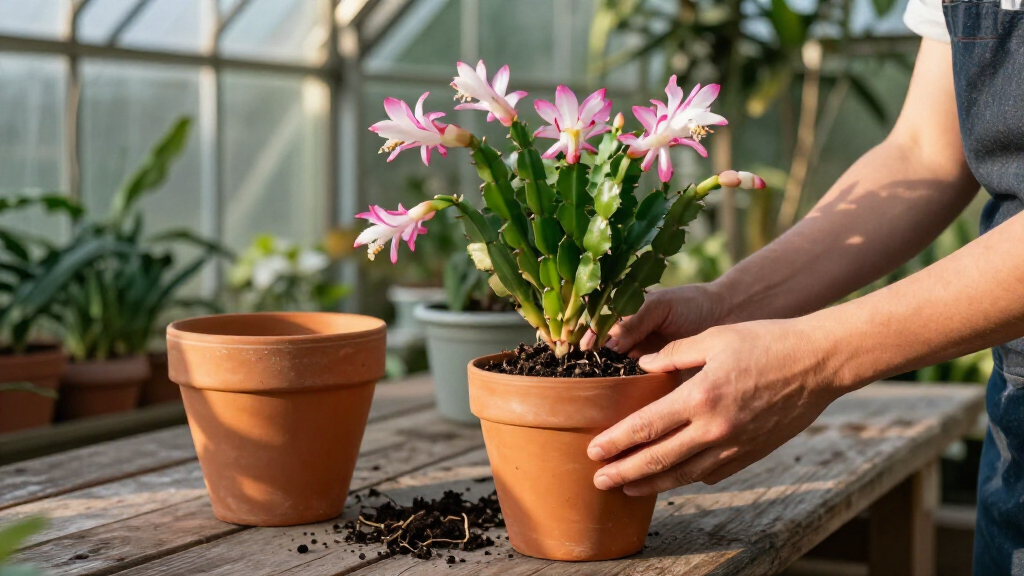
The gardening guidance in Ideal Home’s report is to repot a Christmas cactus in spring, once it has finished flowering. Repotting in autumn, when it is setting buds, may lead to bud drop; exceptions include urgent problems such as a cracked pot or rotting roots.
Garden experts quoted by Ideal Home advise waiting until spring, after a Christmas cactus has finished flowering, before repotting it. Repotting in autumn, when the plant is developing flower buds, may cause them to drop and reduce the chance of a seasonal display, according to Jo Lambell, founder of Beards & Daisies.
Lambell told Ideal Home that spring is the better time because the cactus begins putting on new growth after flowering and can settle into a new pot more readily. Her advice is not to repot simply because the plant looks large or the pot seems crowded: Christmas cacti can prefer a slightly snug pot, and do not need frequent repotting. She said repotting every two or three years is generally enough.
In the report, Lambell specifically cautioned against repotting in October, when a Christmas cactus starts setting buds. Disturbing the plant at that point may make the buds fall, she said. The report does not establish that every autumn repotting will cause bud loss; it presents this as a risk and recommends postponing routine work until after flowering.
Lambell described exceptions for urgent problems, including a cracked pot or soggy, rotting roots. If repotting cannot wait, she advises handling the plant gently, keeping the root ball as intact as possible and returning it to the same spot. Andy Little, houseplant buyer at British Garden Centres, said that rotten sections can be removed and healthy portions used to grow new plants, though the report says propagation is best attempted in spring.
Protecting This Season’s Buds
For owners hoping to see flowers over the festive season, the timing advice offers a practical way to avoid unnecessary disturbance while buds are forming. Waiting until flowering is over may help preserve the developing buds, while also giving the plant a period of new growth in which to settle after repotting.
The guidance also challenges the assumption that a plant needs a larger container as soon as it appears crowded. According to Lambell, Christmas cacti can tolerate being slightly pot-bound, and frequent repotting is not required. That means postponing a routine pot change is not necessarily neglect; it may be the less disruptive choice when a plant is healthy and budding.
There is a distinction between routine care and an urgent plant-health problem. A broken container or signs of root rot may make action necessary even in autumn. Readers should weigh the risk to flowers against the risk of leaving a damaged pot or rotting roots untreated, rather than treating the seasonal recommendation as an absolute ban on repotting.
Christmas cactus potting mix well draining
As an affiliate, we earn on qualifying purchases.
As an affiliate, we earn on qualifying purchases.
Spring Repotting and Plant Growth
The report focuses on a seasonal houseplant-care question: when to move a Christmas cactus that has outgrown its container. Its recommendation is based on the plant’s flowering cycle as described by Lambell: buds begin forming in autumn, while spring follows flowering and brings new growth. This is why the timing of the task matters as much as the choice of pot.
Ideal Home’s account also notes that a cactus does not need repotting on a fixed annual schedule. Lambell’s suggested interval is every two or three years, and only when repotting is needed. The report mentions specialist cactus and succulent compost as a product option, but the central advice is about timing and avoiding disturbance during bud formation, not a requirement to buy a particular mix or planter.
For a plant with damaged or rotten parts, Little’s advice is to remove affected sections and consider propagating healthy ones. The report places that work in spring where possible. It does not provide a detailed diagnosis guide for root rot, so visible decline should not automatically be treated as proof of a specific cause.
“The best time to repot a Christmas cactus is in spring, once it has finished flowering.”
— Jo Lambell, founder of Beards & Daisies
small terracotta pots with drainage holes for Christmas cactus
As an affiliate, we earn on qualifying purchases.
As an affiliate, we earn on qualifying purchases.
When a Pot Change Cannot Wait
The report does not specify how likely bud loss is after autumn repotting, or whether the risk changes with the extent of disturbance. Lambell says it can happen, but the source offers no measured rate or guarantee that buds will drop. It also does not give a complete checklist for deciding when a plant is sufficiently unhealthy to justify repotting before spring.
Individual plants may be at different points in their flowering cycle, and the report does not provide a calendar that applies to every home or growing environment. Its October reference is seasonal guidance from the expert, not a confirmed date on which every Christmas cactus starts budding. Where root damage is suspected, the source recommends gentle intervention but does not describe how to confirm the problem or what treatment is appropriate in every case.
As an affiliate, we earn on qualifying purchases.
Wait Until Flowering Ends
For a healthy Christmas cactus that is developing buds, the report’s next step is to leave it undisturbed through flowering and consider repotting in spring, once the blooms have finished. Owners can then assess whether a new pot is actually needed rather than repotting solely because the plant looks full.
If the container is cracked or roots appear soggy and rotten, Lambell’s guidance is to act only if necessary, handle the root ball carefully and return the plant to its usual spot. The source gives no further timetable for those urgent cases. For propagation from healthy sections, Little’s advice is to wait until spring where possible.
As an affiliate, we earn on qualifying purchases.
Key Questions
When should I repot a Christmas cactus?
Spring, after flowering, is the recommended time in the Ideal Home report. Lambell says the plant is beginning new growth then and can settle into a new pot more readily.
Can I repot a Christmas cactus in autumn?
The report advises against routine autumn repotting because the plant may be setting buds, and disturbance can cause buds to drop. Lambell identifies a cracked pot or soggy, rotting roots as reasons a move might be necessary before spring.
How often does a Christmas cactus need repotting?
Lambell says Christmas cacti do not need repotting often and suggests that every two or three years is plenty. The report also says a slightly snug pot is not automatically a problem.
What should I do if I must repot it while it is budding?
If a serious issue means the plant cannot wait, Lambell advises being gentle, keeping the root ball as intact as possible and putting the cactus back in the same spot. The report does not provide a detailed treatment plan for root rot.
Can I propagate a Christmas cactus from damaged sections?
Andy Little says rotten parts can be removed and healthy sections used to grow new plants. The report recommends doing propagation in spring where possible.
Source: rss
Fall yard work Picks
leaf blowers
As an affiliate, we earn on qualifying purchases.