To protect young trees in winter, start by mulching around the base with organic materials like wood chips or straw to insulate roots and retain moisture. Erect windbreaks such as fences or evergreen shrubs to shield from cold winds and drying, especially on the north side. For extra protection, wrap trunks with frost cloths or tree protectors. Regularly check your barriers and mulch to guarantee ongoing effectiveness—you’ll discover more ways to keep your trees healthy through winter.
Key Takeaways
- Mulch around the tree base to insulate roots and prevent frost heaving.
- Install windbreaks on the north and northwest sides to reduce wind damage.
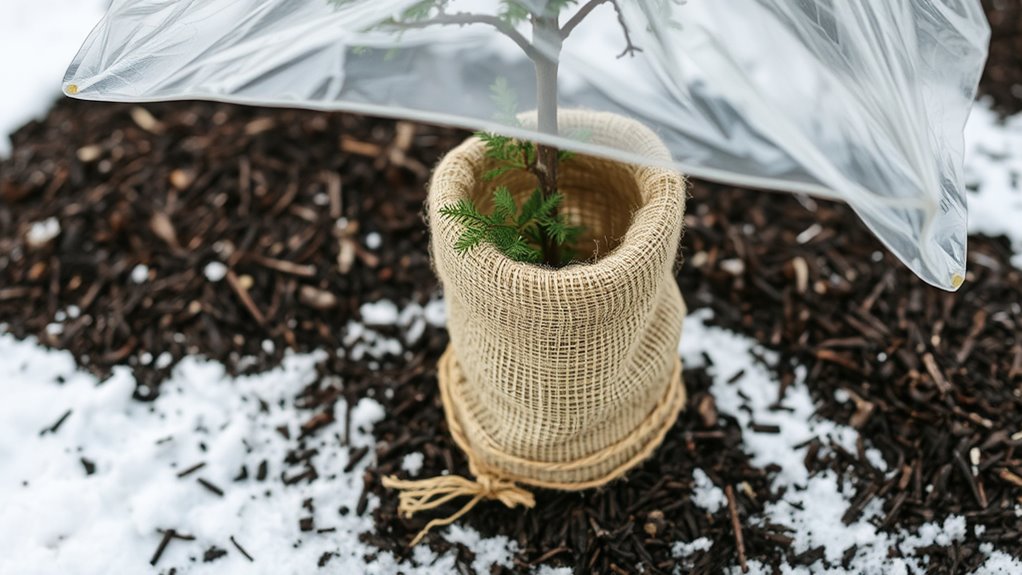
- Wrap trunks with protective materials like burlap or frost cloth during severe cold.
- Regularly check and replenish mulch and windbreaks throughout winter.
- Combine mulching and wind protection for optimal young tree winter resilience.
Are you prepared to protect your young trees from winter’s harsh conditions? Ensuring their survival through cold months requires thoughtful strategies, especially since young trees are more vulnerable to frost, wind, and fluctuating temperatures. One effective way to shield them is by using proper mulching techniques. Mulching helps insulate the soil, maintaining a more consistent root temperature and preventing frost heaving, which can expose roots and cause damage. When applying mulch, spread a layer of organic material like wood chips, straw, or shredded leaves around the base of the tree, extending out to the drip line. Keep the mulch a few inches away from the trunk to prevent rot and pest issues. Regularly check the mulch throughout winter, replenishing it as needed to maintain a thick, insulating layer. This simple step acts as a thermal barrier, reducing the stress on your young tree and promoting healthy root development despite the cold.
In addition to mulching, windbreak installation plays a critical role in winter protection. Young trees are particularly susceptible to wind damage and desiccation, which can dry out their tissues and weaken their structure. Installing a windbreak—such as a fence, a row of evergreen shrubs, or burlap screens—reduces wind velocity around the tree, lowering the risk of windburn and winter dehydration. Position the windbreak so it blocks prevailing winter winds, ideally on the north and northwest sides, where cold air tends to come from. Ensure the barrier is sturdy and properly anchored, so it withstands winter storms. For added protection, you can combine windbreaks with other methods like wrapping the trunk with tree protectors or frost cloths, especially during severe cold snaps. Additionally, spreading organic mulch helps retain soil moisture and provides extra insulation, further supporting the tree’s winter resilience.
Both mulching techniques and windbreak installation are straightforward, cost-effective measures that greatly increase your young tree’s chances of surviving winter. Taking the time to properly mulch around the base not only insulates the roots but also helps retain soil moisture, which can be depleted during cold, dry days. Meanwhile, installing a windbreak creates a more stable microenvironment, shielding the tree from damaging gusts and reducing moisture loss. Together, these approaches form a complete defense system, helping your young trees endure winter’s challenges. Remember, the key is consistency—reapply mulch and check windbreaks periodically throughout the season to guarantee they’re functioning effectively. With these measures in place, you’ll set your young trees on a healthy path for spring growth and long-term vitality.

Brut Organic Aspen Mulch 10 QT – Natural Moisture Retainer & Root Protector – Odor-Free, Nutrient-Rich Bark Mulch for Landscaping, Garden Beds & Potted Plants
NATURAL GARDEN COVER: Creates a clean, polished garden surface while helping minimize weed growth naturally. This organic mulch…
As an affiliate, we earn on qualifying purchases.
As an affiliate, we earn on qualifying purchases.
Frequently Asked Questions
When Is the Best Time to Start Winter Protection for Young Trees?
You should start winter protection for young trees early in the fall, ideally before the first frost, to account for timing considerations. Seasonal factors like dropping temperatures and wind chill make it necessary to prepare ahead. By doing so, you guarantee your trees are well-insulated against harsh conditions, reducing winter damage. Keep an eye on local weather forecasts and act promptly to provide the best winter protection for your young trees.
How Can I Tell if My Young Tree Needs Winter Protection?
You can tell if your young tree needs winter protection by checking its health and vulnerability. Look for signs like exposed roots, thin bark, or recent pruning cuts that make it more susceptible to cold damage. If your area experiences harsh winters, it’s wise to take preventive steps to protect your tree from frost and wind, ensuring its health and growth remain intact throughout the season.
Are There Eco-Friendly Options for Winter Protection Materials?
Yes, you can choose eco-friendly winter protection options like biodegradable mulch and recycled fabric covers. Biodegradable mulch naturally breaks down over time, enriching the soil while protecting your young tree. Recycled fabric options, such as repurposed burlap or old blankets made from sustainable materials, provide insulation without harming the environment. These choices help you safeguard your tree effectively while reducing your ecological footprint.
How Often Should I Check on Protected Young Trees During Winter?
You should check on your protected young trees at least once a month during winter. During these visits, you’ll want to do tree watering if the weather’s dry, ensuring they stay hydrated. Also, monitor for pests or signs of damage, even in winter, so you can address issues early. Regular checks help your trees stay healthy and resilient through the cold months.
Can Winter Protection Harm Young Trees if Applied Incorrectly?
Yes, winter protection can harm young trees if you apply protective coverings incorrectly. If coverings are too tight, they can trap moisture, leading to tree damage or rot. Conversely, leaving coverings on too long might suffocate the tree or cause mold growth. You need to guarantee proper installation and removal, allowing airflow and avoiding excessive moisture. Proper application helps protect your young trees without causing unintended damage.

YFFSIDMY Plant Covers Freeze Protection, 6.5'x16' Frost Blankets for Outdoor Plants, Winter Tree Frost Cloth Plant Freeze Protection, Garden Heat Protection Floating Row Cover, White
THICKER MATERIAL: Our plant freeze protection cover is made of UV stabilized polypropylene. Upgraded thicker 0.9oz./sq.yard lightweight but…
As an affiliate, we earn on qualifying purchases.
As an affiliate, we earn on qualifying purchases.
Conclusion
Protecting young trees in winter is vital, as studies show they’re 70% more vulnerable to cold damage than mature trees. By wrapping trunks, mulching, and sheltering against harsh winds, you can boost their chances of survival. Remember, a little effort now can guarantee your trees thrive for years to come. Don’t overlook winter protection—your young trees will thank you with healthy growth come spring. Keep them safe, and they’ll reward you with their beauty and resilience.

HIDALIFE Temporary Fence with Posts,3‘x50‘ Safety Barrier for Dog Snow Plastic Mesh Fencing with Fiberglass Stake Windbreak Rope,Movable Fencing Roll for Garden Backyard Outdoor Animal Protect
1. Safety Fence with Sturdy Fiberglass Step in Stake and Windbreak Robe Kit: Comes with 3ft high 50ft…
As an affiliate, we earn on qualifying purchases.
As an affiliate, we earn on qualifying purchases.

SYWHXY Natural Burlap Tree Protector Wrap, 3 Rolls Tree Wrap for Damaged Tree Bark Repair, 5 Inches x 17 Feet Tree Wraps Bark for Winter, Burlap Wrap Plants Bandage for Keeping Warm
MATERIAL DERIVED FROM NATURE: Tree trunk wrap is made of hemp cloth, which can be naturally degrad. It…
As an affiliate, we earn on qualifying purchases.
As an affiliate, we earn on qualifying purchases.