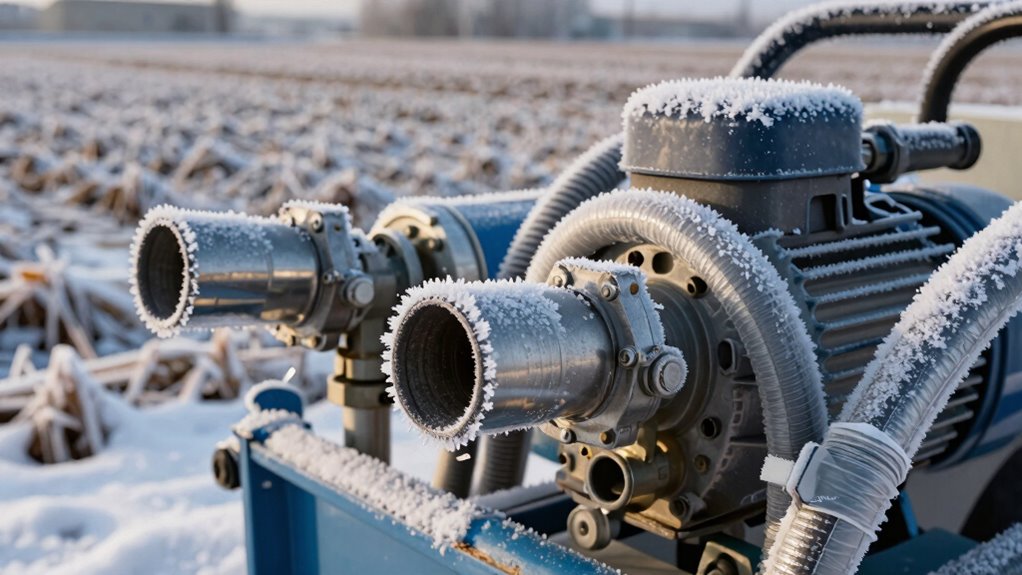
To winterize your sprayers and pumps, you need to drain all liquids, flush out chemicals, and verify everything is dry to prevent freezing damage. Protect hoses and nozzles with insulation or by storing them indoors, and add antifreeze to all lines after draining. Proper storage in a sheltered area and inspecting for cracks or leaks are essential steps. Continue to explore this guide to learn how to keep your equipment safe all winter long.
Key Takeaways
- Drain all residual liquids, chemicals, hoses, and nozzles to prevent freezing and expansion damage.
- Flush systems with compatible cleaners and add antifreeze to protect internal components.
- Inspect equipment for cracks, damage, and leaks; seal or repair any issues before storing.
- Protect hoses, nozzles, and components with insulation or heated covers to prevent freeze-thaw damage.
- Store equipment in sheltered, dry locations, and perform final checks like lubricating parts and verifying pressure relief valves.

Brass RV Winterizing Kit, 17'' Sprinkler Winterization Kit with Water Pressure Gauge & Air Compressor Quick Plug & Shut Off Valve, Line Blow Out Fitting Adapter for Camper, Boat, Travel Trailer
Enhanced Hose Design: 17'' RV water air compressor with rubber hose is designed for superior strength and flexibility,…
As an affiliate, we earn on qualifying purchases.
As an affiliate, we earn on qualifying purchases.
Why Proper Winterization of Sprayers and Pumps Is Critical

Proper winterization of sprayers and pumps is essential because leaving residual liquids or moisture inside can cause serious damage during cold weather. If you neglect this step, chemical leaks may develop as residual chemicals break down or expand with freezing, leading to costly repairs. Additionally, trapped moisture promotes corrosion, which weakens metal parts and shortens equipment lifespan. Preventing corrosion is crucial for maintaining the integrity of your sprayer or pump, saving you money and downtime. Proper winterization ensures that all residual liquids are drained or thoroughly cleaned, eliminating potential sources of leaks and corrosion. Taking these precautions not only extends your equipment’s life but also guarantees it’s ready for reliable operation when spring arrives. Energy-efficient winterization practices contribute to sustainable equipment management and optimal performance.

Kärcher – Pump Guard – Anti-Freeze Protection & Lubrication Formula for Electric & Gas Power Pressure Washers – 16oz
Universal Compatibility: Compatible with all brands gas and electric power pressure washers
As an affiliate, we earn on qualifying purchases.
As an affiliate, we earn on qualifying purchases.
How to Inspect and Prepare Your Equipment for Cold Weather

Before winter sets in, you need to inspect your equipment for any cracks or damage that could worsen in cold weather. Make sure to drain all liquids and protect the parts to prevent freezing and corrosion. Proper preparation now will help your sprayers and pumps stay in good shape through the winter. Additionally, understanding the field‑of‑view and imaging‑scale can be useful when assessing equipment for potential vulnerabilities. Being aware of the materials and fuel types used in your equipment can also aid in choosing the best protective measures for winter storage. Recognizing the material properties can help you select appropriate protective coatings or storage techniques to extend the lifespan of your equipment. Consulting the material‑compatibility guidelines can further ensure that your equipment is stored safely and effectively during cold months. Conducting a visual inspection to identify hidden issues can also prevent costly repairs later.
Inspect for Cracks
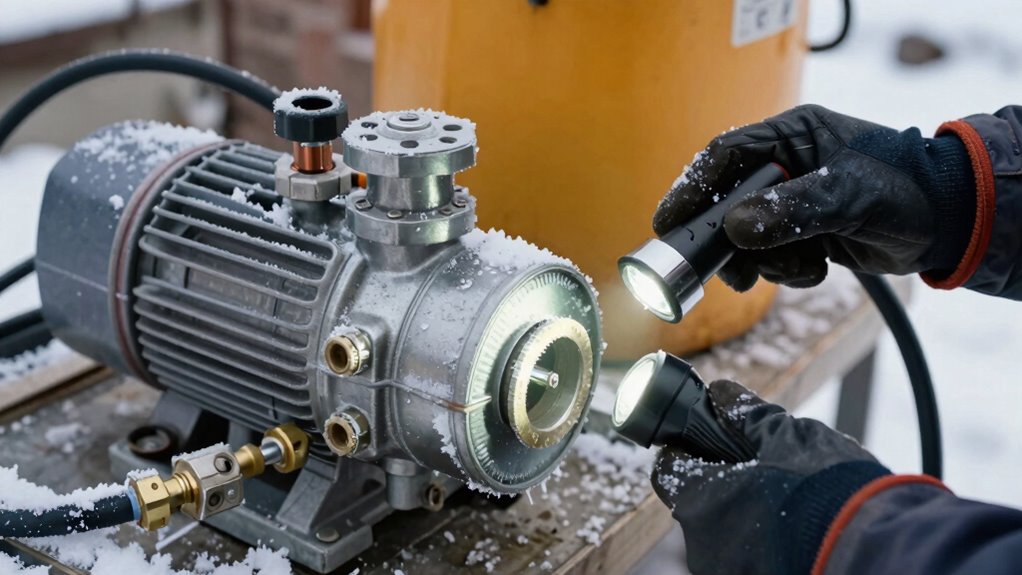
Have you checked your sprayers and pumps for cracks lately? Crack detection is essential to maintain the structural integrity of your equipment during winter. Carefully inspect all visible surfaces, focusing on seams, joints, and areas prone to stress. Use a flashlight to highlight any tiny fractures that might be hidden in shadows. Even small cracks can expand when exposed to freezing temperatures, risking costly damage. Look for signs of wear, such as discoloration or deformation, which could indicate compromised strength. Pay special attention to plastic and metal parts, as both are susceptible to cracking under cold stress. Address any cracks immediately by sealing or repairing them to prevent leaks and ensure your equipment remains durable throughout the winter. Regular inspection procedures can help identify potential issues before they lead to failure, saving time and money. Incorporating material resilience strategies can further protect your equipment from cold-related damage, especially by selecting freeze-resistant materials for repairs and replacements. Ensuring that your equipment is properly maintained helps prolong its lifespan and maintains optimal performance during harsh winter conditions. Additionally, proper storage of equipment in a sheltered area can help prevent unnecessary exposure to cold temperatures, extending their lifespan.
Drain and Protect
To guarantee your sprayers and pumps withstand winter, start by draining all remaining liquids from the system. This prevents chemical corrosion that can occur when residual chemicals sit during freezing temperatures. Carefully empty tanks, hoses, and nozzles, ensuring no trapped liquid remains. Next, inspect electrical connections for signs of corrosion or damage, as moisture can cause shorts or malfunctions in cold weather. Disconnect batteries if possible, or apply dielectric grease to protect electrical components. Once drained, consider adding antifreeze designed for sprayers to prevent any residual liquid from freezing. Properly storing and protecting your equipment minimizes damage and extends its lifespan. Taking these steps ensures your sprayers and pumps are ready for winter and will perform reliably when needed again. Additionally, winterizing procedures play a crucial role in safeguarding your equipment from freeze damage. Regularly inspecting seals and gaskets for wear helps prevent leaks caused by cold-induced brittleness, which is an important aspect of equipment maintenance for cold weather readiness. To further protect your equipment, ensure you are familiar with the proper storage techniques, including keeping your equipment in a dry, covered location to prevent moisture buildup, which can lead to freeze-related harm. Incorporating preventative maintenance practices can help identify potential issues before they become major problems during winter.

Titan Brand Shield/Liner Cover for Airless & HVLP Hose – 50ft
As an affiliate, we earn on qualifying purchases.
As an affiliate, we earn on qualifying purchases.
Drain and Flush Fluids to Prevent Freezing Damage

To prevent freezing damage, you need to drain any remaining fluids from your sprayer or pump. Then, thoroughly flush the system with an appropriate cleaner to remove residues. Finally, make certain all components are dry and free of leftover liquids before storage. Simple systems are easier to maintain and less prone to damage during winter months. Additionally, inspecting your device for any internal components that may require special attention can help ensure proper winterization. Properly system maintenance and storage practices can also prevent electrical hazards caused by residual moisture or freezing. Incorporating smart monitoring techniques can alert you to potential issues before they cause damage.
Drain Remaining Fluids
As winter approaches, it’s vital to drain any remaining fluids from your sprayers and pumps to prevent freezing damage. Proper fluid removal ensures no liquid stays inside that could expand and cause cracks when temperatures drop. Start by thoroughly emptying all tanks and hoses. Use equipment drainage to remove residual liquids, paying close attention to nozzles, filters, and pumps. Keep in mind, even small amounts of fluid can freeze and damage components. After draining, wipe down parts to remove leftover moisture. This step helps safeguard your equipment during the cold months. Additionally, inspecting low light office plants can also be beneficial for indoor spaces used during winter. Ensuring your equipment is completely drained aligns with winterizing procedures that help prevent costly repairs. Regularly checking and maintaining storage conditions can further protect your equipment from environmental damage. Remember, complete drainage is essential for winterizing your sprayers and pumps effectively. Properly storage practices can reduce the risk of corrosion and other winter-related issues. Taking these precautions now will save you time and money on repairs come spring.
Flush System Thoroughly
After draining the remaining fluids from your sprayer or pump, it’s important to thoroughly flush the system to remove any leftover residue that could freeze and cause damage. Use clean water or an approved flushing solution compatible with your equipment to prevent chemical reactions that could harm components. Confirming chemical compatibility during flushing helps protect seals and valves. As you flush, check your pump calibration to confirm it remains accurate, since residues can affect pressure and delivery. Properly cleaning the system reduces the risk of freezing damage by eliminating residual chemicals that may expand when frozen. Take your time to circulate the flushing fluid through all parts, including hoses and nozzles, to ensure a thorough clean and protect your equipment during winter.
Use Appropriate Cleaners
Choosing the right cleaners for draining and flushing your sprayer or pump is vital to prevent freezing damage during winter. Use chemical cleaners that are compatible with your equipment and the substances you typically spray. Verify detergent compatibility to avoid damaging seals or components. Avoid using plain water alone, as it can freeze and expand, causing cracks. Select appropriate chemical cleaners to effectively dissolve residues and prevent corrosion. Follow manufacturer recommendations for dilution ratios and cleaning procedures. Proper cleaning ensures no leftover fluids freeze and expand inside your system. This step not only protects your equipment but also preserves its functionality for the next season. Using the correct cleaners and ensuring detergent compatibility is a simple yet essential part of winterizing your sprayer or pump.
chemical sprayer storage shelter
As an affiliate, we earn on qualifying purchases.
As an affiliate, we earn on qualifying purchases.
How to Add Antifreeze for Effective Freeze Protection
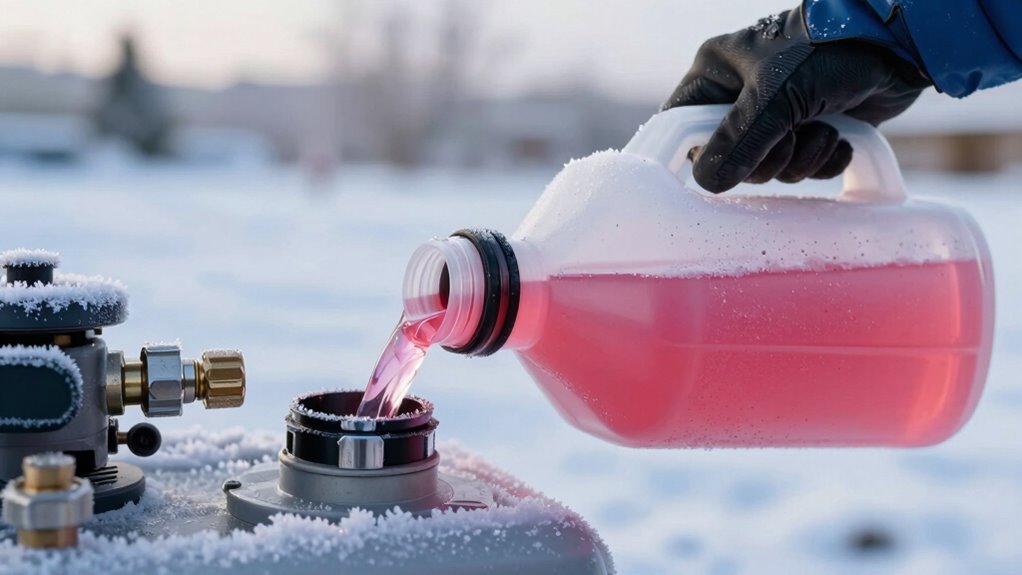
To make certain your sprayers and pumps don’t freeze during cold weather, you need to add antifreeze properly. Start by choosing the right antifreeze types, such as propylene glycol or extended-life formulations, suitable for agricultural equipment. Always check the manufacturer’s recommended mixing ratios; typically, a 50/50 mix with water provides effective freeze protection. Before adding antifreeze, drain any remaining water from the system to prevent dilution. Pour the antifreeze into the tank, then run the pump to circulate it through all lines and components. Confirm the entire system is filled with the antifreeze mixture. Proper mixing ratios and thorough circulation are vital to prevent ice formation and protect your equipment from freeze damage during winter.
Protect Hoses, Nozzles, and Other Components During Winter

Protecting hoses, nozzles, and other components during winter is essential to prevent damage from freezing temperatures. Start by applying hose protection, such as wrapping hoses with insulation or using heated enclosures, to prevent cracking and bursting. Nozzle shielding is equally important; remove nozzles and spray tips, then store them indoors or in a heated space. If leaving parts outside, ensure they are thoroughly drained and protected with covers or protective sleeves. Inspect hoses and nozzles for cracks or leaks before winter, repairing or replacing damaged parts. Proper hose protection and nozzle shielding minimize the risk of freeze-thaw damage, extending the lifespan of your equipment. Taking these steps now saves you time and money by avoiding costly repairs later.
Store Your Equipment Correctly to Last Through the Cold

Proper storage is key to guaranteeing your sprayers and pumps withstand winter’s challenges. To maximize equipment longevity, follow these storage tips: clean thoroughly, drain all liquids, and store in a dry, sheltered location. Avoid freezing temperatures by keeping equipment indoors or in insulated spaces. Use protective covers to prevent dust and moisture buildup. Proper storage prevents rust, corrosion, and damage from ice expansion. Keep track of your gear’s condition and perform regular inspections before storing. Here’s a quick guide:
| Step | Action | Tips |
|---|---|---|
| Clean & Dry | Remove residual chemicals | Prevent corrosion |
| Drain Fluids | Empty tanks and lines | Avoid freezing damage |
| Cover & Shelter | Use protective covers, store indoors | Protect from moisture |
| Inspect & Maintain | Check for damage, lubricate moving parts | Ensure readiness for next season |
Troubleshoot Common Winterization Problems Before Storage

Before storing your sprayers and pumps for winter, it’s essential to troubleshoot common issues that could cause damage later on. Check for residual chemicals that might corrode or clog parts, ensuring chemical compatibility with your equipment’s materials. Verify all moving parts are properly lubricated to prevent rust and seize-up during storage. Inspect hoses and seals for cracks or leaks, which can worsen in cold conditions. Make sure the pump’s internal components are free of debris and thoroughly cleaned. Confirm that no moisture remains inside, as freezing water can expand and crack parts. Also, test the equipment’s pressure relief valves to ensure they function correctly. Addressing these issues in advance helps prevent costly repairs and prolongs your equipment’s lifespan through the winter months.
- Residual chemicals and their compatibility
- Proper lubrication of moving parts
- Cracks, leaks, and seal integrity
- Moisture inside pump components
- Functionality of pressure relief valves
How to Prepare Your Equipment for Spring Startup
As winter ends, it’s vital to prepare your equipment for spring startup to guarantee peak performance and longevity. Start by inspecting for any damage and cleaning all components thoroughly. Check chemical compatibility to make sure no residues interfere with new solutions, preventing clogs or corrosion. Calibrate your equipment to guarantee accurate application rates, which is essential for effective spraying. Use the table below to verify key steps:
| Step | Action | Purpose |
|---|---|---|
| Clean & Inspect | Remove residues, check hoses | Prevent clogs, identify damage |
| Verify Chemical Compatibility | Use compatible chemicals | Avoid corrosion, reactions |
| Calibrate Equipment | Adjust settings to desired output | Ensure accurate application |
Proper preparation sets the stage for a successful spraying season.
Create a Winter Maintenance Checklist to Avoid Freeze Damage

Preparing your sprayers and pumps for winter storage is key to preventing freeze damage. Creating a winter maintenance checklist helps ensure your equipment stays protected during cold months. Start by draining all liquids to prevent ice formation inside hoses and tanks. Use antifreeze solutions where necessary for extra frost protection. Inspect for leaks or cracks, repairing any issues before storage. Remove and clean filters and nozzles to avoid clogs. Store equipment in a dry, frost-free area away from direct cold exposure. Consider covering or insulating vulnerable parts to guard against fluctuating temperatures. A detailed checklist guarantees you don’t overlook critical steps, making spring startup smoother. Proper winter storage safeguards your investment and keeps your sprayers and pumps in top condition year-round.
Frequently Asked Questions
What Are Signs of Freeze Damage on Sprayers and Pumps?
You’ll notice freeze damage on sprayers and pumps through visual inspection, looking for cracks, leaks, or broken parts. Corrosion signs, like rust or discoloration, also indicate damage from freezing temps. If you see any of these issues, it’s a clear sign that the equipment has been compromised and needs repairs or replacement before further use. Regular checks help prevent costly failures and guarantee your equipment stays in good working condition.
Can I Use Regular Household Antifreeze for Equipment Winterization?
You shouldn’t use regular household antifreeze for equipment winterization because it’s not compatible with sprayers and pumps. Household antifreeze contains additives that can harm your equipment and isn’t designed for industrial use. Instead, opt for industrial-grade antifreeze, which is formulated to withstand lower temperatures and prevent freeze damage. Always check antifreeze compatibility with your equipment before use to ensure proper protection and avoid costly repairs.
How Often Should I Inspect Equipment During Winter Storage?
You should inspect your equipment at least once a month during winter storage. Follow a maintenance schedule that includes checking for leaks, corrosion, and battery condition. Use a thorough storage checklist to ensure all parts are protected from freezing and moisture. Regular inspections help catch issues early, preventing costly repairs or damage when you’re ready to use your sprayer or pump again. Stay proactive to keep your equipment in top shape.
Is It Necessary to Remove All Residual Fluids Before Storing?
You must remove all residual fluids before storing your equipment. Failing to do so can lead to costly freeze damage. Start with thorough equipment cleaning, ensuring every nook is free of leftover chemicals or water. Residual fluid removal is essential; it prevents freezing and corrosion during winter. Don’t overlook this step—neglecting it could jeopardize your gear’s longevity. Act now, and your equipment stays ready for use when spring arrives.
What Are the Best Materials for Insulating Hoses and Nozzles?
You should use durable materials like foam pipe insulation or rubber sleeves for insulating hoses and nozzles. These insulation techniques effectively prevent freeze damage by maintaining consistent temperatures. Opt for materials with high durability to withstand harsh winter conditions and avoid cracking or breakdown. Wrap hoses and nozzles tightly, ensuring no gaps, to maximize insulation. This approach keeps your equipment protected and ready for use when warmer weather returns.
Conclusion
By winterizing your sprayers and pumps, you’re wrapping your equipment in a warm, protective blanket against the icy grip of winter. Think of it as steering a ship safely through a frozen sea—each step shields your gear from freezing damage like a sturdy hull guards a vessel. When spring arrives, your equipment will emerge ready to sail smoothly again. With diligent winter care, you’ll keep your tools thriving through the cold, ready for new adventures when the thaw comes.