
TL;DR

Get garden gear delivered free with Prime
- Fast, free delivery on millions of items
- Prime Video, Amazon Music and more included
- Member-only deals all year
Homes & Gardens has published seven styling ideas for displaying amaryllis bulbs before their flowers open, including clear vases, kokedama, waxed bulbs and grouped pots. The suggestions focus on showing off the bulbs and rising stems while they grow; the report does not establish that the arrangements change bloom timing or guarantee flowering.
Homes & Gardens has outlined seven ways to display amaryllis bulbs before they flower, encouraging readers to treat the bulbs and their rising stems as part of a seasonal indoor arrangement rather than waiting for blooms. The ideas range from transparent forcing vases and moss-wrapped kokedama to terracotta pots, vintage ceramics and plant pairings.
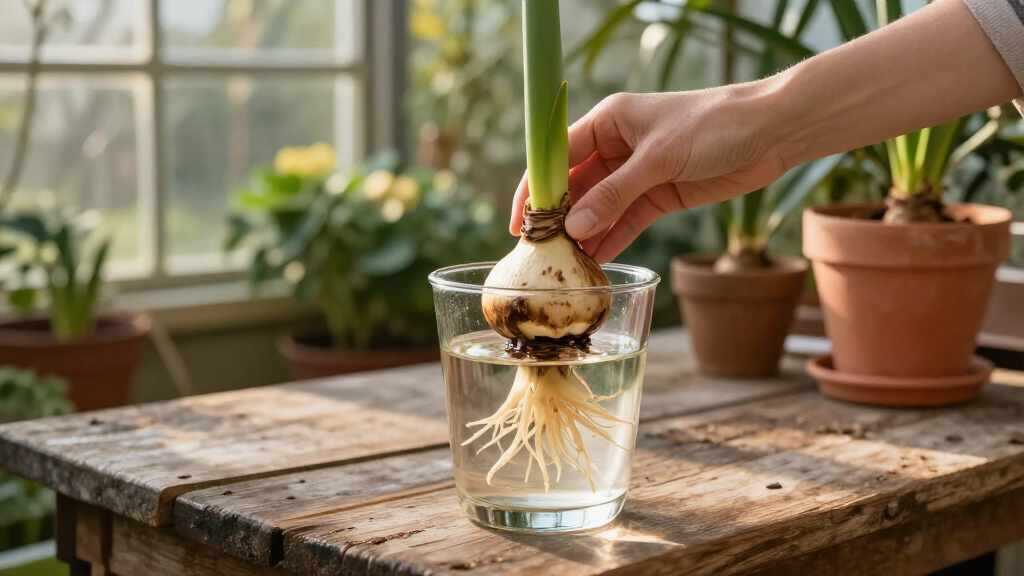
The guide’s first suggestions emphasize making the bulb’s growth visible. A clear bulb-forcing vase can hold the bulb above water while its roots develop, allowing viewers to see growth below the surface. The report also suggests planting an amaryllis in a clear vessel, with moss used as a decorative finish. Its kokedama idea wraps the bulb in moss for display on a table or, where practical, hanging near a bright window.
For a simpler arrangement, the report recommends placing waxed amaryllis bulbs on shelves or tables, or raising them to different levels with wood slices and adding seasonal materials such as moss, foliage, pinecones or lights. It also suggests grouping bulbs in terracotta pots or repurposed vintage ceramics. In both cases, varying vessel heights can help create a coordinated display; the guide says moss on the soil surface can help retain moisture in planted pots.
The final ideas pair amaryllis with other plants. Paperwhites may flower earlier, creating a sequence in which their blooms appear while amaryllis stems are still developing. The report says growers seeking simultaneous flowering can stagger planting: amaryllis bulbs six to eight weeks before the desired bloom period and paperwhites three to four weeks before. Moss, ferns, ivy and cyclamen are suggested as low-growing companions, with the amaryllis serving as the tallest focal point.
Making Growth Part of the Display
The guide reframes the weeks before flowering as a usable stage of indoor gardening. Amaryllis stems can typically reach 12 to 24 inches, according to the source, so their height can contribute structure to a tabletop or room display even before the flowers open. That makes the suggestions relevant to people planning seasonal decor around the plant’s full growth cycle, rather than only its final bloom.
The arrangements also offer different levels of visibility and care. Clear glass highlights roots, planted pots allow combinations with companion plants, and waxed bulbs are described as requiring no watering because the wax retains moisture. These are styling and growing suggestions, not evidence that a particular vessel or arrangement will make a bulb flower more reliably.
Products Worth Considering

Orbit B-hyve XR 8-Zone Indoor/Outdoor Smart Sprinkler Controller

Daltack 14-Pack Polycarbonate Greenhouse Panels (6' x 2' x 0.24)

Husqvarna 330LK Gas String Trimmer
As an affiliate, we earn on qualifying purchases.
The Bulb’s Pre-Bloom Stage
Amaryllis bulbs are commonly grown indoors for seasonal color. The source report focuses on the period after planting but before flowers open, when bulbs produce roots and tall green shoots. Its central suggestion is to make that developing form visible, using vessels and plant combinations suited to the home.
The seven approaches are clear glass, kokedama, waxed bulbs, grouped terracotta pots, vintage ceramics, paperwhite pairings and other companion plants. The report also notes that paperwhites often bloom sooner than amaryllis, and gives planting lead times for readers who want to try to coordinate their flowers. Actual timing can vary; the article does not provide guarantees for a particular bulb or growing environment.
Bloom Timing and Care Limits
The supplied report does not give a publication date, identify a particular amaryllis variety or specify the conditions behind its general growth and timing guidance. It also does not report tests comparing the seven display methods. Bloom dates are not guaranteed, and the suggested planting intervals should be treated as planning guidance rather than a promise that amaryllis and paperwhites will flower together.
Care needs depend on the method. The report says waxed bulbs do not need watering, but offers no detailed instructions for maintaining moisture in kokedama or for water levels in forcing vases. Readers should follow instructions supplied with their bulbs and containers; the article does not explain how long waxed bulbs remain viable or what to do after flowering.
Choosing a Display for Home
Readers can choose an arrangement based on whether they want to see root growth, combine plants or keep maintenance low. The guide points toward a clear vase for visibility, moss and companion plants for a planted composition, and waxed bulbs for a display it describes as requiring no watering. Anyone aiming for holiday blooms can count backward from the desired display period using the article’s planting windows, while allowing for variation in flowering time.
As the bulbs grow, the next visible change will be the development of their stems and eventual flowers. The source does not announce a follow-up report or provide a schedule for updates, so the timing and outcome for individual plants remain dependent on their own growth.
Key Questions
What are the seven display ideas?
Clear forcing vases, kokedama, waxed bulbs, grouped terracotta pots, vintage ceramics, paperwhite pairings and companion plants are the seven approaches listed by Homes & Gardens.
How tall do amaryllis stems typically grow?
The report gives a typical stem height of 12 to 24 inches. Individual plants may differ, and the source does not specify a variety or growing conditions for that range.
When should amaryllis and paperwhites be planted?
For a desired bloom period, the report suggests planting amaryllis six to eight weeks beforehand and paperwhites three to four weeks beforehand. These are planning estimates, not guaranteed flowering dates.
Do waxed amaryllis bulbs need watering?
The source says waxed bulbs do not need watering because the wax holds moisture. It does not provide further care instructions or discuss how long the bulbs remain viable.
Source: homesandgardens.com