
TL;DR
Sweet box (Sarcococca) is being highlighted as a winter container alternative to poinsettias, combining evergreen foliage with small, fragrant flowers. It can grow in partial or full shade and may suit a sheltered pot, though container plants need regular watering and the article does not specify hardiness or care differences among varieties.
Sweet box (Sarcococca) is being recommended as a winter container plant for gardeners who want more than holiday color: the evergreen shrub keeps its glossy foliage year-round and produces creamy-white, vanilla- and jasmine-scented flowers in winter. The suggestion offers an alternative to poinsettias for a sheltered, shaded spot near an entrance, though it is a gardening recommendation rather than a newly announced cultivar or research finding.

Get garden gear delivered free with Prime
- Fast, free delivery on millions of items
- Prime Video, Amazon Music and more included
- Member-only deals all year
According to the gardening feature, sweet box differs from the traditional poinsettia display in both appearance and duration. Poinsettias are valued for their bright red, pink or white bracts, while sweet box is a slow-growing evergreen shrub with modest winter blooms tucked beneath its leaves. The feature describes the flowers’ scent as strong enough to carry through a garden on a still day.
The feature says some sweet box varieties produce ornamental berries after flowering, which may mature from red to dark purple or black. The exact berry color depends on the species and variety. It names Sweet & Lo™ Sweet Box as one option and also refers to ‘Fragrant Valley’; it provides no comparative trial results or details on how their fragrance, mature size or performance differ.
For container growing, the feature recommends a pot with drainage holes and a moisture-retentive potting mix, placed in a sheltered area with partial or full shade. It advises watering when the potting mix begins to dry and notes that container-grown plants need closer attention than shrubs in the ground, especially during dry spells. The feature also suggests a light trim after flowering to keep the shrub neat, while noting its slow growth may mean frequent shaping is unnecessary.
A festive garden pick beyond poinsettias
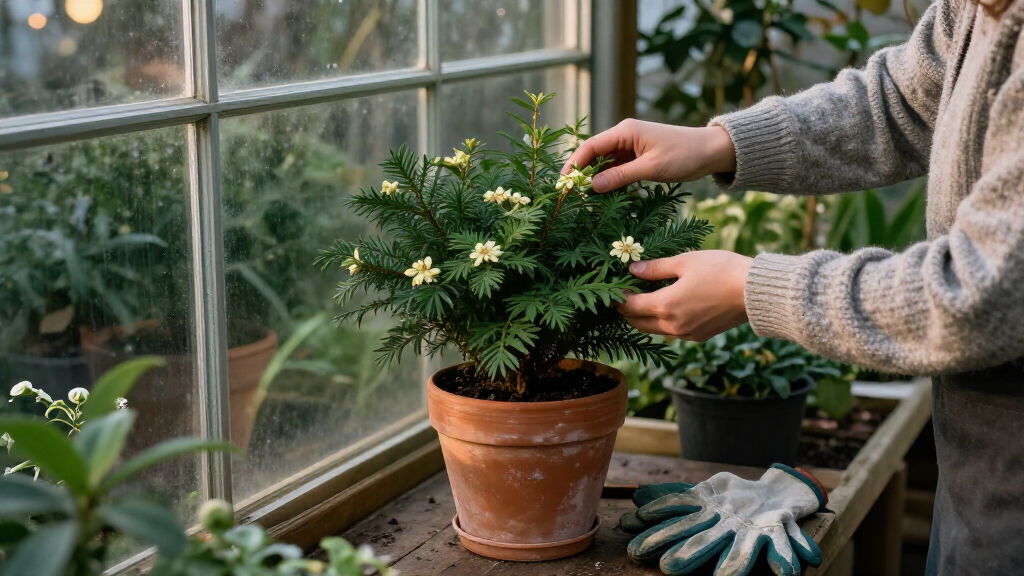
Sweet box (Sarcococca) pairs year-round evergreen foliage with fragrant winter flowers, making it a possible choice for a sheltered, shaded container.
A different winter display
Choose between poinsettias’ bold seasonal color and sweet box’s lasting foliage and subtle blooms.
- Bright seasonal bracts
- Commonly grown indoors in the United States
- Keeping them attractive after the holidays can take extra care
- Glossy evergreen leaves
- Small, creamy-white winter flowers
- May remain part of the garden year-round
Why gardeners may notice it
Its winter flowers bring fragrance when many gardens have little in bloom.
Evergreen structure
Glossy leaves stay through the year for a lasting container display.
Vanilla-like scent
Small blooms smell of vanilla and jasmine; the fragrance may carry on still days.
Possible berries
Some varieties produce ornamental berries, whose color varies by species and variety.
Set up the container
A sheltered position and steady attention to moisture support the feature’s suggested use.
Place the pot in a sheltered area with partial or full shade.
Use drainage holes and moisture-retentive potting mix.
Water when the mix begins to dry, checking more closely during dry spells.
A light trim after flowering can keep the shrub neat; slow growth may mean less frequent shaping.
Choose for your conditions
The recommendation offers practical gardening advice, not a head-to-head trial or guarantee for every variety.
- Confirm the variety suits your climate and intended container.
- Check nursery details for mature size before choosing a pot and location.
- Winter hardiness and container protection needs are not specified.
- Sweet & Lo™ Sweet Box and ‘Fragrant Valley’ are named, but their performance is not compared.
A Winter Display Beyond Poinsettias
The gardening feature presents longevity as sweet box’s appeal: it can provide green foliage throughout the year, with winter flowers adding fragrance when many gardens have little in bloom. That makes it a potential choice for a shaded front-door container where seasonal color alone is not the goal. Unlike a plant bought chiefly for a holiday display, sweet box can remain part of the garden after decorations come down.
The feature’s comparison with poinsettias is about differing uses, not a claim that one plant is universally better. It says poinsettias supply conspicuous seasonal color and are commonly grown indoors in the United States. Sweet box offers subtler flowers and evergreen structure, but its success in a pot depends on suitable shade, shelter, drainage and watering. Gardeners choosing between them can weigh bright holiday bracts against year-round foliage and winter scent.
The feature also notes that sweet box can grow in partial or full shade, a potential advantage in yards with dim corners where other container plants may struggle. Its recommendation does not establish that every variety will thrive in every climate or container. Local winter conditions and the plant’s eventual size remain part of the choice.
Products Worth Considering

EGO POWER+ 21-Inch Single-Stage Snow Blower with Two 4.0Ah Batteries and 320W Charger

Traeger Woodridge Wood Pellet Grill and Smoker, 860 sq. in., WiFi

Weber Searwood XL 600 Wood Pellet Smoker Grill, 36-Inch, Black
As an affiliate, we earn on qualifying purchases.
From Holiday Color to Evergreen Structure
The gardening feature says poinsettias are closely associated with festive decorating because their colorful bracts create an immediate seasonal display. It describes them as tender plants usually grown indoors in the United States, where they need warmth, bright indirect light and careful watering. The feature adds that keeping one attractive after the holiday period and encouraging it to color again the following year can take additional care.
Sweet box presents a different seasonal pattern, according to the feature. Its glossy leaves remain in place through the year, while its small flowers appear in winter and may be followed by berries. The feature describes the fragrance as similar to vanilla and jasmine, particularly noticeable on still days. It also notes that some varieties can eventually become substantial shrubs, although slow growth may make the plant a long-term container choice.
The recommendation is based on gardening characteristics and care advice in the feature, not published measurements or a head-to-head test against poinsettias. The feature does not provide a full list of suitable climates, exact mature dimensions for each named variety, or a schedule for repotting.
Variety and Local Conditions
The gardening feature does not state which climate zones are suitable, how much frost sweet box can tolerate in a container, or whether protection is needed in a particular region. It also gives no exact mature sizes for the varieties mentioned, so gardeners should check the label or supplier information before selecting a pot and location. Flowering intensity and berry color may vary by species and cultivar.
The feature’s description of the scent is not a quantified measurement, and it offers no direct comparison of fragrance strength among varieties. It also reports no trial data showing how sweet box performs against poinsettias or other winter container plants. The recommendation should therefore be treated as practical gardening advice from the feature, with outcomes dependent on the plant, local weather and care.
Check Conditions Before Planting
Gardeners considering sweet box should confirm that the chosen variety suits their climate and intended container, then follow its nursery label for planting and winter care. The gardening feature recommends a pot with drainage holes, moisture-retentive mix and a sheltered position in partial or full shade. It advises checking the soil or compost regularly and watering when it begins to dry, with closer attention during dry weather.
The feature suggests a light trim after flowering to maintain the outline if needed. Slow growth may reduce the need for frequent pruning, but the plant’s eventual size should be considered before placing it in a permanent spot. Gardeners can observe flowering and fragrance over the winter and adjust care to local conditions.
The feature does not announce a follow-up study, new product release or scheduled update. Its practical advice is to compare cultivar details with local growing conditions before buying, rather than assume every sweet box will have the same size, scent or winter performance.
Key Questions
What is sweet box?
Sweet box is the common name used in the gardening feature for Sarcococca, an evergreen shrub with glossy leaves and small winter flowers. The feature says some varieties may also produce ornamental berries after flowering.
Does sweet box smell like vanilla?
The gardening feature describes the flowers as having a vanilla- and jasmine-like fragrance. It says the scent can carry through the garden on a still winter day, but does not quantify fragrance strength or compare varieties.
Can sweet box grow in a container?
Yes. The gardening feature describes slow-growing sweet box as a possible long-term container plant. It recommends a pot with drainage holes and moisture-retentive potting mix, and advises accounting for the mature size of the selected variety.
Where should a potted sweet box be placed?
The gardening feature recommends a sheltered spot with partial or full shade. It does not specify local climate or winter-care requirements, so check the plant’s label or supplier guidance.
How often should sweet box in a pot be watered?
The gardening feature advises watering when the potting mix begins to dry. It notes that container plants may need closer attention than plants in the ground, especially during dry spells; this is not a fixed schedule for every climate or pot.
Source: gardeningknowhow.com