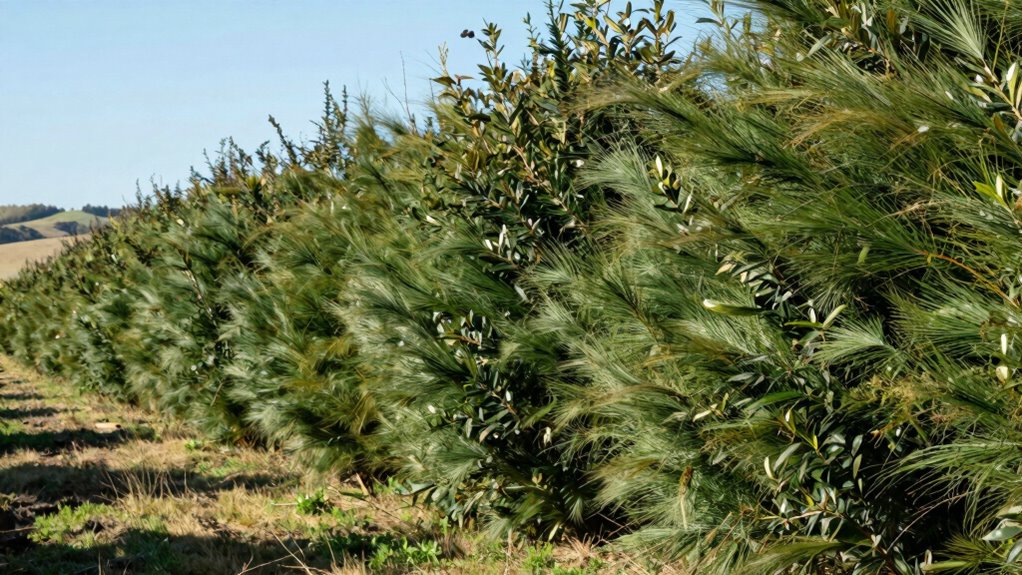

Barrier planting is a smart way to block wind and create a calmer outdoor space. By planting dense shrubs, tall grasses, or trees, you can break wind flow and reduce stress from strong gusts. These barriers also help prevent soil erosion and improve your outdoor comfort. Plus, they support wildlife and boost garden health. Want to discover how to select the right plants and design your own windbreak? Keep exploring for more tips.

Get garden gear delivered free with Prime
- Fast, free delivery on millions of items
- Prime Video, Amazon Music and more included
- Member-only deals all year
Key Takeaways
- Dense shrub and tree plantings create physical barriers that effectively block and reduce wind flow.
- Strategically placed barriers diminish wind pressure, providing a calmer, more relaxing outdoor environment.
- Native, deep-rooted plants stabilize soil and prevent erosion caused by strong winds.
- Barrier planting supports biodiversity, attracting wildlife and promoting ecological resilience.
- Creating natural windbreaks through plantings enhances outdoor comfort and reduces environmental stress.

Creating a barrier planting can be an effective way to define your outdoor space, block unwanted views, or reduce noise. But beyond that, it also plays an essential role in erosion control and supporting wildlife habitat. When you choose the right plants and arrange them thoughtfully, you can create a natural shield that not only breaks wind and reduces stress but also benefits your local environment. This planting acts as a barrier that slows down wind flow, making your outdoor space more comfortable and peaceful. It’s especially helpful if you live in a windy area, where gusts can cause discomfort or even damage to your property.
Creating barrier plantings enhances privacy, reduces noise, controls erosion, and supports local wildlife naturally.
By planting dense shrubs, trees, or tall grasses, you create a physical obstacle that interrupts wind currents. This reduces the force of the wind, making it easier to enjoy your yard and helping to prevent soil erosion. Without proper protection, wind can carry away topsoil, leaving your land more vulnerable to erosion. A well-designed barrier planting stabilizes the soil with deep-rooted plants, keeping it in place over time. Plus, these plants can trap and hold moisture, further reducing runoff and soil loss during heavy rains. Incorporating native plants into your design can enhance the overall effectiveness and ecological benefits of your barrier. Using plants that are well-suited to your climate can also reduce the need for supplemental watering and fertilizers.
In addition to erosion control, your barrier planting becomes a key wildlife habitat. Many native plants attract birds, butterflies, and beneficial insects, providing food and shelter. As you select plants suited to your climate, you encourage biodiversity and create a mini-ecosystem right in your yard. Birds can nest among thick shrubbery, while pollinators feed on flowering plants, helping your entire garden thrive. The dense foliage also offers cover for small mammals and insects, contributing to a balanced environment. This natural habitat can also serve as a buffer zone, protecting your garden from harsh weather or pests. Incorporating sustainable landscaping practices can further enhance the ecological benefits of your barrier planting. Additionally, understanding the importance of biodiversity can help you choose the most beneficial plants for your specific area. By fostering a healthy ecosystem, you support the resilience and natural health of your outdoor space.
As an affiliate, we earn on qualifying purchases.
Frequently Asked Questions
How Long Does It Take for a Barrier Planting to Become Effective?
It usually takes about one to two growing seasons for a barrier planting to become effective at reducing wind speed and stress. You should make certain of proper planting density, which means placing plants closely enough to block and break wind flow effectively. As the plants mature and establish their root systems, they’ll provide a stronger windbreak, so patience and consistent care are key to achieving the best results.
What Types of Plants Are Best for Windbreaks?
You’ll want plants with high wind resistance and dense foliage for effective windbreaks. Evergreen trees like pine, spruce, and cedar excel because they retain leaves year-round, providing consistent protection. Shrubs such as arborvitae and juniper also work well, offering dense coverage. When selecting plants, consider your local climate and soil, ensuring they can thrive and form a sturdy barrier that reduces wind speed and stress effectively.
Can Barrier Plants Be Used for Noise Reduction Too?
Yes, barrier plants can help reduce noise effectively. By creating a dense, natural shield, they absorb sound waves, offering you a quieter space. Plus, they support local wildlife habitat, attracting birds and beneficial insects. Their aesthetic appeal enhances your landscape, making your environment more inviting and visually pleasing. You’ll enjoy a peaceful, beautiful setting while also benefiting from improved privacy and reduced stress.
How Do I Maintain My Barrier Planting Over Time?
To sustain your barrier planting over time, you should regularly prune the plants to keep them healthy and shapely, which also enhances garden aesthetics. Keep an eye out for pests and diseases, and water appropriately based on the plant’s needs. Mulching helps retain moisture and suppress weeds. Consistent care ensures your barrier remains effective, attractive, and stress-reducing, providing long-term windbreak benefits.
Are There Specific Soil Requirements for Barrier Plants?
You’ll find that barrier plants thrive best in soil compatibility that offers good drainage and nutrients. Make sure you plant them at the right planting depth—about twice as deep as their root ball—to promote healthy growth. While they’re adaptable, avoiding overly compacted or waterlogged soils will help them grow strong and effective. With proper soil conditions, your barrier plants will stand tall, providing wind protection and stress relief for years to come.
native tall grasses for erosion control
As an affiliate, we earn on qualifying purchases.
As an affiliate, we earn on qualifying purchases.
Conclusion
By building a barrier planting, you boldly break barriers of breeze and stress. This simple, strategic solution soothes your space, shielding you from harsh winds and hectic worries. With each carefully chosen shrub and sturdy stem, you create a calming curtain of comfort. So, plant proactively, protect peacefully, and pave the path to peace—because a well-woven windbreak not only wards off weather but also welcomes wellness into your world.
As an affiliate, we earn on qualifying purchases.
wildlife attracting native plants
As an affiliate, we earn on qualifying purchases.
As an affiliate, we earn on qualifying purchases.
Fall yard work Picks
leaf blowers
As an affiliate, we earn on qualifying purchases.