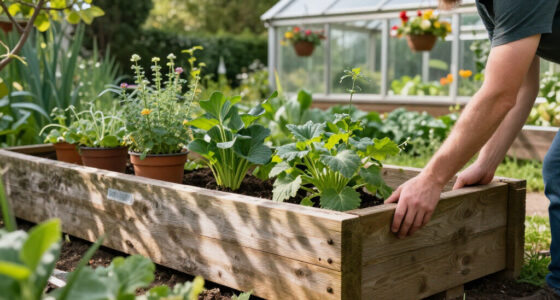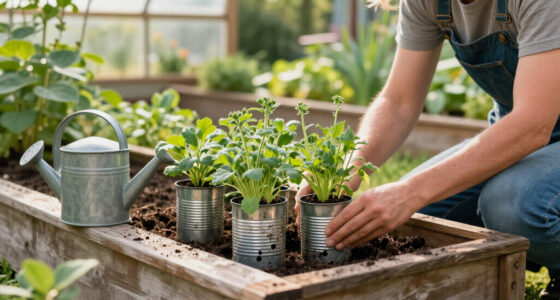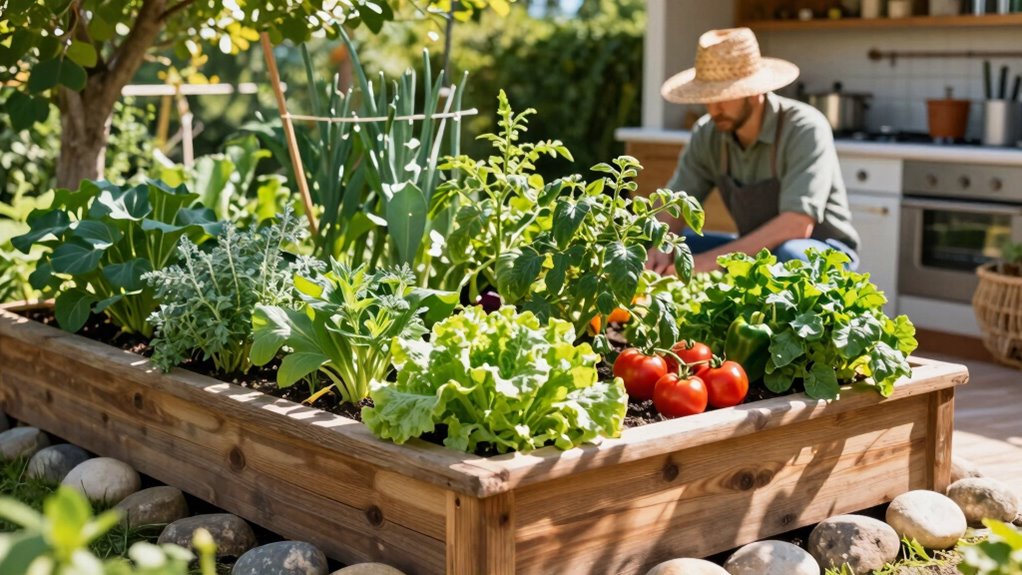

To design a kitchen garden around harvest flow, organize your space to guarantee continuous produce by planning crop schedules for steady harvests. Use companion planting to boost growth and pest control, and select crops based on their harvest timing. Regularly test and amend soil with organic matter to keep it fertile and healthy. Incorporate crop rotation and soil enrichment techniques for long-term success. Keep these principles in mind, and you’ll create a resilient, productive garden that keeps producing throughout the year.

Get garden gear delivered free with Prime
- Fast, free delivery on millions of items
- Prime Video, Amazon Music and more included
- Member-only deals all year
Key Takeaways
- Plan planting schedules to ensure continuous harvests, staggering crop planting and harvesting times effectively.
- Organize the garden layout to facilitate easy access and efficient crop management during peak harvest periods.
- Use companion planting to optimize space, improve pest control, and enhance overall crop health throughout the season.
- Incorporate soil enrichment practices like composting and crop rotation for sustained fertility and consistent yields.
- Design pathways and zones that streamline harvest flow and minimize crop disturbance during picking.
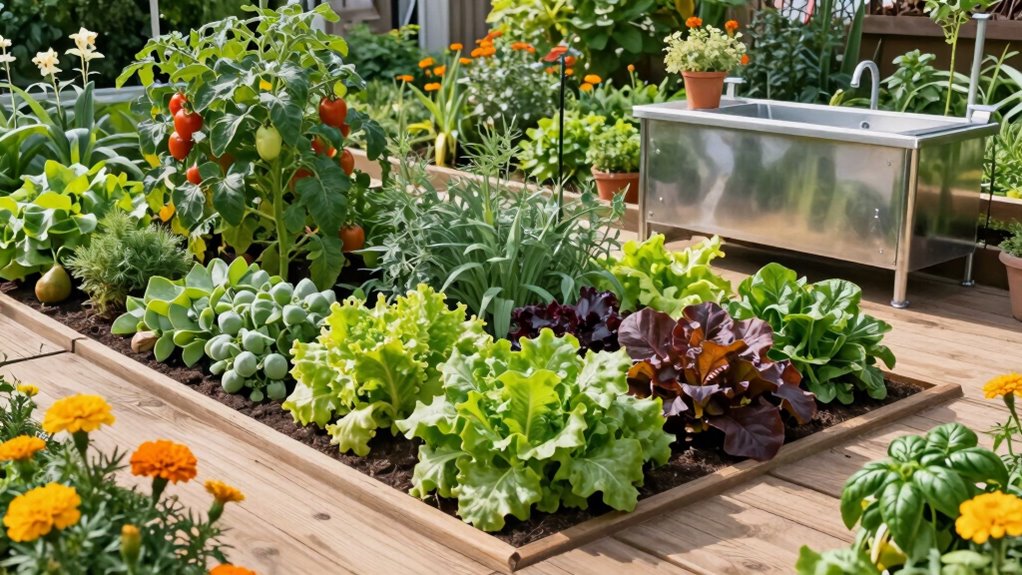
Have you ever thought about growing your own fresh herbs and vegetables right outside your kitchen? Designing a kitchen garden around harvest flow means planning your space to maximize yields and guarantee a steady supply of produce. To do this effectively, you need to understand how to organize your planting schedule, select the right crops, and maintain healthy soil. Starting with companion planting can be a game-changer. By grouping plants that benefit each other, you can naturally boost growth, repel pests, and improve flavor. For example, planting basil near tomatoes not only enhances taste but also helps deter pests like flies and mosquitoes. Incorporating this strategy allows you to create a more resilient garden that produces consistently, aligning with your harvest flow.
Soil enrichment plays a pivotal role in maintaining a productive kitchen garden. As you harvest your crops, the soil can become depleted of nutrients if not properly managed. To prevent this, integrate organic matter such as compost, aged manure, or cover crops into your soil regularly. This keeps the soil fertile, guaranteeing your plants have access to essential nutrients throughout the growing season. Healthy, enriched soil also improves plant vigor, which translates into tastier, more abundant harvests. By focusing on soil health, you set a solid foundation for your garden’s success, especially as you plan for continuous harvests over time. Additionally, understanding the importance of soil fertility helps you make informed decisions about amendments and crop choices. Incorporating techniques like crop rotation can also help maintain soil health and prevent nutrient depletion, ensuring long-term productivity. Moreover, monitoring soil nutrients allows you to adjust your fertilization practices to support optimal plant growth. Regularly testing your soil can provide valuable insights to fine-tune your gardening practices and sustain your harvest flow.
kitchen garden planting schedule planner
As an affiliate, we earn on qualifying purchases.
As an affiliate, we earn on qualifying purchases.
Frequently Asked Questions
How Do I Choose the Best Location for My Kitchen Garden?
You should choose a location with ample sunlight, ideally 6-8 hours daily, and easy access for watering and harvesting. Consider garden aesthetics to create a visually appealing space, integrating companion planting for healthier crops and pest control. Avoid shaded areas and windy spots. A flat, well-drained site near your kitchen makes tending your vegetables convenient, encouraging consistent care and maximizing your harvest flow.
What Soil Amendments Improve Harvest Flow Efficiency?
Oh, because your plants totally love a surprise soil mix! Start with soil testing to identify deficiencies, then boost harvest flow with organic composting. Compost enriches the soil naturally, guaranteeing nutrients are available just when your crops need them most. This combo keeps your garden thriving, prevents bottlenecks, and guarantees a smooth, continuous harvest flow. Don’t forget, happy plants make for happy harvests—no magic needed, just good soil!
How Do I Plan Crop Rotation for Continuous Harvest?
To plan crop rotation for continuous harvest, you should use crop succession by planting different vegetables in the same spot over seasons. Incorporate companion planting to boost growth and deter pests naturally. Rotate crops based on their nutrient needs and family groups—such as legumes, leafy greens, or root vegetables. This approach maintains soil health, reduces disease risk, and guarantees a steady supply of fresh produce throughout the year.
Which Pest Control Methods Are Safest for Edible Plants?
You should prioritize using natural predators like ladybugs and nematodes to control pests safely on edible plants. These biological controls target specific pests without harming your crops. Additionally, opt for organic sprays such as neem oil or insecticidal soap, which are effective yet gentle. Regularly inspect your plants and apply these methods as needed, ensuring your garden remains healthy and safe for harvest.
How Can I Maximize Space in a Small Kitchen Garden?
You can maximize space by using vertical gardening, stacking plants upward on trellises or wall-mounted planters, which frees up ground space. Companion planting also boosts efficiency by pairing plants that grow well together, making the most of limited room. These strategies create a thriving, compact garden, ensuring you harvest more from less. Combining vertical gardening and companion planting turns even a tiny kitchen garden into a productive oasis.
As an affiliate, we earn on qualifying purchases.
Conclusion
Now that you’ve woven your kitchen garden around harvest flow, you’ve created a vibrant tapestry of life and flavor. Think of it as planting a living symphony, where every leaf and fruit plays its part in harmony. With care and patience, your garden will flourish like a well-tuned orchestra, providing fresh, nourishing bounty. Remember, your garden is a reflection of your dedication—nurture it, and it’ll reward you with a harvest as rich as a painter’s palette.
As an affiliate, we earn on qualifying purchases.
As an affiliate, we earn on qualifying purchases.
Fall yard work Picks
leaf blowers
As an affiliate, we earn on qualifying purchases.