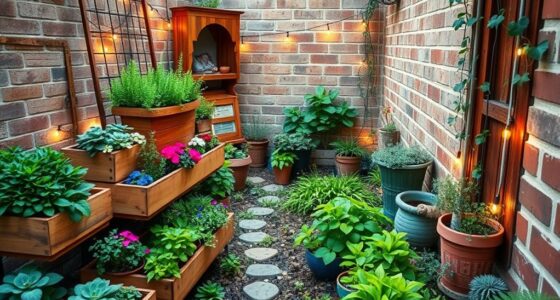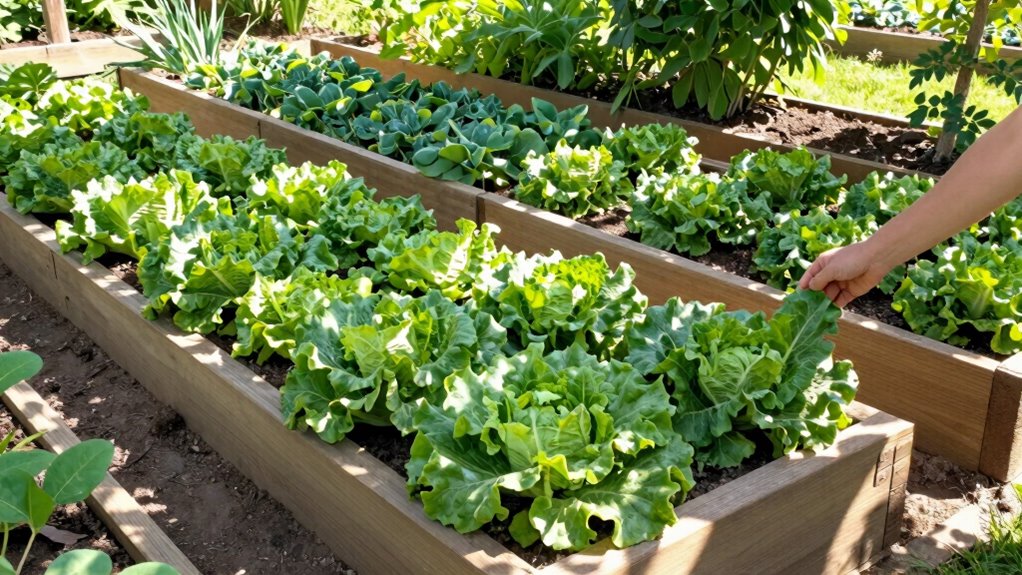

To make pest checks easier, organize your garden into specific zones using companion planting and mulch. Group plants that repel pests or attract beneficial insects, creating natural barriers. Use mulch as a physical barrier and to help spot early signs of pests or diseases. This layout helps you target problem areas quickly and simplifies inspections. If you keep exploring, you’ll find even more tips to keep your garden healthy and pest-free.

Get garden gear delivered free with Prime
- Fast, free delivery on millions of items
- Prime Video, Amazon Music and more included
- Member-only deals all year
Key Takeaways
- Organize the garden into designated zones based on plant compatibility for targeted pest monitoring.
- Incorporate companion planting to create natural pest barriers and simplify inspection areas.
- Use mulching around plant groups to make pests more visible and prevent egg-laying.
- Design pathways between zones for easy access during routine pest checks.
- Diversify plantings to attract beneficial insects, reducing pest presence and easing detection.
A well-planned garden layout can considerably reduce pest problems, but even the most thoughtful design requires regular checks. When you organize your garden thoughtfully, you make pest monitoring easier and more effective. One key trick is to use companion planting, which involves pairing plants that naturally repel pests or attract beneficial insects. For example, planting marigolds near your tomatoes can deter nematodes, while basil alongside peppers can confuse pests and reduce their attacks. By grouping compatible plants, you create a natural pest barrier that minimizes the need for chemical interventions. Not only does companion planting help keep pests at bay, but it also simplifies your routine—you’re checking specific sections of your garden where certain pests are more likely to appear, rather than scanning randomly across an unorganized space. Biodiversity within your garden can further enhance pest control by supporting a diverse ecosystem that naturally balances pest populations. Incorporating plant diversity in your garden helps attract a variety of beneficial insects, which contributes to more effective pest suppression.
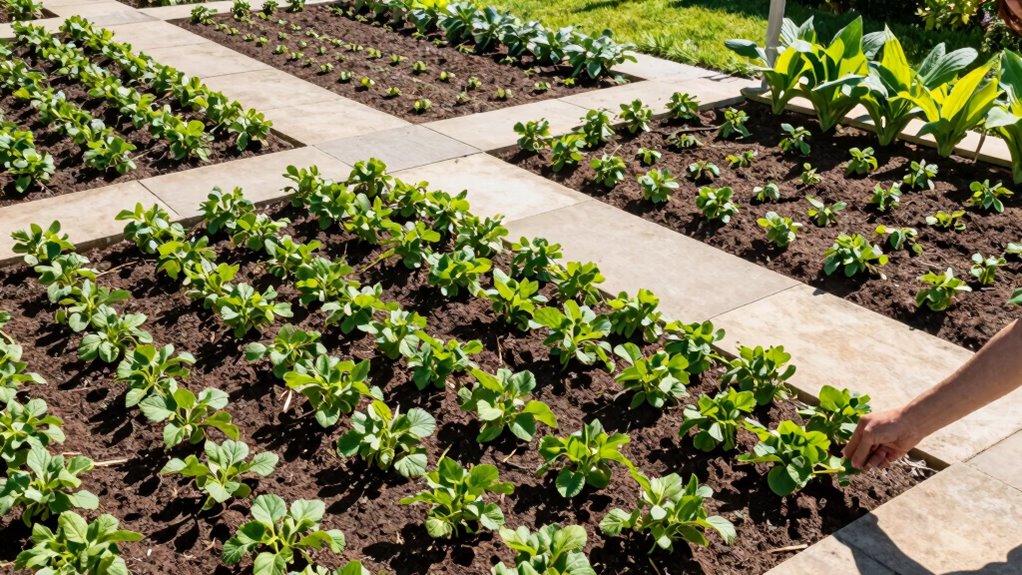
In addition to strategic plant placement, employing mulching techniques plays a crucial role in pest management. Mulch acts as a physical barrier, preventing weeds that can harbor pests, and helps maintain consistent soil moisture, which promotes healthy plant growth. Organic mulches like straw, wood chips, or shredded leaves also attract beneficial insects that prey on pests, creating a natural balance. When you mulch properly, you can easily identify signs of pests or diseases since the mulch layer makes it easier to spot damage or unwanted visitors early. Mulching also discourages pests from laying eggs directly on the soil surface, reducing infestations before they start. Regularly checking beneath your mulch for signs of pests or eggs becomes a straightforward task because the mulch keeps the area clean and accessible. Additionally, understanding the life cycles of pests can help you time your inspections more effectively and target problem areas at the right moments. Incorporating pest-resistant plants into your garden can further reduce the likelihood of infestations, especially when combined with an understanding of pest behavior and pest monitoring techniques.
Combining companion planting with effective mulching techniques makes pest checks less intimidating. By designing your garden layout with these strategies in mind, you create zones where pests are less likely to thrive and where problems are easier to detect. For instance, you can designate specific areas for certain plant pairings, then apply mulch generously around them. When you walk through your garden, your routine becomes more focused—you know exactly where to look and what signs of trouble to watch for. This proactive approach allows you to catch pest issues early, often before they cause significant damage, saving you time and effort down the line. Overall, thoughtful garden layout, supported by companion planting and mulching, turns pest checks from a tedious chore into an efficient, manageable task.
As an affiliate, we earn on qualifying purchases.
Frequently Asked Questions
How Often Should I Perform Pest Checks in My Garden?
You should perform pest checks weekly to catch issues early. Focus on your garden bed, inspecting leaves, stems, and soil. Good plant spacing helps make these checks easier, as it allows you to see pests more clearly and reduces overcrowding that can promote infestations. Regular inspections ensure you spot pests before they spread, keeping your garden healthy. Make pest checks a routine part of your gardening schedule for the best results.
What Tools Are Best for Quick Pest Identification?
For quick pest identification, use a magnifying glass to spot tiny pests and damage clearly. A handheld garden tool, like a trowel or pruning shears, helps gently lift leaves and inspect hidden areas. Keep a small notebook nearby to note pest types and signs. These garden tools and visual aids make pest identification faster and easier, helping you catch issues early before they spread.
Can Garden Layout Prevent All Types of Pests?
You can’t prevent every pest with just garden layout, no matter how clever your design. While companion planting and crop rotation do help reduce pest problems, they’re not foolproof. Pests adapt and find their way, so it’s essential to stay vigilant. A well-planned garden minimizes issues, but expecting it to be pest-proof is unrealistic. Stay proactive, combine strategies, and remember that some pests are just part of gardening.
How Do I Attract Beneficial Insects to My Garden?
To attract beneficial insects, you should use companion planting and natural repellents. Plant flowers like daisies, marigolds, and fennel alongside your vegetables to draw in pollinators and predatory insects that prey on pests. Avoid chemical pesticides, and instead, use natural repellents like neem oil or garlic spray. Creating diverse, colorful plantings provides food and shelter, making your garden a haven for helpful insects that naturally protect your crops.
Are There Eco-Friendly Methods for Pest Control?
Yes, you can use eco-friendly methods for pest control like composting benefits, which improve soil health and reduce pests naturally. Encourage beneficial insects by planting diverse, organic pesticide-free plants. Avoid chemical pesticides and opt for organic options when necessary. These methods work together to create a balanced ecosystem, making pest management more sustainable and less harmful to the environment. You’ll enjoy a healthier garden with fewer pests using these eco-friendly strategies.
As an affiliate, we earn on qualifying purchases.
Conclusion
By organizing your garden with clear pathways and designated sections, pest checks become quicker and less stressful. This simple trick keeps you vigilant and helps catch pests early before they cause serious damage. Imagine how much easier gardening would be if pests were less of a mystery—wouldn’t you want to spend more time enjoying your plants instead of battling pests? Try this layout trick and take control of your garden’s health today!
As an affiliate, we earn on qualifying purchases.
As an affiliate, we earn on qualifying purchases.
Fall yard work Picks
leaf blowers
As an affiliate, we earn on qualifying purchases.