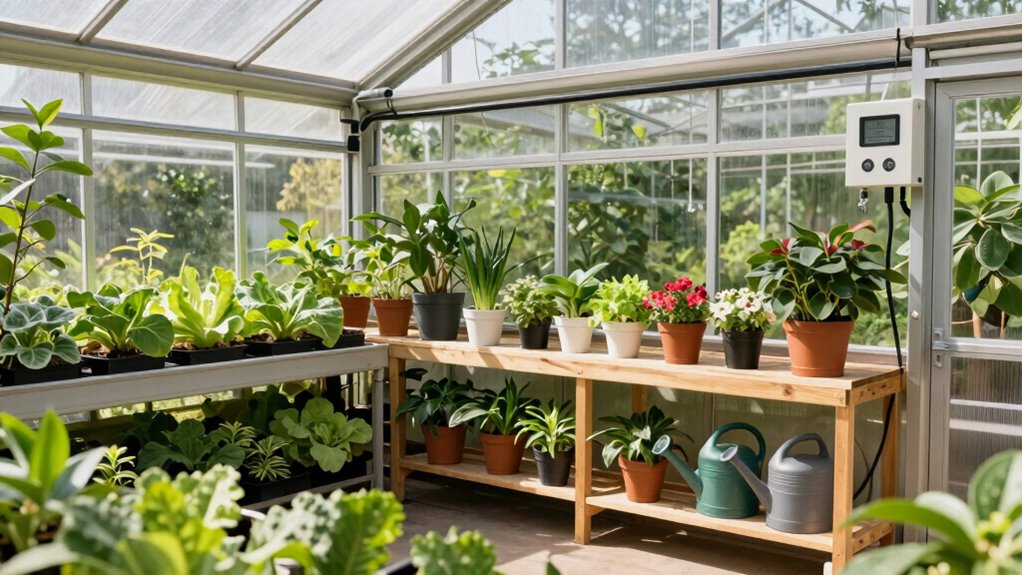

Having dedicated utility zones in your greenhouse helps organize tasks like watering, pest control, and equipment storage, making everything run more smoothly. It reduces unnecessary movement, saves time, and boosts safety by keeping hazards separate. Well-planned zones also improve energy efficiency and ease maintenance, cutting costs and preventing issues before they grow. To discover more about how strategic zoning enhances your greenhouse’s productivity and sustainability, keep exploring these smart setup ideas.

Get garden gear delivered free with Prime
- Fast, free delivery on millions of items
- Prime Video, Amazon Music and more included
- Member-only deals all year
Key Takeaways
- Utility zones streamline operations by assigning specific areas for tasks like watering, pest control, and equipment storage.
- Proper zoning minimizes movement and saves time, increasing overall greenhouse efficiency.
- Separate zones improve safety by organizing chemicals, tools, and electrical systems, reducing hazards.
- Zoning enhances pest management by isolating waste and high-risk areas, preventing pest spread.
- Organized utility zones support maintenance and energy management, lowering operational costs.
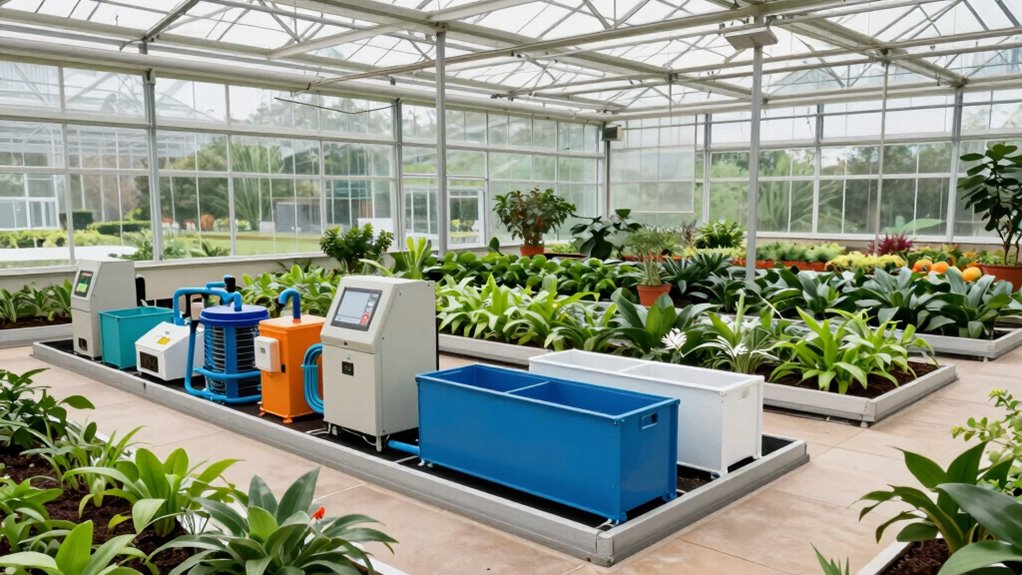
Greenhouses are organized into specific utility zones to optimize workflow and guarantee safety. By dividing your greenhouse into dedicated areas, you ensure that each task—from watering plants to pest management—is handled efficiently. This structure minimizes unnecessary movement, saving you time and energy while keeping operations smooth. When you plan your zones carefully, you also promote sustainable energy practices, like placing energy-intensive equipment near sources of renewable power or insulation to reduce energy waste. This strategic layout not only cuts costs but also supports eco-friendly goals, making your greenhouse more sustainable over the long term.
Organizing greenhouse zones boosts efficiency, safety, and sustainability for long-term success.
Having designated zones for different functions means you can implement targeted pest management strategies more effectively. For instance, keeping a separate area for composting or plant waste helps prevent pests from spreading to healthy crops. You can also position pest control supplies and equipment close to high-risk zones, enabling quick response to infestations. This proactive approach reduces pesticide use and reliance on chemical controls, aligning with environmentally conscious practices. Proper zoning also helps you monitor pest activity more accurately, so you can apply control measures precisely where needed, avoiding unnecessary treatments across your entire greenhouse. Additionally, pest management strategies are more effective when tailored to specific zones. Creating clear boundaries between zones can further improve pest control by limiting pest movement and access. Incorporating monitoring tools within each zone can enhance your ability to detect pest activity early, enabling more targeted interventions.
The organization into utility zones also improves safety for everyone working inside. When you assign specific areas for tools, chemicals, and equipment, it becomes easier to keep pathways clear and prevent accidents. For example, storing hazardous substances away from workspaces minimizes risks of spills or exposure. Clear zones for walkways and workstations ensure that you and your staff can move around safely without tripping over clutter or equipment. Additionally, designated zones for irrigation and electrical systems help prevent electrical fires or water-related accidents, especially when combined with proper safety protocols. Implementing proper safety protocols is essential for maintaining a secure working environment. Incorporating safety signage within each zone can further enhance awareness and prevent mishaps. Keeping these zones well-organized also facilitates routine maintenance, reducing the likelihood of overlooked issues or hazards.
The layout of your greenhouse into distinct utility zones also makes maintenance more straightforward. You can schedule routine checks and repairs systematically, focusing on specific areas without disrupting the entire operation. This organized approach minimizes downtime and ensures your greenhouse remains in top condition. Plus, a well-planned layout facilitates better monitoring of environmental controls, like ventilation and heating systems, which are vital for maintaining ideal growing conditions and reducing energy consumption. Keeping these systems in designated zones allows for easier troubleshooting and efficient maintenance routines. A thoughtfully designed zoning plan also helps in managing energy efficiency, reducing overall operational costs. Overall, a strategic zone setup can help identify and address potential issues before they escalate, saving time and resources in the long run.
greenhouse utility zone storage bins
As an affiliate, we earn on qualifying purchases.
As an affiliate, we earn on qualifying purchases.
Frequently Asked Questions
How Do Utility Zones Impact Greenhouse Energy Efficiency?
Utility zones boost your greenhouse’s energy efficiency by optimizing climate control and promoting energy conservation. You can separate heating, cooling, and ventilation areas, reducing unnecessary energy use. This targeted approach helps maintain consistent temperatures, minimizes waste, and lowers energy costs. By effectively managing climate control within each zone, you make your greenhouse more sustainable, saving money while creating ideal growing conditions.
Can Utility Zones Be Customized for Different Plant Types?
Utility zones are like tailored suits, fitting different plant needs perfectly. You can customize zones for various plant types by adjusting factors like temperature, humidity, and light. This plant placement strategy optimizes growth conditions, ensuring each plant gets what it needs. Zone customization allows you to create specific microclimates, making your greenhouse more efficient and productive. So yes, utility zones can definitely be tailored to suit different plant types.
What Materials Are Best for Constructing Utility Zones?
You should use sustainable materials like recycled wood, bamboo, or reclaimed metal for constructing utility zones, as they’re eco-friendly and durable. Additionally, consider cost-effective options like treated lumber or repurposed pallets, which save money while maintaining quality. These materials withstand moisture and temperature changes, making your utility zones functional and sustainable. By choosing eco-conscious and budget-friendly options, you create efficient, long-lasting utility zones that support your greenhouse’s success.
How Do Utility Zones Affect Greenhouse Pest Management?
Utility zones improve pest control by creating designated areas for pest management activities, reducing the spread of pests within your greenhouse. They simplify zone maintenance, making it easier to implement targeted pest control measures without disrupting your crops. By containing pests and maintaining clean, organized zones, you can effectively minimize infestations, ensuring healthier plants and better yields. Utility zones are essential for efficient, focused pest management in your greenhouse.
Are Utility Zones Suitable for Small-Scale or Hobby Greenhouses?
Yes, utility zones are suitable for small-scale gardening and hobby greenhouse design. They help you organize your space efficiently, making maintenance easier and keeping tools or supplies accessible. In a hobby greenhouse, utility zones streamline workflows and reduce clutter, allowing you to focus on your plants. Whether you’re growing vegetables or flowers, these zones improve overall functionality, making your small-scale gardening experience more enjoyable and productive.
pest control supplies for greenhouse
As an affiliate, we earn on qualifying purchases.
As an affiliate, we earn on qualifying purchases.
Conclusion
By harnessing the power of utility zones, you turn your greenhouse into a well-oiled machine, each section working in harmony like a symphony. These zones streamline your operations, making everything from watering to climate control more efficient and less stressful. Think of utility zones as the backbone of your greenhouse—strong, organized, and essential. Embrace this approach, and you’ll see your greenhouse flourish like a garden bursting with life, all because everything has its perfect place.
As an affiliate, we earn on qualifying purchases.
As an affiliate, we earn on qualifying purchases.
Fall yard work Picks
leaf blowers
As an affiliate, we earn on qualifying purchases.