
Choosing the right layout of wheelbarrows, carts, and hauling paths can greatly reduce back strain and improve your gardening efficiency. Opt for ergonomic tools with padded grips and balanced weight, and set up direct, smooth paths close to your work zones to minimize trips and effort. Using appropriate equipment for your terrain, like larger tires over uneven ground, makes hauling easier and safer. Keep exploring to discover more tips that can help protect your back and boost your garden productivity.
Key Takeaways
- Choose ergonomic wheelbarrows with padded grips and balanced weight to reduce back strain during hauling.
- Design direct, smooth paths close to work zones to minimize travel distance and effort.
- Use large, puncture-resistant tires suited for uneven terrain to improve mobility and stability.
- Plan routes over stable ground to prevent tipping and reduce physical exertion.
- Combine proper tool selection with efficient path layout for a safer, less strenuous gardening experience.
Have you ever wondered how workers move heavy loads efficiently across uneven terrain? The secret lies in choosing the right hauling tools and layout to maximize garden efficiency and reduce strain. Whether you’re working in a large backyard or a professional landscape, selecting the proper wheelbarrow, cart, or hauling path makes all the difference. A well-designed system doesn’t just save time; it protects your back and minimizes fatigue.
When it comes to garden efficiency, ergonomic design plays an essential role. Modern wheelbarrows are built with features like ergonomic handles, balanced weight distribution, and sturdy tires, which make hauling less tiring. You want a tool that allows you to keep your back straight and use your leg muscles rather than strain your spine. Many models now include padded grips and adjustable handles, accommodating different user heights and reducing wrist and shoulder stress. With the right ergonomic features, you can transport materials more comfortably, allowing you to work longer without discomfort or injury.
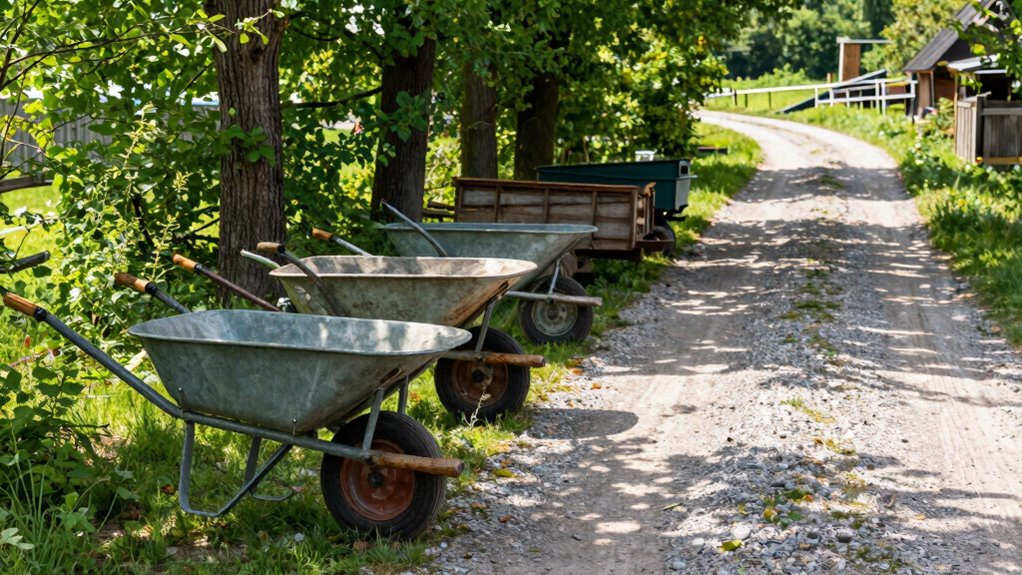
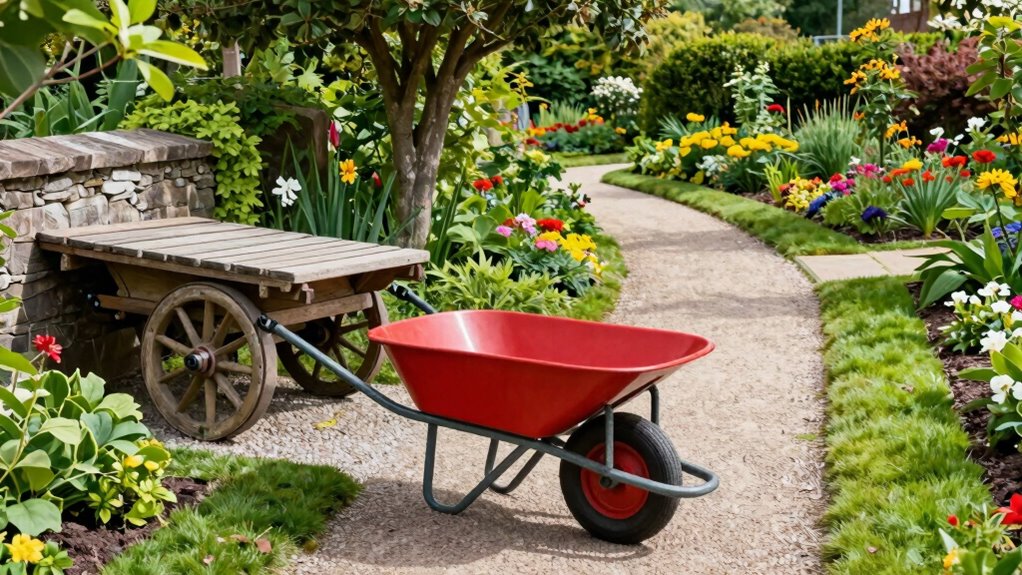
Beyond the tool itself, the layout of your hauling paths considerably impacts efficiency. Think carefully about where you place your wheelbarrows and carts to minimize the distance traveled and avoid rough or unstable ground. Building smooth, level paths using gravel, paving stones, or compacted dirt helps prevent tipping and makes pushing or pulling easier. When your hauling routes are direct and well-maintained, you lessen the effort needed to move heavy loads, saving your energy and protecting your joints.
Creating smooth, direct paths minimizes effort, protects joints, and boosts garden efficiency.
Using carts or wheelbarrows with large, puncture-resistant tires can improve mobility across uneven terrain. Larger tires distribute weight better and roll smoothly over rocks, roots, or soft ground. Additionally, positioning your work zones close together reduces the need to carry loads over long distances, further boosting garden efficiency. When you plan your layout with accessibility in mind, you cut down on unnecessary trips, fatigue, and the risk of accidents.
In essence, the combination of ergonomic design in your hauling tools and a smart layout creates a seamless workflow. It means you spend less time struggling with heavy loads and more time enjoying your garden. Properly chosen equipment and well-laid paths protect your back, increase productivity, and make gardening a more enjoyable, less physically demanding activity. When you focus on these details, you’ll find that moving heavy loads becomes easier, safer, and more efficient—helping you maintain a beautiful, thriving garden with less effort. Incorporating proper layout planning is also crucial in creating an efficient and safe environment for your gardening activities.
ergonomic wheelbarrow with padded grips
As an affiliate, we earn on qualifying purchases.
As an affiliate, we earn on qualifying purchases.
Frequently Asked Questions
What Materials Are Best for Durable Hauling Paths?
For durable hauling paths, you should choose materials that offer excellent surface stability and material longevity. Gravel or crushed stone provides solid support and drains well, preventing erosion. Pavers or concrete slabs create a stable, long-lasting surface resistant to wear and tear. Asphalt is also a good option, offering durability and smoothness. Select materials based on your budget and intended use to guarantee your hauling paths stay durable over time.
How Do I Prevent Wheelbarrow Tire Flats?
To prevent wheelbarrow tire flats, you gotta prioritize tire inflation and puncture prevention. Keep your tires properly inflated—under-inflation invites flats—and check them regularly. Use puncture-resistant tubes or liners if you’re hauling rough terrain. Avoid sharp debris, and store your wheelbarrow in a safe spot. Fundamentally, treat your tires like royalty, and they’ll reward you with fewer flats and smoother hauling adventures.
Are There Ergonomic Designs for Reducing Back Strain?
Yes, ergonomic handles and a back-friendly design can considerably reduce your back strain. Look for wheelbarrows with padded, contoured handles that fit comfortably in your hands, encouraging proper posture. Choose models with a balanced weight distribution and an ergonomic shape that minimizes bending and twisting. These features help you work more efficiently and comfortably, preventing back pain during long tasks and making hauling easier on your body.
How Often Should Hauling Paths Be Maintained?
You should inspect and maintain your hauling paths at least quarterly, adjusting your maintenance scheduling based on usage and weather conditions. Regularly check for uneven surfaces, debris, or damage that could cause accidents or back strain. Proper path design, such as smooth, level surfaces, minimizes strain and improves safety. Consistent maintenance keeps your paths in good shape, extending their lifespan and ensuring your hauling activities remain efficient and safe.
Can Alternative Hauling Methods Be More Efficient?
Alternative methods can be way more efficient, transforming your hauling chores from a snail’s pace to lightning-fast. When you compare their efficiency, you’ll see that options like motorized carts or pulley systems often surpass traditional wheelbarrows in speed and ease. These methods minimize effort and increase productivity, making your work feel less like a burden and more like a breeze. Switching up your approach truly can revolutionize your hauling game.
large puncture-resistant tires for garden carts
As an affiliate, we earn on qualifying purchases.
As an affiliate, we earn on qualifying purchases.
Conclusion
Choosing the right hauling layout is like planting a sturdy tree—your back will thank you for the strong roots you set. By selecting wheelbarrows, carts, and paths that suit your needs, you create a smooth flow that saves effort and reduces strain. Think of it as giving your garden a well-organized heartbeat, turning back-breaking work into a manageable dance. With the right setup, you’ll enjoy tending your yard rather than fighting against it.
As an affiliate, we earn on qualifying purchases.
garden cart with balanced weight distribution
As an affiliate, we earn on qualifying purchases.
As an affiliate, we earn on qualifying purchases.