
Hedgerows provide critical habitat by offering safe corridors for wildlife, supporting biodiversity, and connecting fragmented areas. When designed with layered, diverse plantings—combining evergreens, deciduous types, and varying heights—they create effective windbreaks that shield land and crops from harsh weather. Properly maintained hedgerows reduce soil erosion, stabilize microclimates, and enhance ecological resilience. To maximize these benefits, you should consider the right plant selection, placement, and ongoing management—discover how effective hedgerows can truly transform your landscape.
Key Takeaways
- Hedgerows serve as wildlife corridors, connecting fragmented habitats and supporting biodiversity.
- Properly designed hedgerows with layered, diverse plantings create effective habitats for various species.
- Windbreak hedgerows are positioned perpendicular to prevailing winds, providing shelter and reducing soil erosion.
- Combining evergreen and deciduous plants ensures year-round habitat and wind protection.
- Regular maintenance and strategic planting sustain hedgerows’ ecological and protective functions over time.
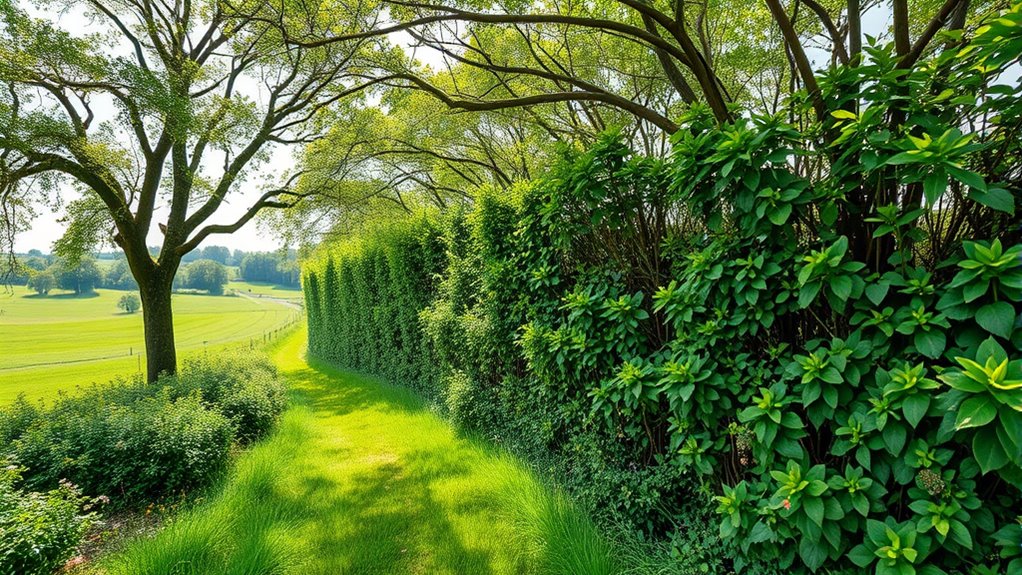
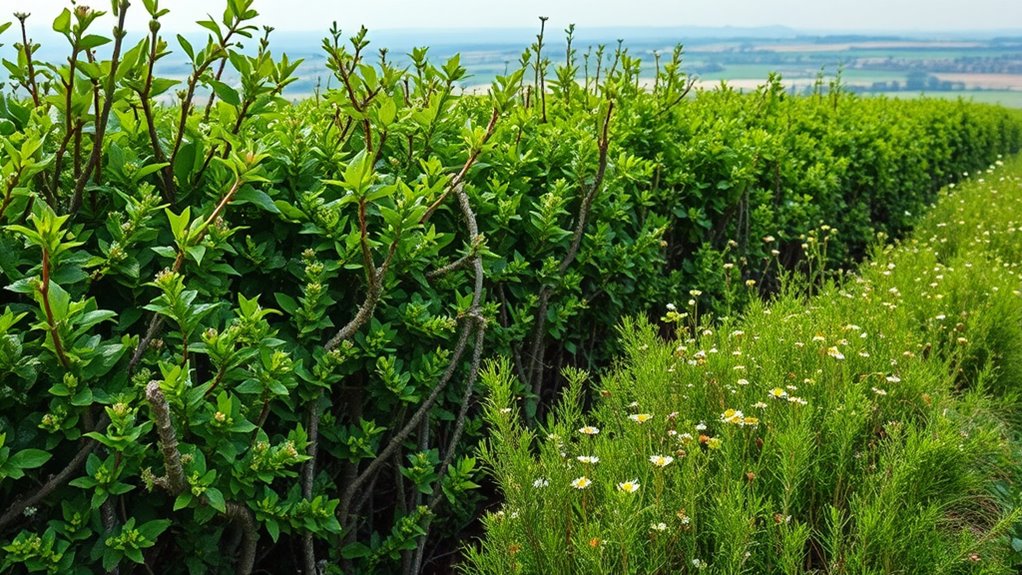
Hedgerows play an essential role in supporting biodiversity and protecting land from harsh weather conditions. As you plan and maintain your hedgerows, you’ll discover their power to serve as critical wildlife corridors. These natural pathways connect fragmented habitats, allowing animals to move safely between feeding, breeding, and nesting areas. By integrating wildlife corridors into your hedgerow design, you help sustain local ecosystems and promote genetic diversity among species. You don’t need a sprawling landscape to make this work; even narrow, thoughtfully placed hedgerows can create effective links. When designing these corridors, consider the height, density, and plant variety to guarantee they’re inviting and safe for wildlife. Dense, layered plantings encourage birds and small mammals to thrive, providing cover and food sources along their routes. Incorporating color temperature adjustments can enhance the visual appeal and ecological function of your hedgerow, making it more attractive to wildlife. Windbreak design is another key aspect of your hedgerow’s purpose. Properly structured windbreaks reduce the impact of strong winds, shielding your land, crops, or buildings. To achieve this, you should think about the orientation and composition of your hedgerow. Position it perpendicular to prevailing winds to maximize protection. Incorporate a mix of evergreen and deciduous species to maintain a barrier year-round and support diverse wildlife. Tall, dense planting at the windward side creates an effective shield, while a gradual tapering toward the leeward side prevents turbulence and promotes airflow. This thoughtful windbreak design not only mitigates soil erosion and moisture loss but also creates a microclimate beneficial for plant growth and habitat stability. As you develop your hedgerow, remember that its structure influences both its ecological functions and wind protection capabilities. Layering different plant heights, from low shrubs to tall trees, enhances habitat complexity and windbreak efficiency. You might also consider adding gaps or varied widths to allow for wildlife movement without compromising wind protection. Maintaining a diverse plant palette ensures resilience against pests and diseases, prolonging the hedgerow’s effectiveness. Regular management, such as pruning and planting succession, keeps the hedgerow healthy and functional over time. Keep in mind that a well-designed hedgerow serves multiple purposes: fostering wildlife corridors, providing shelter and wind protection, and enriching the landscape’s ecological value.
Frequently Asked Questions
How Do Hedgerows Impact Local Biodiversity?
Hedgerows boost local biodiversity by providing shelter and food for various species, helping with pest control naturally. They support insects, birds, and small mammals, especially through seasonal changes that bring different resources throughout the year. You’ll notice more diverse wildlife and healthier ecosystems as hedgerows create a balanced environment, reducing the need for pesticides and encouraging natural pest predators, ultimately enriching your local habitat.
What Are the Best Native Species for Hedgerows?
You should choose native shrubs like hawthorn, blackthorn, hazel, and dogwood for your hedgerows. These species provide excellent wildlife habitat by offering food and shelter for birds, insects, and small mammals. Native shrubs are well-adapted to your local environment, ensuring healthy growth and longevity. Incorporating these plants creates a thriving, biodiverse habitat that supports local ecosystems and enhances your landscape’s ecological value.
How Do I Maintain Hedgerows Over Time?
Think of maintaining your hedgerow as tending a garden of living sculptures. You should prune regularly using proper pruning techniques to shape and encourage healthy growth, removing dead or overgrown branches. Keep weeds at bay through consistent weed control, which prevents competition for nutrients. Mulching helps retain moisture and suppress weeds. With steady care, your hedgerow remains vibrant and thriving, providing habitat and wind protection for years to come.
Can Hedgerows Be Used for Organic Farming?
Yes, you can use hedgerows for organic farming. They support sustainable pest control by attracting beneficial insects and predators, reducing the need for chemical pesticides. Additionally, hedgerows improve soil fertility through organic matter input and nitrogen fixation, enhancing crop health. Incorporate native plants and maintain diverse species to maximize these benefits, creating a balanced ecosystem that promotes sustainable, organic practices on your farm.
What Are the Costs Involved in Establishing a Hedgerow?
You’ll find that establishing a hedgerow involves initial costs for planting methods like planting young shrubs or trees, which vary depending on plant type and size. You should also consider long-term costs for maintenance, such as trimming and managing growth. While the upfront investment might seem high, the long-term benefits, like wind protection and habitat creation, often make it worthwhile. Planning carefully helps manage both short-term and long-term expenses effectively.
Conclusion
By planting hedgerows, you create a fortress of life and protection that could rival the Great Wall itself. Imagine a lush, tangled barrier so dense that even the mightiest windstorms are stopped in their tracks, and countless creatures find sanctuary within its embrace. Your hedgerow isn’t just a row of bushes—it’s a mighty shield, a bustling habitat, and a *revitalizing gust* of fresh hope for the environment. Together, you’re building a living, breathing fortress for the future.