
TL;DR

Get garden gear delivered free with Prime
- Fast, free delivery on millions of items
- Prime Video, Amazon Music and more included
- Member-only deals all year
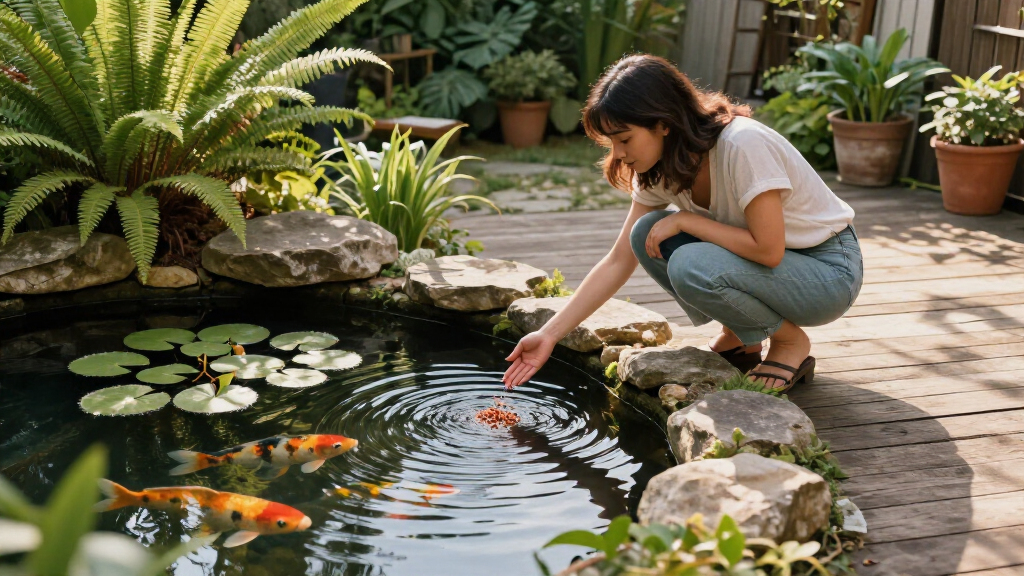
A Gardening Know How report uses Jennifer Aniston’s Bel Air koi pond as inspiration for smaller garden water features. Experts say the first decision is whether to keep fish: a pondless waterfall or container feature can offer water and movement, but small ponds need careful maintenance, and koi require sufficient depth and filtration.
Jennifer Aniston’s koi pond is the starting point for a new Gardening Know How report on bringing water features to small gardens, but the experts interviewed say copying the look does not require keeping koi. They recommend deciding first whether fish, water sounds, visual interest or habitat is the priority, then choosing a feature that fits the space and the owner’s willingness to maintain it.
The report describes Aniston’s Bel Air garden as having Japanese-inspired planting, roses and a koi pond. It presents the pond as part of a broader interest in recreating the garden’s style, while offering advice from water-feature and landscape professionals. The supplied report does not give construction details, dimensions or costs for Aniston’s pond.
Kendahl Kreps, director of marketing at Oase North America, says the first question is whether the owner wants fish. A fish-free option is a pondless waterfall, in which water collects in a buried reservoir and is recirculated by a pump. Joe Zawistowski, founder of Black Koi Water Features, says such a feature can provide water sounds and planting without an open pond; he says some designs can fit a footprint as small as 10 by 10 feet.
For koi, the report emphasizes pond depth and filtration. It says koi need at least 18 inches of depth, while Zawistowski recommends three feet. Aiza, a sustainability writer at GreenerPulse, says depth can help limit rapid temperature changes that stress fish. Landscape expert Jacob Romkee and Aiza both caution against skimping on filtration. The report also notes that small container ponds may require more attention because their water temperature and quality can change quickly.
Small-Space Water Features Need Planning
The practical takeaway is that a pond’s appearance is only one part of the decision. Fish bring ongoing care requirements, including appropriate depth and filtration; a smaller water volume can be less forgiving, not automatically easier to manage. For readers with a patio or compact garden, a container pond, raised feature or pondless waterfall may provide movement and sound without the same commitment to fish.
The report also connects the visual style to restrained design rather than size alone. Its experts point to an asymmetrical shape, a small number of stones and a limited planting palette as ways to create a composed, Japanese-inspired feel. Those choices may be adaptable to a modest space, but they do not remove the need to plan for water circulation, upkeep and suitable plants.
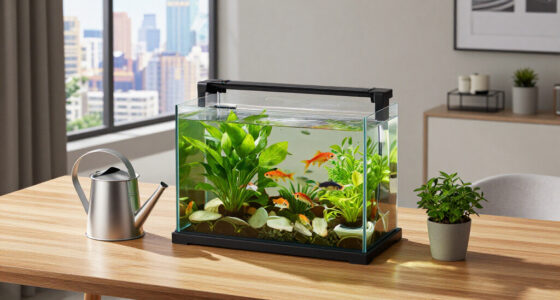
small pond water feature for garden
As an affiliate, we earn on qualifying purchases.
As an affiliate, we earn on qualifying purchases.
The Design Behind Aniston’s Pond
The Gardening Know How report frames Aniston’s garden as a source of inspiration, naming designer Stephen Shadley and describing the landscape as Japanese-inspired. It does not independently document the design process or say when the pond was built. The article’s focus is instead on translating the visual idea into choices homeowners can make for their own spaces.
For planting, Zawistowski suggests marginal plants such as iris and pickerelweed, water lilies for surface shade, and surrounding plants including Japanese maples, catmint, ornamental Carex and coneflowers. Romkee mentions ferns, Japanese iris and creeping ground cover, while cautioning that bamboo can be difficult to remove once planted. These are expert suggestions in the report, not a confirmed inventory of plants at Aniston’s home.
“Do you want fish?”
— Kendahl Kreps, director of marketing at Oase North America
As an affiliate, we earn on qualifying purchases.
Pond Details Remain Unreported
The supplied report does not state the pond’s dimensions, cost, construction details or maintenance schedule, and it does not identify the koi or describe how the feature is managed. Its references to Aniston’s property and the garden’s design are presented as context for the advice, not as a detailed account from Aniston or Shadley.
The recommendations about pond sizes, plants and care are attributed to the professionals interviewed. Requirements can vary with the design and location; the report does not provide site-specific guidance, a full cost comparison or a maintenance plan for any particular reader’s garden.
As an affiliate, we earn on qualifying purchases.
Choose a Feature Before Building
The report’s suggested next step for homeowners is to define what they want from a water feature—fish, sound, appearance or habitat—before settling on size and budget. Those considering koi should plan for adequate depth and filtration; people seeking water movement without fish can explore a pondless waterfall or another fish-free feature.
For a compact garden, the report identifies container ponds and raised features as possible approaches, while warning that smaller volumes can call for closer attention to temperature and water quality. It does not announce a project or a forthcoming development at Aniston’s home; the next decision described is for readers planning their own feature.
As an affiliate, we earn on qualifying purchases.
Key Questions
Does a small garden need a koi pond to get this look?
No. The report describes pondless waterfalls, container ponds and raised features as alternatives that can bring water and movement into smaller spaces. A pondless waterfall does not keep fish.
How deep should a koi pond be?
The report says koi need a minimum depth of 18 inches. Joe Zawistowski recommends three feet, citing protection from herons and more stable conditions. The appropriate design may depend on the site and the fish-care plan.
Are container ponds easier to maintain?
Not necessarily. The experts quoted say small water volumes can experience faster temperature swings and changes in water quality, so a container feature may need more frequent attention.
What design choices create a Japanese-inspired pond?
The report’s experts suggest an asymmetrical shape, a few carefully chosen stones, restrained planting and one focal feature. They advise against overcrowding the design with multiple fountains.
Which plants does the report recommend?
Suggestions include iris, pickerelweed and water lilies around or in the pond, with Japanese maples, ferns, catmint, Carex, coneflowers and creeping ground cover nearby. These are expert recommendations, not a verified list of plants at Aniston’s property.
Source: rss
Fall yard work Picks
leaf blowers
As an affiliate, we earn on qualifying purchases.