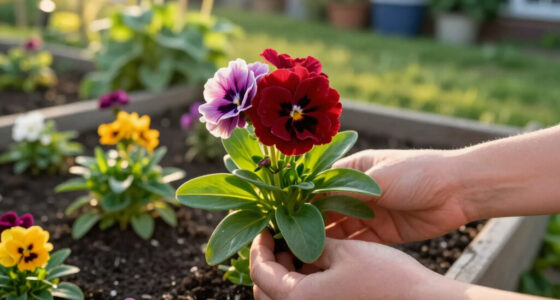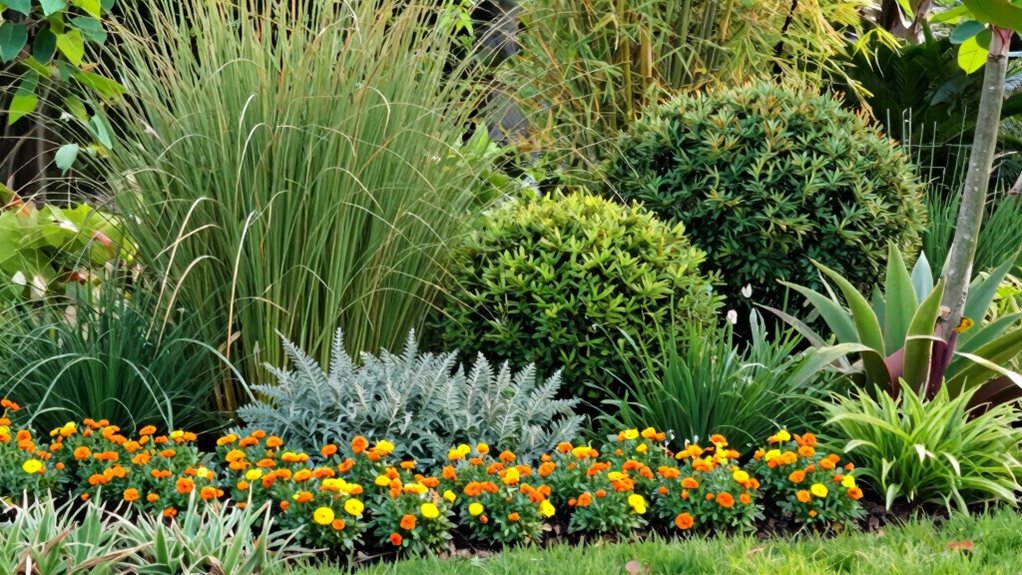

To layer plants for a healthy habitat without chaos, start by dividing your space into distinct levels: ground covers, mid-height shrubs, and taller trees or canopy plants. Group plants with similar needs, like sunlight and water, to keep things organized. Use vertical gardening elements like trellises or hanging baskets to add dimension. Keep things well-spaced to prevent overcrowding, and consider plant habits for growth management. Continue exploring how to create a balanced, thriving garden that stays orderly.

Get garden gear delivered free with Prime
- Fast, free delivery on millions of items
- Prime Video, Amazon Music and more included
- Member-only deals all year
Key Takeaways
- Organize plants into distinct ground cover, mid-height, and canopy layers to maintain structure and prevent overcrowding.
- Choose plants with compatible growth habits and similar needs to reduce competition and chaos.
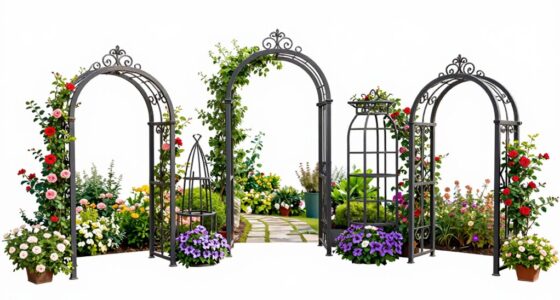
- Use vertical gardening elements like trellises and hanging baskets to add height without clutter.
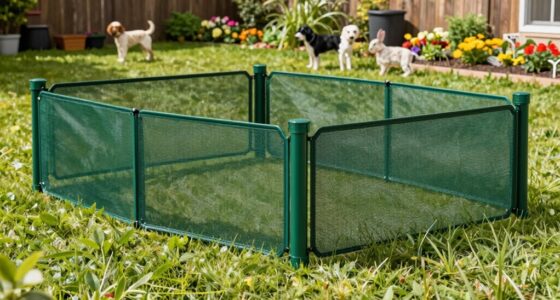
- Implement barriers or spacing for aggressive spreaders to contain growth and maintain order.
- Plan for seasonal crop rotation and biodiversity to sustain balance and reduce chaos over time.
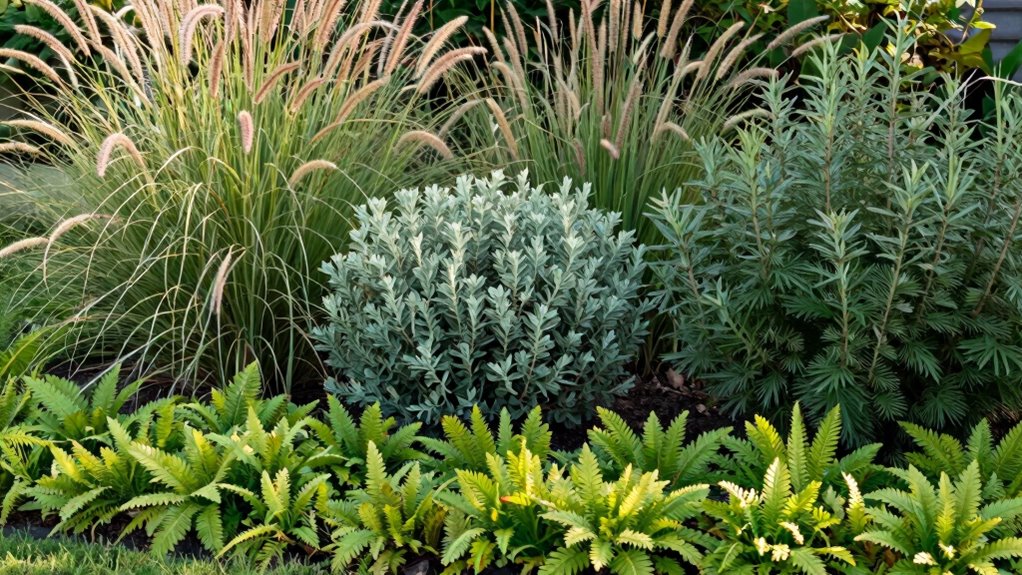
Start by visualizing your space in layers—ground cover, mid-height plants, and taller, canopy-forming species. With companion planting, you pair plants that benefit each other, whether by deterring pests, improving soil health, or providing mutual shade. For example, planting basil near tomatoes not only boosts flavor but also repels harmful insects. This strategic pairing helps keep pests at bay naturally, reducing the need for chemical interventions. When you incorporate vertical gardening, you add height and dimension, giving you room for more plants without crowding the ground. Using trellises, wall-mounted planters, or hanging baskets, you can grow vining plants like beans or cucumbers up walls and supports, freeing up ground space for root vegetables or ground covers.
Visualize your garden in layers and use vertical space to maximize growth and diversity naturally.
As you layer your plants, keep in mind that each level should complement the others. The bottom layer might include dense ground covers or low-growing herbs that suppress weeds and provide habitat for beneficial insects. The middle layer can feature shrubs or bushy plants that attract pollinators and provide shelter. The top layer should consist of taller plants or trees that offer shade and nesting sites for birds and other wildlife. By maintaining this hierarchy, you prevent your garden from becoming a tangled mess, instead creating a structured habitat that’s easy to maintain. Additionally, understanding plant growth habits can help you manage space effectively, ensuring each plant has enough room to thrive. Incorporating knowledge about plant growth habits can guide your planning and prevent overcrowding. Recognizing how plants spread or grow vertically allows for better space utilization, making your garden more efficient and attractive.
Good planning is essential. Think about sunlight, water needs, and growth habits of each plant to avoid overcrowding or competition. Group plants with similar requirements together, and rotate crops seasonally to prevent soil depletion. Be mindful of how plants grow—some spread aggressively, so give them enough space or use barriers to contain them. Incorporating biodiversity into your garden helps support a resilient ecosystem and encourages beneficial species to thrive. This way, your layered garden remains organized and functional, supporting a variety of species without chaos.
vertical garden trellises for plants
As an affiliate, we earn on qualifying purchases.
As an affiliate, we earn on qualifying purchases.
Frequently Asked Questions
How Do I Choose Plants That Thrive Together in Layered Habitats?
Choose plants that support plant diversity and thrive together by considering their soil compatibility. Mix deep-rooted and shallow-rooted species to create multi-layered habitats. Observe each plant’s sunlight needs and water requirements to guarantee compatibility. Incorporate native plants suited to your soil type for better growth. By selecting compatible species and varying heights, you build a dynamic, balanced habitat that prevents chaos and promotes healthy, thriving plant communities.
What Are Common Mistakes to Avoid When Layering Plants?
You should avoid overcrowding plants, which can hinder growth and make pest prevention difficult. Don’t forget to practice companion planting; pairing compatible plants boosts pest prevention naturally. Keep in mind that mixing too many different species without considering their needs can create chaos. Regularly monitor and prune your layered habitat to maintain balance, ensuring plants do not compete excessively and that pest issues are minimized effectively.
How Can I Ensure Proper Drainage in Layered Plant Habitats?
To guarantee proper drainage in layered plant habitats, you should focus on soil aeration and water retention. Use well-draining soil mixes that include sand or gravel to prevent water from pooling. Layer plants so that taller ones don’t block airflow to the soil, and consider adding a gravel or coarse material at the bottom for extra drainage. Regularly check moisture levels, and adjust watering to avoid over-saturating the soil.
Which Plants Are Best for Creating a Natural Look?
You should choose plants like ferns, ground covers, and tall grasses for a natural look. These create appealing plant pairings that blend seamlessly, enhancing aesthetic balance. Mix varying heights and textures to mimic nature’s diversity, avoiding clutter. Select plants that thrive in similar conditions, ensuring they grow harmoniously. This approach results in a lush, authentic habitat that feels both spontaneous and well-planned, making your space inviting and visually appealing.
How Do I Maintain Balance Between Plant Heights and Density?
Balance begins by blending plant heights and densities wisely. You should prune plants regularly to control growth and maintain structure, ensuring taller plants don’t overshadow shorter ones. Simultaneously, boost soil fertility with nutrients to support healthy, balanced growth. By pruning proactively and enriching soil, you create a harmonious habitat, preventing chaos while keeping the landscape lively and layered. Consistent care keeps the plant palette both pleasing and perfectly balanced.
hanging baskets for climbing plants
As an affiliate, we earn on qualifying purchases.
As an affiliate, we earn on qualifying purchases.
Conclusion
By thoughtfully layering your plants, you craft a habitat that’s as harmonious as a symphony, inviting nature’s delicate balance to thrive. Remember, each plant plays its part in creating a lush, welcoming environment without chaos. With patience and an eye for detail, you’ll build a vibrant, sustainable space that feels alive—like a well-tended tapestry woven from nature’s finest threads. Keep experimenting, and watch your habitat flourish into a masterpiece of natural artistry.
garden barriers for aggressive spreaders
As an affiliate, we earn on qualifying purchases.
As an affiliate, we earn on qualifying purchases.
plant layering guides for gardens
As an affiliate, we earn on qualifying purchases.
As an affiliate, we earn on qualifying purchases.
Fall Picks
fall essentials
As an affiliate, we earn on qualifying purchases.