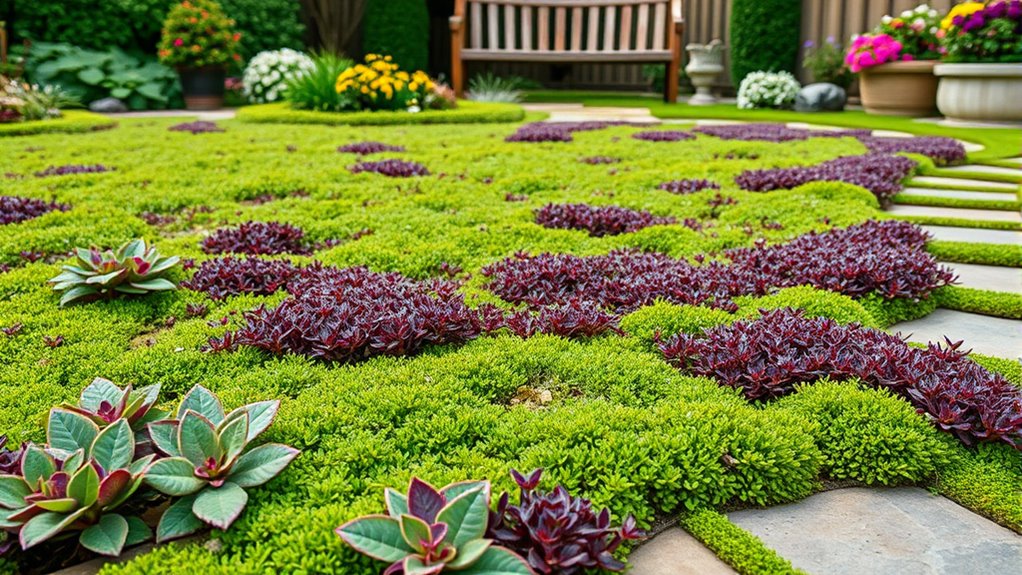

If you’re looking for low-mow lawn alternatives, consider using native grasses that thrive naturally in your region, requiring less water, fertilizer, and mowing. You can also adopt xeriscaping principles by replacing traditional turf with drought-tolerant plants, ornamental grasses, and ground covers, which need minimal maintenance. These options help create resilient, eco-friendly landscapes that look lush and reduce your yard work. Keep exploring to discover how these solutions can transform your outdoor space effortlessly.
Key Takeaways
- Native grasses require less mowing, water, and fertilizers, supporting sustainable lawn alternatives.
- Xeriscaping minimizes maintenance by replacing traditional turf with drought-tolerant plants and ground covers.
- Using native grasses enhances ecosystem support and provides habitat for local wildlife with minimal upkeep.
- Drought-resistant landscaping options reduce water bills and decrease the frequency of mowing and landscape maintenance.
- Deep-rooted native plants create resilient, erosion-resistant landscapes that need less mowing and watering over time.
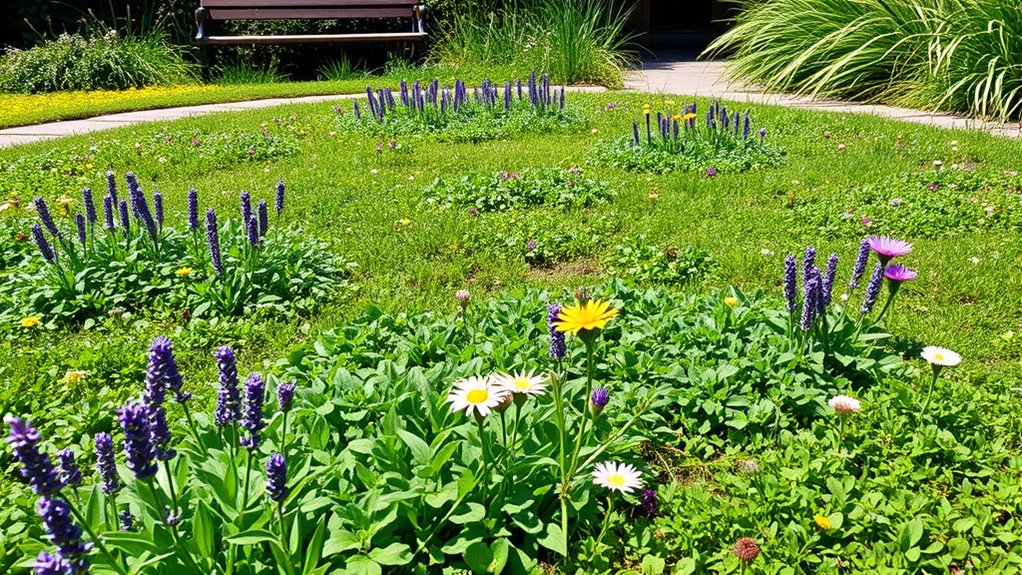
Many homeowners are seeking low-maintenance lawn options that reduce mowing frequency without sacrificing curb appeal. If you’re looking for ways to cut down on lawn work while maintaining a beautiful yard, exploring native grass and xeriscaping options can be game-changers. Native grasses are adapted to your region’s climate and soil, meaning they require less water, fertilizer, and mowing. By planting native grass species, you can enjoy a lush, green appearance with minimal upkeep. These grasses often grow at a slower pace, so you won’t need to mow as frequently, and they tend to resist pests and diseases better than non-native varieties. Plus, native grasses help support local ecosystems by providing habitat for native insects and birds, making your yard not only low-maintenance but environmentally friendly. Incorporating native grasses can also foster a sense of connection to the natural environment around your home.
Xeriscaping options further reduce your lawn care chores by emphasizing drought-tolerant plants and landscape designs that minimize water usage. Instead of a traditional grass lawn, you can incorporate native grasses, ornamental grasses, and drought-resistant ground covers that thrive with little watering once established. This approach often involves replacing large swaths of traditional turf with gravel, mulch, or rock features, which considerably cut down on mowing requirements. When you choose xeriscaping, you’re creating a landscape that’s less prone to overgrowth, so you won’t have to mow as often—sometimes only once or twice a season. Additionally, xeriscaping can include native plants that flourish with minimal irrigation, further reducing your water bill and maintenance time.
Both native grass and xeriscaping options also offer aesthetic flexibility. You can create a natural, meadow-like look that blends seamlessly with your surroundings or design a more structured landscape using native grasses combined with drought-tolerant shrubs and wildflowers. These choices not only lessen your mowing chores but also contribute to water conservation efforts, especially in regions prone to drought. Moreover, native grasses tend to develop deep root systems, making your landscape more resilient against drought and soil erosion, which means less intervention on your part.
Transitioning to native grasses and xeriscaping isn’t just about reducing work; it’s about creating a sustainable, beautiful yard that aligns with your lifestyle and environmental values. It allows you to enjoy your outdoor space without the constant maintenance demands of a traditional lawn. By choosing these options, you’re making a smart investment in a landscape that’s easier to care for, eco-friendly, and visually appealing all year round. Embracing native plant selection can further enhance the sustainability and low-maintenance qualities of your landscape.
Frequently Asked Questions
Are Low-Mow Lawns Suitable for All Climates?
Low-mow lawns aren’t suitable for all climates because their climate adaptability varies. You need to take into account your local conditions, like temperature and rainfall, to ensure they thrive. Also, check soil compatibility—some low-mow options prefer well-drained or specific soil types. If your area has extreme weather or soil issues, these lawns might not be the best choice. Always research your climate and soil before choosing a low-mow lawn alternative.
How Do Low-Mow Lawns Affect Local Wildlife?
Low-mow lawns can positively impact local wildlife by creating a more diverse wildlife habitat. They support greater plant diversity, attracting insects, birds, and small mammals that thrive in varied vegetation. By avoiding frequent mowing, you allow native plants and grasses to flourish, which benefits pollinators and other wildlife. This natural approach fosters a healthier ecosystem, making your yard a crucial part of local biodiversity.
What Are the Maintenance Costs of Alternative Lawn Options?
You’ll find that the maintenance costs of alternative lawn options vary, but generally, they’re more affordable than traditional lawns. The cost comparison shows lower expenses due to less frequent mowing and fertilizing. You won’t need to spend much on upkeep because these alternatives, like native grasses or groundcovers, require less maintenance frequency, saving you time and money while keeping your yard eco-friendly and attractive.
Can Low-Mow Lawns Be Used for Recreational Activities?
Yes, low-mow lawns can be used for recreational activities, but you should prioritize playground safety. These lawns often need less mowing frequency, so they stay manageable and safe for activities like casual play or picnics. However, avoid heavy use that could damage the grass. Regularly check the area for hazards, maintain proper mowing, and make certain the turf remains even and safe for everyone enjoying the space.
Do Low-Mow Lawn Alternatives Require Special Soil Preparation?
Did you know that proper soil preparation can boost grass growth by up to 30%? You’ll need to do some soil prep when installing low-mow lawn alternatives, including aerating and amending the soil if necessary. Selecting the right seed is vital, too. Focus on high-quality seed suited for low-mow options, and guarantee your soil has proper nutrients and drainage to support healthy growth and maintenance.
Conclusion
By choosing low-mow lawn alternatives, you’re not just saving time—you’re revolutionizing your outdoor space into a wild, vibrant sanctuary that rivals nature itself. Imagine a yard so lush and untamed, it feels like stepping into a secret garden, bursting with life and color. Say goodbye to boring, high-maintenance lawns and hello to a breathtaking paradise that will leave everyone in awe. Your yard won’t just be a backyard; it’ll be an awe-inspiring masterpiece of nature!