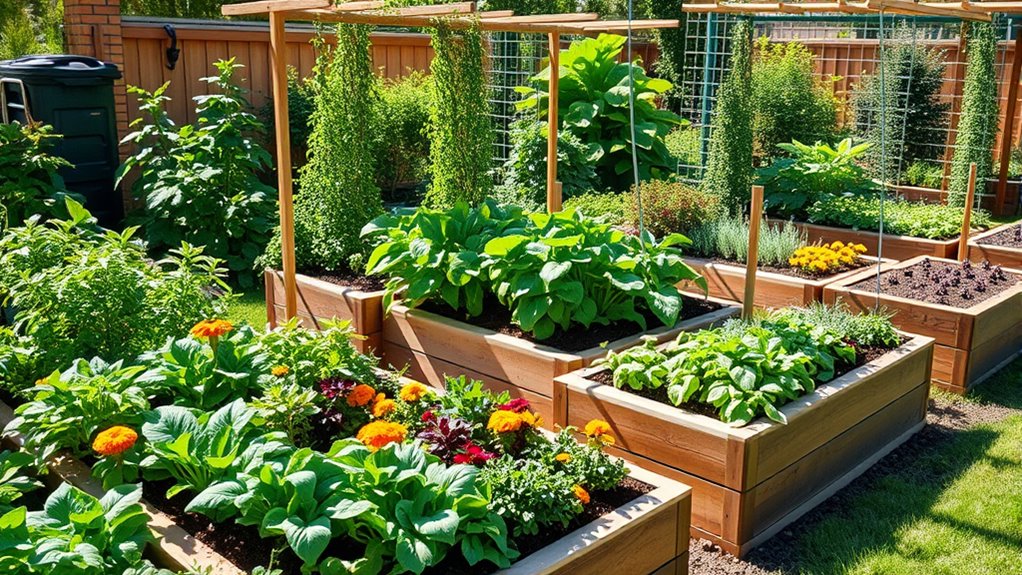

Design your pest-savvy kitchen garden by grouping plants based on their resistance and compatibility, such as interplanting basil near tomatoes or using marigolds to deter nematodes. Incorporate physical barriers like row covers and place trap crops at the edges to attract pests away. Proper spacing and crop rotation help break pest cycles, while blending pest-repelling plants throughout boosts natural defenses. Continue exploring to discover how these strategies come together for a healthier garden environment.
Open a free Amazon Business account
Business pricing, bulk buying and tax-exempt orders.
As an affiliate, we earn on qualifying purchases.
Key Takeaways
- Incorporate pest-repelling companion plants like basil and marigolds throughout the garden to naturally deter pests.
- Distribute vulnerable crops evenly and avoid dense clusters to reduce pest breeding hotspots.
- Use trap crops at the garden edges, such as nasturtiums for aphids, to attract pests away from main vegetables.
- Install physical barriers like netting or row covers around susceptible plants for added protection.
- Rotate crops seasonally and integrate biodiversity to interrupt pest life cycles and prevent buildup.
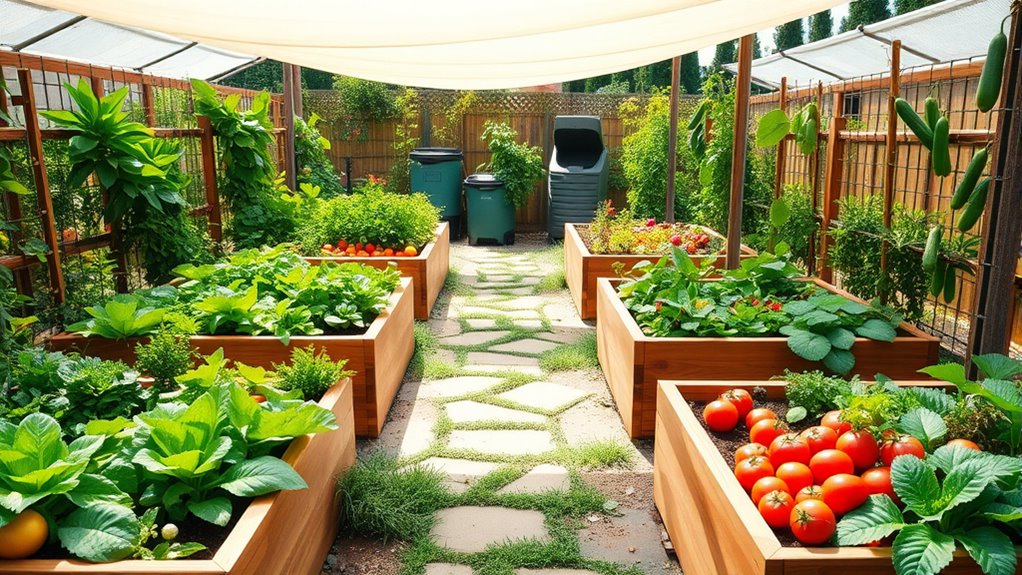
Have you ever wondered how to organize your kitchen garden for maximum efficiency and beauty? One of the key elements is designing a layout that naturally deters pests while promoting healthy growth. To do this effectively, you need to incorporate pest control strategies and companion planting techniques into your plan. A thoughtful layout isn’t just about aesthetics; it’s about creating an environment that minimizes pest issues without relying heavily on chemicals.
Start by grouping plants based on their pest resistance and compatibility. Companion planting techniques are invaluable here. For example, planting basil near tomatoes can help repel pests like aphids and whiteflies, while marigolds work well alongside many vegetables to deter nematodes and beetles. By strategically placing these companion plants throughout your garden, you create a natural pest barrier that reduces the need for chemical interventions. This approach not only protects your crops but also enhances biodiversity, attracting beneficial insects such as ladybugs and pollinators that keep pest populations in check.
Design your layout with pest hotspots in mind. Avoid creating large, dense clusters of susceptible plants, which can become breeding grounds for pests. Instead, distribute these plants evenly, intermixing them with pest-repelling companions. For example, intersperse carrots with onions or garlic, which can help repel nematodes and other pests. Incorporating crop rotation plans into your layout also helps prevent pest buildup; rotating families of vegetables each season disrupts pest life cycles, reducing infestations over time.
Another smart pest control strategy involves planting trap crops at the edges of your garden. These are plants that attract pests away from your main crops. For instance, planting nasturtiums near your cucumbers can lure aphids away, safeguarding your more vulnerable plants. Positioning these trap crops at the perimeter of your garden acts as a first line of defense, drawing pests outward before they reach your valuable vegetables.
Additionally, ensure your garden layout includes physical barriers like row covers, netting, or fencing, especially around vulnerable plants. Proper spacing between plants improves air circulation and reduces humidity, creating an environment less inviting to pests and diseases. Regularly inspecting your garden and removing infested plants or pests by hand is also part of an effective pest control strategy that complements your layout design.
garden row covers for pest protection
As an affiliate, we earn on qualifying purchases.
As an affiliate, we earn on qualifying purchases.
Frequently Asked Questions
How Can I Attract Natural Pest Predators to My Garden?
To attract natural pest predators, you should create a habitat that supports beneficial insects. Plant a diverse range of flowers and herbs to provide nectar and pollen, which attract beneficial insects like ladybugs and lacewings. Avoid pesticides and leave some undisturbed areas to serve as shelter. By promoting habitat diversity, you’ll encourage beneficial insects to stay and help control pests naturally in your garden.
What Are the Best Companion Plants for Pest Control?
You should plant companions like marigolds, basil, and nasturtiums to attract beneficial insects and support natural pest predators. These plants create beneficial insect habitats, encouraging helpful bugs to stay in your garden. Additionally, using trap crop strategies with plants like radishes or mustard can lure pests away from your main crops. This combination helps reduce pests naturally, keeping your garden healthier and more productive.
How Do I Prevent Pests From Spreading Between Garden Zones?
Prevent pests from spreading like wildfire by using barrier techniques and zone separation. You should create physical barriers like row covers and netting around vulnerable plants, and keep different zones clearly separated with pathways or edging. This not only limits pest movement but also makes it easier to monitor and manage infestations. Regularly inspect zones, maintain clean borders, and rotate crops to keep pests from establishing a foothold across your garden.
Are Organic Pest Control Methods Effective in Small Gardens?
Yes, organic pest control methods are effective in small gardens. You can attract beneficial insects like ladybugs and lacewings to naturally reduce pests, and use organic sprays such as neem oil or insecticidal soap to target specific issues. These methods are safe for your plants and environment, offering a sustainable way to keep pests in check while promoting healthy, productive garden growth.
How Often Should I Inspect My Garden for Pests?
Think of pest monitoring as your garden’s heartbeat—regular, essential, and watchful. You should inspect your garden at least once a week, especially during peak growing seasons. An inspection schedule keeps pests at bay before they take root. Walk through your garden with keen eyes, checking leaves, stems, and soil. By staying vigilant and consistent, you catch trouble early, letting your garden flourish with healthy, pest-free bounty.
companion planting guide for vegetables
As an affiliate, we earn on qualifying purchases.
As an affiliate, we earn on qualifying purchases.
Conclusion
By choosing the right kitchen garden layout, you unveil the secret to a thriving, pest-resistant oasis right outside your door. With strategic planning and thoughtful design, you’ll turn your garden into a lush paradise that outshines even the most meticulously curated botanical wonders. Embrace these layouts, and you’ll transform your space into a sanctuary of fresh, organic bounty—an achievement so grand, it redefines what a backyard garden can be. Your green thumb’s masterpiece awaits!
trap crop plants for pest control
As an affiliate, we earn on qualifying purchases.
As an affiliate, we earn on qualifying purchases.
garden netting for vegetable protection
As an affiliate, we earn on qualifying purchases.
As an affiliate, we earn on qualifying purchases.
Fall yard work Picks
leaf blowers
As an affiliate, we earn on qualifying purchases.