Planting pollinator strips along your vegetable beds attracts beneficial insects like bees, butterflies, ladybugs, and hoverflies. These insects improve pollination, boost crop yields, and naturally control pests. Choose native flowers that bloom at different times to provide a continuous food source and support ecosystem health. Plus, these strips add color and beauty to your garden while requiring minimal maintenance. If you’re interested in creating a thriving, productive garden, keep exploring how to set up effective pollinator strips.

Get garden gear delivered free with Prime
- Fast, free delivery on millions of items
- Prime Video, Amazon Music and more included
- Member-only deals all year
Key Takeaways
- Plant native, bee-friendly flowers along vegetable beds to attract beneficial insects and improve pollination.
- Use a variety of blooming plants that provide continuous nectar and pollen throughout the growing season.
- Incorporate pollinator strips to naturally control pests by attracting predator insects like ladybugs and hoverflies.
- Create a habitat refuge for pollinators, supporting biodiversity and ecosystem resilience around vegetable gardens.
- Design colorful, easy-to-maintain borders that enhance garden aesthetics while boosting pollination and pest control.
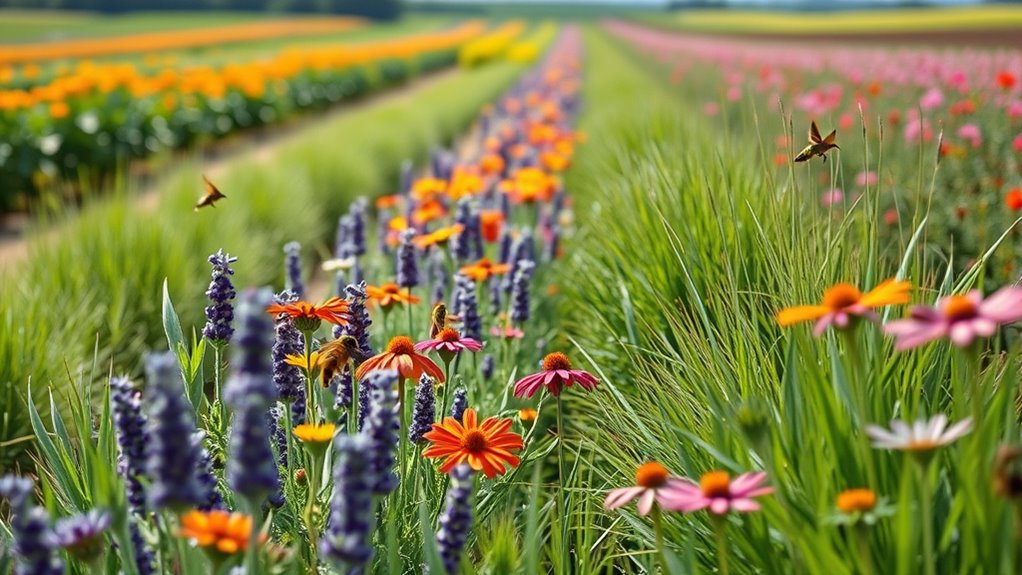
Planting pollinator strips along your vegetable beds can considerably boost your garden’s productivity by attracting beneficial insects like bees and butterflies. These insects are essential for pollination, which directly impacts your crops’ fruit and vegetable yields. To maximize this benefit, choose bee friendly plants that are well-suited to your climate and soil conditions. Plants such as wildflowers, lavender, and bee balm not only attract pollinators but also provide them with nectar and pollen sources throughout the growing season. When you incorporate these plants into your strips, you create a thriving habitat that encourages a diverse array of beneficial insects.
Plant pollinator strips with native flowers to boost yields and attract beneficial insects naturally.
By establishing bee friendly plants along your garden edges, you also improve pest control naturally. Many of these beneficial insects are predators or parasites of common garden pests. For example, ladybugs, which are attracted to certain pollinator plants, feast on aphids, reducing the need for chemical pesticides. Similarly, hoverflies lay their eggs on pest populations, and their larvae feed on aphids and other soft-bodied insects. Encouraging these natural pest control agents helps keep your vegetable beds healthy and minimizes chemical intervention. The presence of pollinator strips creates a balanced ecosystem where beneficial insects can thrive, leading to fewer pest outbreaks and healthier plants.
Furthermore, pollinator strips serve as a refuge for pollinating insects during times of bad weather or when food sources are scarce elsewhere. As you plant bee friendly plants, you’re providing a critical habitat that supports the entire pollinator community. This not only benefits your garden but also contributes to local biodiversity. When planning your strips, consider planting a variety of bee friendly plants that bloom at different times to ensure a continuous food supply. This diversity promotes a resilient pollinator population, which in turn boosts pollination rates for your vegetables.
In addition to enhancing pollination and pest control, pollinator strips add aesthetic value to your garden. They create colorful, natural borders that contrast beautifully with your vegetable beds. Plus, they attract butterflies, which can turn your garden into a lively, fluttering landscape. These strips are easy to maintain—simply plant, water, and occasionally weed to keep the area flourishing. Over time, they become self-sustaining ecosystems that support both pollinators and your vegetable crops, making your gardening efforts more effective and sustainable.
Additionally, planting a variety of bee friendly plants can help support pollinator health, which is vital for sustainable gardening practices.
pollinator strips native flower seeds
As an affiliate, we earn on qualifying purchases.
As an affiliate, we earn on qualifying purchases.
Frequently Asked Questions
How Do Pollinator Strips Affect Vegetable Crop Yields?
Pollinator strips boost your vegetable crop yields by enhancing pollination, which leads to better fruit and vegetable production. By attracting beneficial insects, these strips improve pollination efficiency naturally, reducing the need for manual intervention. As a result, you’ll see a noticeable crop yield improvement, making your garden more productive. Incorporating pollinator strips is a simple and effective way to support pollination enhancement and maximize your vegetable harvest.
What Are the Best Native Plants for Pollinator Strips?
You’ll be amazed at how native plant selection can boost your garden’s pollinator diversity! Opt for plants like bee balm, purple coneflowers, black-eyed Susans, and milkweed—they thrive locally and attract a variety of pollinators. These plants are hardy, support biodiversity, and create vibrant pollinator strips. By choosing the right native species, you’ll turn your vegetable beds into buzzing, flourishing ecosystems that naturally enhance pollination and crop yields.
Can Pollinator Strips Attract Pests to Vegetable Beds?
Pollinator strips can attract pests to vegetable beds if not managed properly. However, they also promote beneficial insect balance, which helps control pest populations naturally. To minimize pest attraction, choose native plants that attract pollinators but aren’t appealing to pests and maintain healthy plant diversity. Regular monitoring and proper maintenance guarantee that pollinator strips support beneficial insects while keeping pest levels in check, protecting your vegetable crops effectively.
How Long Does It Take for Pollinator Strips to Establish?
You can expect your pollinator strip to establish within a few months, typically around 3 to 6 months, depending on the plants and conditions. During this pollinator strip duration, native flowers and plants will grow and attract beneficial insects, strengthening the ecosystem. Keep in mind that the establishment timeline varies based on soil quality, watering, and plant species. Patience is key to creating a thriving pollinator habitat.
Are There Specific Maintenance Tips for Pollinator Strips?
You should regularly perform plant pruning to keep pollinator strips healthy and prevent overgrowth. Focus on removing dead or diseased plants, which encourages new growth and maintains diversity. Weed management is also vital; pull weeds promptly to prevent competition with native plants. Mulching can help suppress weeds and retain moisture. Regularly monitor your strips, and avoid using chemicals that could harm pollinators, ensuring a thriving habitat.
bee friendly plants for vegetable garden
As an affiliate, we earn on qualifying purchases.
As an affiliate, we earn on qualifying purchases.
Conclusion
By planting pollinator strips alongside your vegetable beds, you invite a bustling army of bees and butterflies that boost your harvest. These strips act like a trusty 18th-century garden guide, ensuring your crops flourish naturally. Remember, a simple act like this can make your garden more vibrant and productive. So, don’t delay—embrace this timeless method and watch your garden thrive like a scene from a Dorothy Sayers novel. Your plants will thank you!
wildflower seed mix for pollinator garden
As an affiliate, we earn on qualifying purchases.
As an affiliate, we earn on qualifying purchases.
beneficial insect attractant plants
As an affiliate, we earn on qualifying purchases.
As an affiliate, we earn on qualifying purchases.
Fall yard work Picks
leaf blowers
As an affiliate, we earn on qualifying purchases.