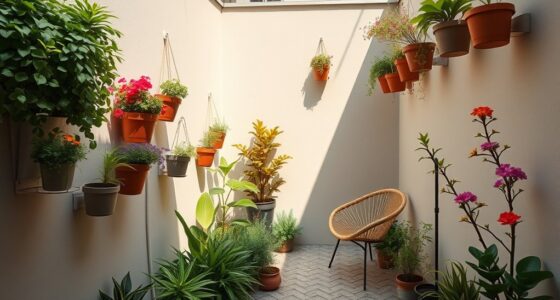
Rain gardens help manage mosquito issues by improving stormwater absorption and reducing stagnant water where mosquitoes breed. By designing them with native plants, you encourage healthier ecosystems that filter pollutants and promote quick water infiltration. Proper maintenance keeps water flowing and prevents pooling, which cuts down mosquito habitats. If you want to learn how to optimize your rain garden for mosquito control and keep your yard healthier, there’s more valuable information coming up.
Key Takeaways
- Properly designed rain gardens reduce stagnant water, limiting mosquito breeding habitats.
- Native plants in rain gardens help improve water absorption and prevent water pooling.
- Regular maintenance ensures effective drainage, minimizing mosquito larval development.
- Rain gardens filter stormwater pollutants, enhancing water quality and reducing standing water risks.
- Strategically positioned rain gardens in low-lying areas intercept runoff, decreasing mosquito breeding sites.
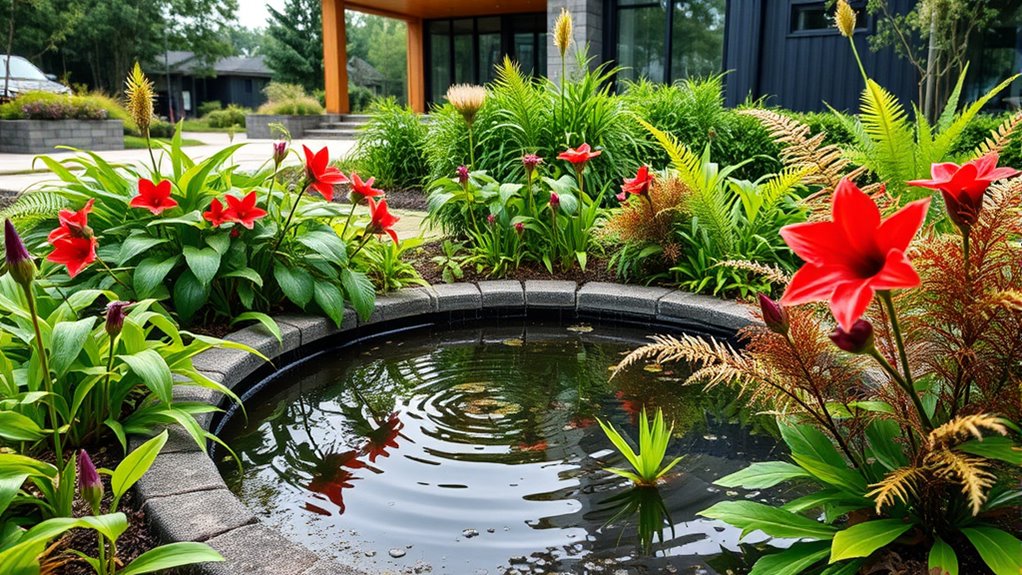
Rain gardens are a smart, eco-friendly way to manage stormwater, but they also play a role in controlling mosquito populations. When designed properly, rain gardens facilitate stormwater filtration, allowing rainwater to soak into the ground rather than pooling on surfaces. This process helps prevent the stagnant water that mosquitoes need for breeding. One key to effective rain garden design is selecting the right native plants. Native plant selection is essential because these plants are adapted to your local environment, requiring less maintenance and water, and they help improve filtration by establishing deep roots that break up soil and increase absorption capacity.
Choosing native plants enhances rain garden filtration and reduces mosquito breeding by promoting healthy, deep-rooted ecosystems.
By choosing native plants, you create a balanced ecosystem that naturally reduces standing water. These plants often grow quickly and densely, filling in spaces where water might otherwise collect. Their roots also help filter pollutants from stormwater, improving water quality as it percolates through the soil. When water is absorbed efficiently, there’s less opportunity for it to stagnate in low spots or containers that could become mosquito breeding grounds. Additionally, native plants tend to attract beneficial insects and pollinators, supporting local biodiversity and creating a healthier environment overall.
Proper stormwater filtration through your rain garden not only reduces runoff but also minimizes the risk of mosquito larvae developing in standing water. When designing your garden, focus on creating a slightly sloped basin that directs water toward the planting zone, where native plants can do their work. Incorporate layers of mulch and organic matter to enhance soil permeability and filtration capacity. This setup ensures that water moves quickly through the garden, decreasing the time it remains stagnant. Also, avoid planting in areas where water tends to pool persistently or where drainage is poor, as these spots can still become mosquito habitats.
You should also consider the size and placement of your rain garden. A well-positioned garden in a low-lying area of your yard can intercept runoff from nearby surfaces, reducing overall mosquito breeding sites. Regular maintenance is important too; removing debris, trimming plants, and ensuring proper drainage will keep water flowing smoothly and prevent unintended pooling. By integrating native plant selection into your rain garden design, you harness nature’s own filtration system, creating a sustainable solution that manages stormwater effectively while keeping mosquito populations in check. Implementing native plant selection techniques enhances the overall effectiveness of your garden by supporting a resilient ecosystem that naturally controls standing water and promotes biodiversity. This approach promotes a healthier landscape that benefits both your family and the environment.
Frequently Asked Questions
Can Rain Gardens Completely Eliminate Mosquito Breeding Sites?
Rain gardens can’t completely eliminate mosquito breeding sites, but they markedly reduce standing water where mosquitoes thrive. By designing your rain garden to drain efficiently and avoid stagnant water, you limit mosquito habitats around your property. Regular maintenance is essential to prevent any remaining standing water from becoming breeding grounds. While they help control mosquito populations, you should also eliminate other sources of stagnant water nearby for the best results.
How Often Should Rain Gardens Be Maintained for Mosquito Control?
Maintaining your rain garden is like tending a garden to keep pests away; you should inspect it at least once a week, especially after heavy rains. Regular rain garden inspection helps you spot and eliminate standing water, reducing mosquito habitats. To keep mosquito breeding sites at bay, commit to consistent maintenance, removing debris and stagnant water promptly. This proactive approach guarantees your garden remains both beautiful and mosquito-free.
Do Rain Gardens Attract Beneficial Insects That Prey on Mosquitoes?
Yes, rain gardens attract beneficial insects that prey on mosquitoes, enhancing natural mosquito control. By providing standing water and lush vegetation, you create an environment where beneficial insects like dragonflies and damselflies thrive. These insects actively engage in mosquito predation, reducing mosquito populations naturally. Maintaining your rain garden properly encourages these helpful insects, making your yard a more balanced ecosystem and decreasing the need for chemical mosquito control methods.
Are Rain Gardens Effective in Urban Areas With High Mosquito Populations?
Yes, rain gardens can be effective in urban areas with high mosquito populations. They help manage urban runoff by filtering stormwater, reducing stagnant water where mosquitoes breed. By promoting proper drainage and absorption, rain gardens decrease standing water, making it harder for mosquitoes to lay eggs. Additionally, they attract beneficial insects that prey on mosquitoes, further helping control the mosquito population naturally.
What Are the Best Plants to Include in a Mosquito-Repellent Rain Garden?
You should select plants known for their mosquito deterrent properties, like citronella, lavender, marigolds, and catnip, for your rain garden. These plants act as natural mosquito repellents, making your garden less attractive to mosquitoes. When choosing plants, focus on species with strong scents or oils that deter these insects, ensuring effective plant selection for a mosquito-repellent rain garden. This strategy helps reduce mosquito presence naturally.
Conclusion
By installing rain gardens, you’re not just managing stormwater—you’re creating a powerful barrier against mosquitoes that could overrun your yard. Imagine turning a potential breeding nightmare into a lush, beautiful oasis that keeps pests at bay. With just a little effort, you’ll transform your landscape into a fortress of mosquito control, making your outdoor space one of the safest and most enjoyable places to relax. It’s a simple change that can save you from mosquito madness!