
To design a rainwater catchment layout that makes garden sense, start by positioning clean, debris-free rooftops with proper gutters to direct water efficiently into storage tanks placed near your collection surfaces. Use first-flush diverters and inlet filters to keep water quality high and prevent clogging. Place tanks in shaded, accessible spots to reduce algae growth and maintenance. A good layout minimizes stagnation and runoff while maximizing water use. Keep exploring to learn more about creating an effective and sustainable system.

Get garden gear delivered free with Prime
- Fast, free delivery on millions of items
- Prime Video, Amazon Music and more included
- Member-only deals all year
Key Takeaways
- Position gutters to efficiently channel water into nearby storage tanks, minimizing runoff and erosion.
- Place storage tanks in shaded, accessible spots to reduce algae growth and facilitate maintenance.
- Incorporate first-flush diverters and inlet filters to ensure high water quality and prevent debris clogging.
- Design the layout to promote smooth water flow, avoiding stagnation and mosquito breeding risks.
- Use water-saving techniques like drip irrigation to maximize harvested rainwater and support garden health.

Designing an effective rainwater catchment layout is essential to maximize water collection and guarantee a reliable supply. When you plan your system thoughtfully, you’re not just capturing rainwater—you’re also contributing to better stormwater management. Properly designed catchment areas help reduce runoff, prevent erosion, and lessen the strain on municipal drainage systems. This approach supports sustainable water practices and promotes healthier gardens. By focusing on layout, you secure your garden remains resilient, even during dry spells.
Effective rainwater catchment design boosts water collection, supports stormwater management, and ensures a resilient, sustainable garden.
Your first step is to select the best collection surfaces. Typically, rooftops serve as the primary catchment area because they’re large and easy to direct water from. Make sure your roof is clean and free of debris, which could contaminate your water supply. Position gutters to efficiently channel water into storage tanks, avoiding obstructions that could cause overflow or leaks. When planning your layout, consider the slope of your roof and gutters; a slight incline helps water flow smoothly into your collection system, minimizing stagnation and potential mosquito breeding grounds.
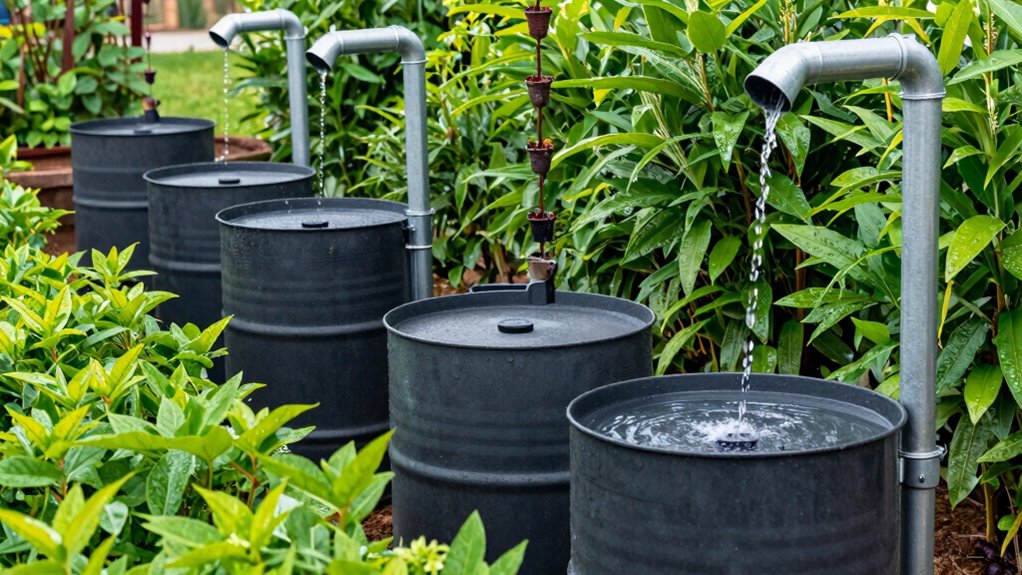
Next, you need to position your storage tanks strategically. Place them close to your collection surfaces but also in a shaded area if possible, to slow algae growth and reduce evaporation. Remember, the goal is to keep your water clean and accessible. Installing first-flush diverters is a smart move—they discard initial runoff that may carry dirt, bird droppings, or other contaminants, improving water quality for your garden. When designing your layout, ensure the tanks are easy to access for maintenance and cleaning. Incorporating filters at the inlet to prevent debris from entering and clogging your system is crucial for maintaining water quality. Additionally, proper layout planning can help optimize water flow and prevent stagnation within your system. Understanding the importance of water conservation can further enhance the efficiency of your setup. Moreover, implementing efficient water distribution methods ensures your harvested rainwater is used effectively across your garden. Using water-saving techniques such as drip irrigation can also significantly reduce water waste and improve garden health. Recognizing the impact of stormwater management can further improve your system’s environmental benefits and overall sustainability.
Products Worth Considering

Rachio 3 Smart Sprinkler In-Ground WiFi Irrigation Controller, 8-Zone

EGO POWER+ 21-Inch Cordless Self-Propelled Lawn Mower Kit, LM2135SP

Greenworks 48V Cordless Lawn Care Combo Kit with 20-Inch Mower, Trimmer, Blower, Batteries, and Charger
As an affiliate, we earn on qualifying purchases.
Frequently Asked Questions
How Much Rainwater Can a Typical Catchment System Collect Annually?
You can typically collect around 600 to 2,000 gallons of rainwater annually, depending on your catchment size and local rainfall. To maximize catchment efficiency, guarantee your system is properly installed and maintained. Good rainwater quality depends on clean gutters and filters, preventing debris. Regularly check for leaks and contaminants to keep your system efficient and your water safe for garden use or other purposes.
What Are the Best Materials for Constructing a Rainwater Catchment System?
You’ll want to choose materials like food-grade polyethylene, corrugated metal, or concrete for your rainwater catchment system, since they’re durable and resistant to weather. These materials also support effective rainwater filtration, ensuring clean water flows smoothly. Steel and PVC are popular too, but make sure they’re rated for water storage. Durable, non-toxic materials help your system last longer and keep your garden’s water safe and healthy.
How Do I Prevent Mosquito Breeding in Rainwater Storage?
To prevent mosquito breeding in your rainwater storage, cover your tanks with tight-fitting lids or screens to block out mosquitoes, ensuring effective mosquito prevention. Regularly inspect and clean your system to remove debris and stagnant water. Use water treatment options like adding mosquito dunks or larvicides when necessary, which help target larvae without harming your plants. Staying vigilant and maintaining proper water management keeps your rainwater safe and mosquito-free.
What Maintenance Is Required to Keep the System Functioning?
Did you know that proper maintenance can extend your rainwater system’s lifespan by up to 50%? To keep it functioning well, regularly check and clean your filters, ensuring debris doesn’t clog them. Manage overflow by inspecting and clearing gutters and downspouts, especially after storms. Keep an eye on your storage tank for algae or sediment buildup, and drain it periodically to prevent stagnation, ensuring your system stays efficient and safe for use.
Can a Rainwater Catchment System Be Integrated With Existing Irrigation?
Yes, you can integrate a rainwater catchment system with your existing irrigation. Start by ensuring proper rainwater filtering to remove debris, then position your storage tank in a convenient spot for easy access and efficient gravity flow. Connect the system with suitable piping, and adjust your irrigation controls to prioritize rainwater, which helps conserve mains water. This integration boosts efficiency and promotes sustainable gardening practices.
Conclusion
By blending your backyard’s beauty with a thoughtful rainwater catchment layout, you’ll boost your garden’s bounty while building a better, greener globe. Remember, planning, positioning, and pooling your rainwater properly make all the difference. With careful coordination, your garden gains growth and grace, all while conserving water and curbing costs. So, start smart, set your system, and see your sustainable sanctuary thrive—making every drop count in your flourishing, fabulous garden!