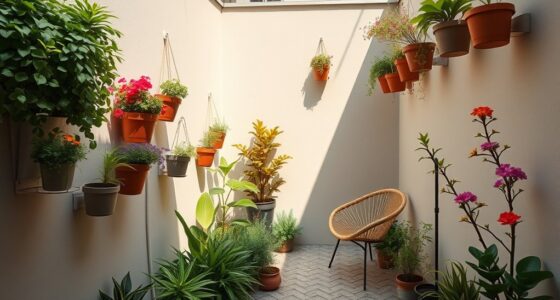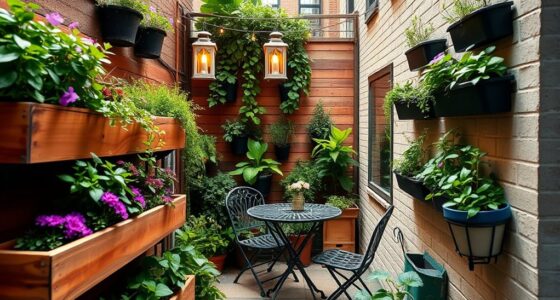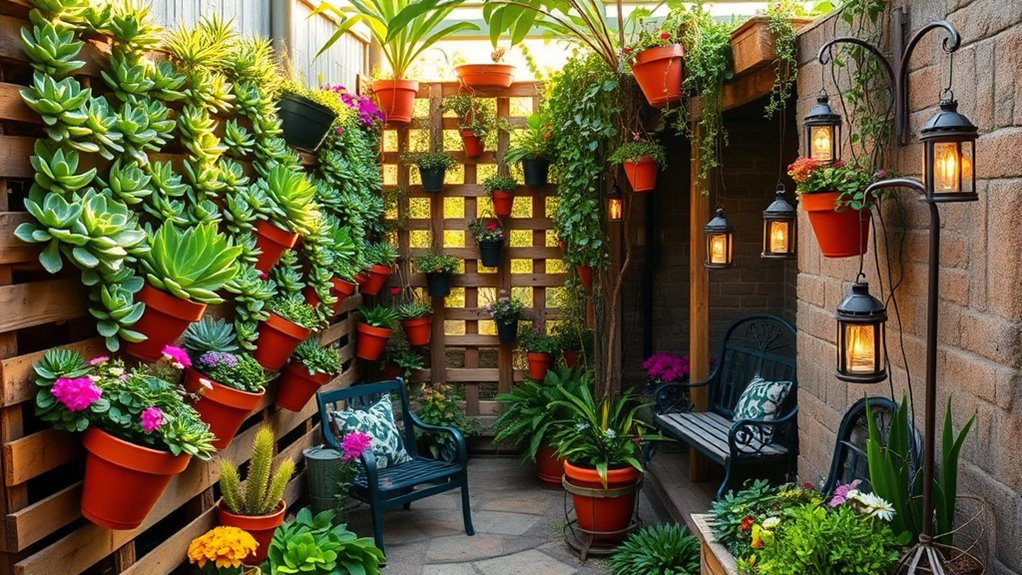

To maximize your small garden’s impact, boost vertical spaces with wall planters and hanging baskets, and layer different plant heights for visual interest and ecological benefits. Incorporate sustainable features like rain gardens and compost bins, and choose multifunctional furniture to save space. Use eco-friendly, solar-powered lighting to create ambiance without extra energy, making your garden lively and inviting. Want to explore more clever ideas to turn your tight spot into a thriving paradise?
Key Takeaways
- Utilize vertical planting solutions like wall planters and trellises to maximize space and add visual interest.
- Layer plants of different heights and textures to create a lush, multidimensional garden.
- Incorporate sustainable features such as rain gardens and composting to enhance eco-friendliness and functionality.
- Use multifunctional furniture and vertical storage to save space and keep the garden organized.
- Enhance ambiance with solar-powered lighting to extend usability and highlight garden features.
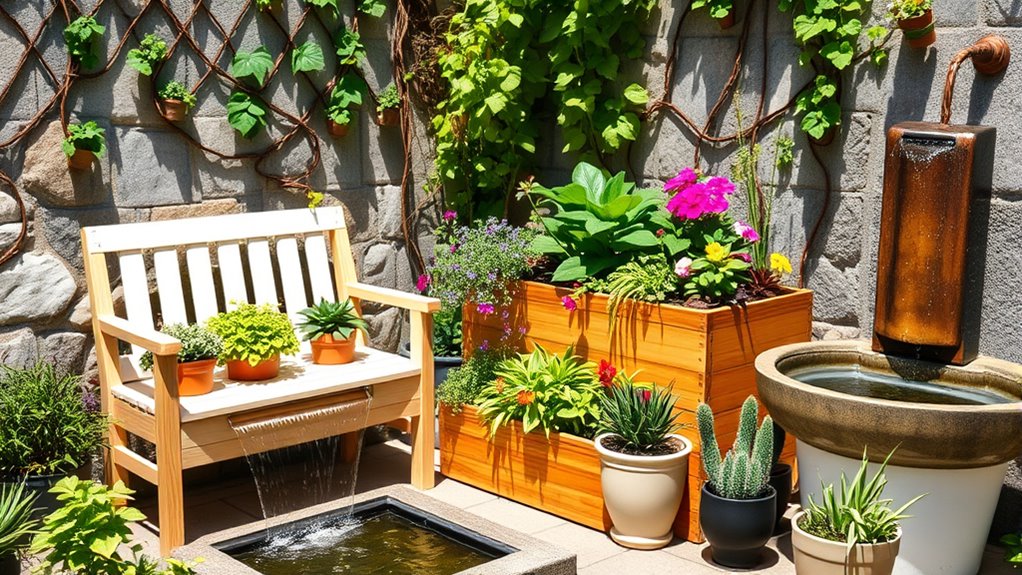
Ever wondered how to make the most of a small garden space? The key lies in clever design choices that maximize every inch while creating a vibrant, functional outdoor area. Even with limited space, you can attract urban wildlife and promote sustainable planting, transforming your tiny yard into a lively sanctuary. By integrating these elements, you’ll enjoy a lively environment that benefits both your garden and local ecosystems.
Start by selecting vertical planting options. Wall-mounted planters, hanging baskets, and trellises allow you to grow more without sacrificing precious ground space. These also serve as excellent habitats for urban wildlife, such as birds and butterflies, which thrive on small patches of greenery. Incorporate native plants into your sustainable planting plan to attract beneficial insects and pollinators, helping your garden flourish naturally. Native species are adapted to your local climate, reducing the need for extra watering or fertilizers, which supports a more environmentally friendly approach.
Maximize small spaces with vertical gardens and native plants to attract wildlife and promote eco-friendly growth.
When choosing plants, think about layering. Use a mix of tall, medium, and low-growing varieties to create a lush, multi-dimensional look that maximizes visual interest in a compact area. Shrubs or small trees can provide shelter for birds, while ground covers and flowering plants bring color and attract pollinators. Incorporate native wildflowers and grasses to encourage urban wildlife to thrive, supporting biodiversity even in a tight space.
Incorporate sustainable features like rain gardens, permeable paving, or compost bins. These elements help manage stormwater runoff, reduce waste, and improve soil health—all essential for eco-friendly gardening. A small compost bin tucked away in a corner turns kitchen scraps into nutrient-rich soil, supporting your sustainable planting efforts. This not only minimizes waste but also provides your plants with natural fertilizer.
Utilize multifunctional furniture and smart storage solutions to keep your garden tidy and functional. Compact seating, fold-away tables, or vertical storage can make your space feel larger and more inviting. Plus, choosing eco-friendly materials for furniture and containers aligns your garden with sustainable principles. Regularly practicing attention to detail in placement and maintenance ensures your garden remains thriving and visually appealing.
Finally, pay attention to lighting. Solar-powered garden lights add ambiance without increasing your energy footprint. They also extend your outdoor enjoyment into the evening hours, allowing you to appreciate your small garden’s charm day and night. By thoughtfully combining vertical planting, native species, sustainable features, and multifunctional furniture, you turn a tiny plot into a thriving, eco-conscious oasis. Not only will you enjoy a beautiful space, but you’ll also support urban wildlife and promote sustainable gardening practices—all in a compact, manageable area.
Frequently Asked Questions
How Can I Maximize Natural Light in a Small Garden?
To maximize natural light in your garden, start by choosing reflective surfaces like light-colored walls and paving. Use garden lighting strategically to enhance brightness during evenings. Opt for shade solutions such as tall, sparse plants or adjustable umbrellas to control light levels without blocking sunlight entirely. Regularly trim overhanging branches to let in more sunlight, and position your garden features to capture the sun’s path, making your small space feel brighter and more inviting.
What Low-Maintenance Plants Are Best for Tiny Spaces?
Did you know that over 80% of gardeners prefer low-maintenance plants? For your tiny space, opt for succulent varieties like aloe or sedum, which need minimal watering and care. Native perennials such as coneflowers or black-eyed Susans also thrive with less attention and attract pollinators. These choices keep your garden vibrant and easy to manage, making the most of your small area without overwhelming you.
How Do I Create Privacy Without Sacrificing Space?
To create privacy without losing space, consider using garden fencing or privacy screens that are vertical or semi-vertical. You can install lattice panels with climbing plants, which add greenery while shielding your view. Opt for slim, tall structures to maximize space efficiency. You’ll enjoy a private oasis that feels enclosed without taking up much ground area, making your small garden both functional and cozy.
What Are Affordable Materials for Small Garden Features?
When choosing affordable materials for your small garden features, consider using repurposed wood or pallets for garden art and decorative pathways. These materials are budget-friendly, easy to work with, and add charm to your space. You can also use gravel or crushed stone for pathways, which are cost-effective and durable. Incorporating these affordable options helps you create a beautiful, functional garden without overspending.
How Can I Incorporate Vertical Gardening Effectively?
When it comes to making the most of your space, vertical gardening is a smart move. You can hang planters or create wall-mounted gardens, which maximize your area without cluttering the ground. Use colorful containers or sleek designs to add style while saving space. These methods not only bring greenery closer but also make watering and maintenance easier, transforming your compact garden into a lush, vibrant retreat.
Conclusion
With a little creativity, your small garden transforms into a vibrant oasis bursting with life. Think of it as a tiny canvas where clever design paints a lush paradise, no matter how tight the space. As you weave plants and patterns together, you’ll feel like a master gardener sculpting a living masterpiece. Remember, even the smallest patch can bloom into a breathtaking sanctuary—proof that big beauty often comes in small, perfectly crafted packages.