The biggest sensor placement mistake is positioning sensors near heat sources, vents, or in direct sunlight, which causes skewed temperature and humidity data. This leads you to make poor decisions, like over-ventilating or under-watering, that harm plant health and waste resources. To get accurate data, sensors should be placed at plant canopy level, away from heat sources, and regularly calibrated. Keep going, and you’ll uncover more tips to improve your climate management.
Key Takeaways
- Placing sensors near heat sources, vents, or in direct sunlight causes skewed temperature and humidity readings.
- Positioning sensors at ground level or in corners fails to capture representative climate data for the entire greenhouse.
- Relying on a single sensor ignores localized variations, leading to inaccurate climate management.
- Failure to regularly calibrate sensors results in drifting measurements and unreliable data.
- Using inappropriate sensor types for specific environmental parameters reduces data accuracy and decision-making quality.
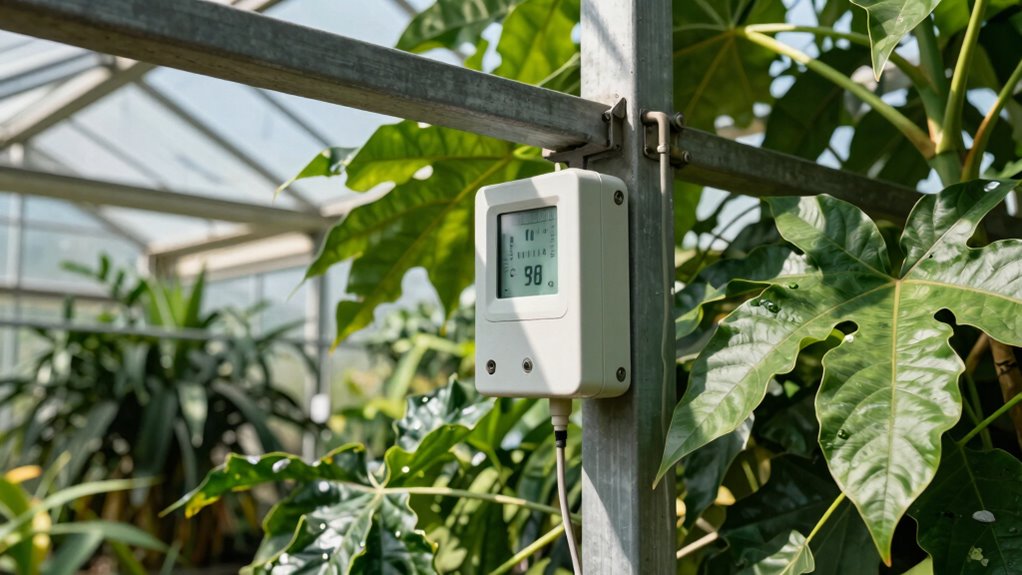
Have you ever wondered why your sensor readings seem off? It’s a common frustration, especially when your greenhouse data doesn’t match the actual conditions. One of the biggest culprits behind inaccurate data is a simple mistake: poor sensor placement. This mistake becomes even more problematic when you consider climate variability—the natural fluctuations in temperature, humidity, and other environmental factors that happen throughout the day and across different parts of your greenhouse. When sensors are poorly positioned, they can’t accurately capture these variations, leading to misleading data that can compromise your decision-making.
Poor sensor placement skews data, making it hard to manage climate variability effectively.
If your sensors are placed in a corner or near a heat source, they might consistently show higher temperatures or humidity levels than what’s actually happening in the main growing areas. Conversely, placing sensors in shaded or cooler spots can give you an overly conservative picture of the greenhouse environment. This misplacement skews your data accuracy because the sensor isn’t representative of the broader conditions your plants experience. As a result, you might over-ventilate, under-watering, or mismanage heating systems based on faulty readings. Over time, such mistakes can hinder plant growth, reduce yields, and waste resources.
Climate variability makes it even more critical to position sensors thoughtfully. Since environmental conditions fluctuate throughout the day and between different zones, a single sensor in one spot can’t tell the full story. If sensors are all clustered in one area or placed too close to heat sources or vents, you miss out on capturing the true variability within your greenhouse. This lack of extensive data hampers your ability to implement precise climate control strategies. When your data isn’t representative, you risk making decisions based on partial or skewed information, which can lead to inconsistent crop production and unnecessary energy expenditure. Understanding sensor placement best practices is essential for accurate data collection and efficient greenhouse management. By considering climate variability, growers can better adapt their strategies to the dynamic environment inside their greenhouse. Additionally, incorporating proper sensor calibration can further enhance data reliability and decision-making accuracy.
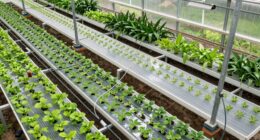
To improve data accuracy, you need to focus on strategic sensor placement. Position sensors at plant canopy level, away from direct sunlight, vents, or heating devices, and in locations that reflect the general conditions of your growing zones. Consider deploying multiple sensors throughout the greenhouse to account for climate variability. This approach provides a more detailed picture of environmental fluctuations, helping you fine-tune your climate control systems. Utilizing sensor calibration tools and techniques regularly can help maintain data accuracy over time. Ensuring the use of appropriate sensor types can also contribute to more reliable readings. Ultimately, avoiding the sensor placement mistake ensures you get reliable data, leading to more effective management, healthier plants, and optimized resource use.
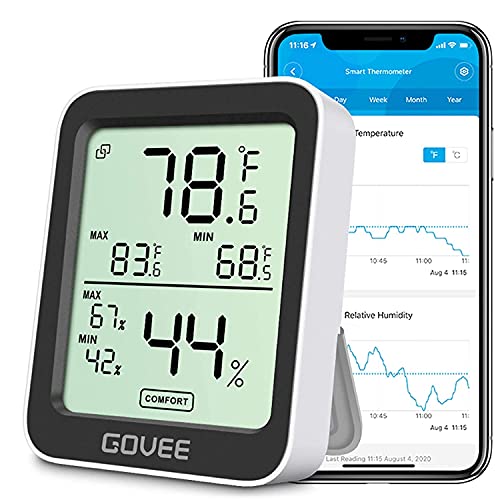
Govee Digital Hygrometer Indoor Thermometer Room H5075, Bluetooth Temperature Humidity Meter with 164ft Remote App Control, Notification Alerts, 2 Years Data Storage Export for Bedroom, Wine Cellar
Smart Features: The Govee Wireless Thermometer Hygrometer supports all basic functions as well as smart functions such as…
As an affiliate, we earn on qualifying purchases.
As an affiliate, we earn on qualifying purchases.
Frequently Asked Questions
How Can I Test if My Sensors Are Accurate?
To test if your sensors are accurate, start with sensor calibration by comparing their readings to a known standard or reference. Perform data validation by collecting readings under controlled conditions and cross-referencing with reliable measurements or manual checks. Regularly recalibrate your sensors and review the data for inconsistencies. This process guarantees your sensors provide precise, trustworthy data, helping you make better decisions for your greenhouse.
What Are the Best Tools for Measuring Sensor Placement?
Think of your sensors as the eyes of your greenhouse—precise placement is everything. Use tools like laser distance meters and moisture meters to verify sensor calibration and confirm ideal placement. Employ thermal imaging cameras to identify temperature hotspots, helping you enhance sensor locations. Regularly check your sensors with these tools to prevent placement errors, guaranteeing your data remains accurate and your greenhouse thrives. Proper tools make all the difference.
How Often Should I Recalibrate Greenhouse Sensors?
You should recalibrate your greenhouse sensors every 2 to 4 weeks to maintain accuracy. Regular sensor calibration guarantees your data stays reliable, helping you make better decisions. Incorporate data validation into your routine by comparing sensor readings with manual measurements or reference tools. This process helps catch drift or errors early, so you can adjust calibration as needed and keep your greenhouse conditions optimized for healthy plant growth.
Can Sensor Placement Affect Plant Growth Directly?
Think of your greenhouse as a symphony, where sensor placement acts like the conductor’s baton. Poor placement can directly impact plant growth by skewing sensor calibration, leading to inaccurate readings. When sensors aren’t ideally positioned, they misrepresent temperature, humidity, or light levels, causing plants to respond poorly. To guarantee healthy growth, place sensors thoughtfully, regularly calibrate them, and monitor data to keep the symphony in perfect harmony.
What Are Common Signs of Faulty Sensor Data?
You’ll notice faulty sensor data when readings seem inconsistent or don’t match your observations. For example, sudden temperature or humidity spikes might occur without cause. To catch these signs, regularly perform sensor calibration and data validation. If data appears erratic or unreliable, it’s a clear sign that your sensors need recalibration or repositioning, ensuring your greenhouse conditions are accurately monitored for ideal plant growth.
plant canopy level climate sensors
As an affiliate, we earn on qualifying purchases.
As an affiliate, we earn on qualifying purchases.
Conclusion
If you place sensors without considering airflow and plant layout, you’re likely to get misleading greenhouse data. This mistake can lead to incorrect adjustments, harming your crops instead of helping them. Some experts argue that ideal sensor placement isn’t just about proximity but understanding the environment’s natural movement. By testing and refining your setup, you’ll uncover the truth: proper placement isn’t just a theory—it’s the key to healthier plants and better yields.
calibrated greenhouse environmental sensors
As an affiliate, we earn on qualifying purchases.
As an affiliate, we earn on qualifying purchases.
outdoor greenhouse sensor placement
As an affiliate, we earn on qualifying purchases.
As an affiliate, we earn on qualifying purchases.