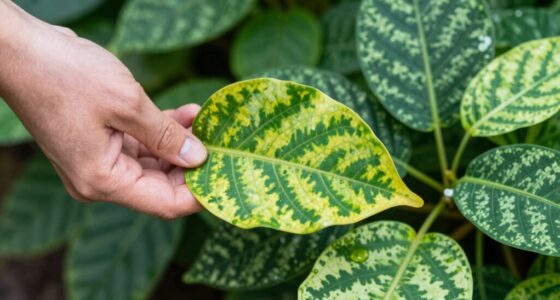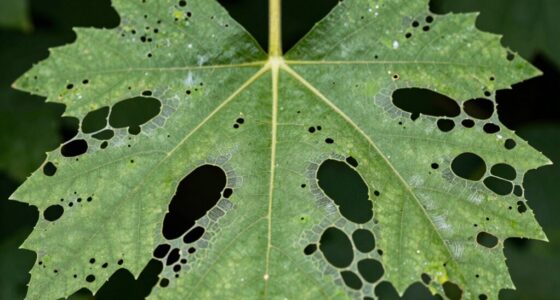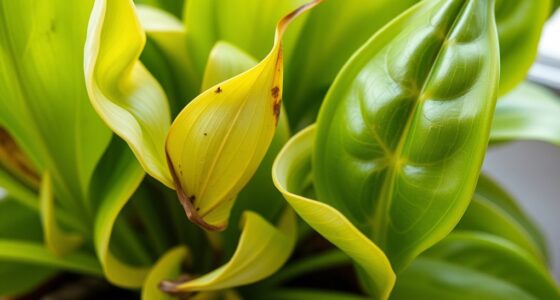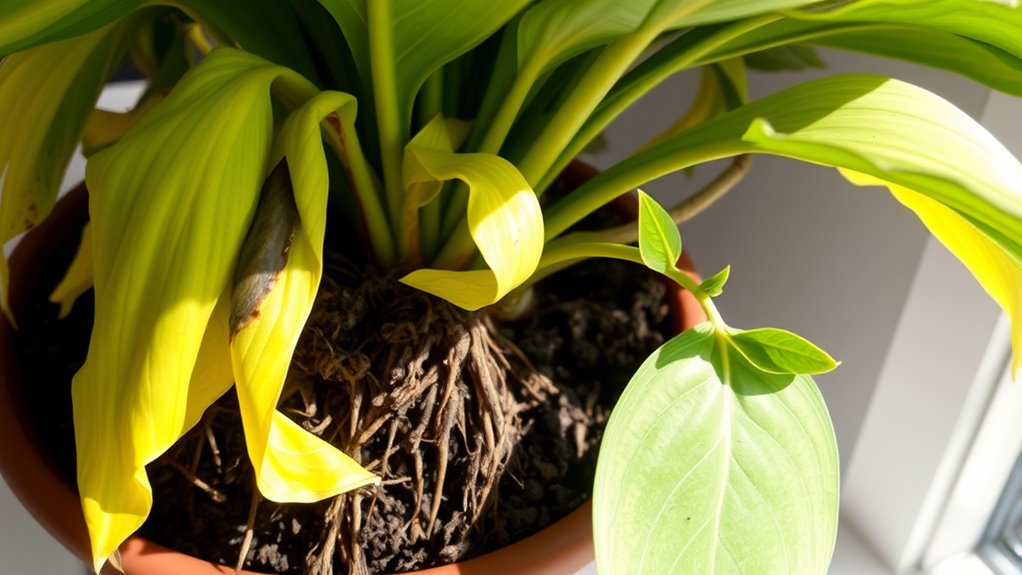

If your plant looks yellow, wilted, or crispy, it may have watering issues—either over- or underwatering. Sticky residue or webbing could mean pests are hiding, while brown spots might suggest disease. Pale or deformed leaves can indicate nutrient deficiencies. Regularly check for these signs, and examine soil moisture, pests, and growth patterns. Spotting these early helps you give the right care; find out more to keep your plant healthy.

Get garden gear delivered free with Prime
- Fast, free delivery on millions of items
- Prime Video, Amazon Music and more included
- Member-only deals all year
Key Takeaways
- Observe leaf color and texture for signs of watering issues, pests, or nutrient deficiencies.
- Check soil moisture to distinguish between overwatering and underwatering problems.
- Look for pests like aphids or spider mites on leaves and stems, especially on undersides.
- Monitor for wilting, browning, or unusual spots indicating disease or environmental stress.
- Regularly inspect plants to detect early signs of problems and enable prompt corrective action.
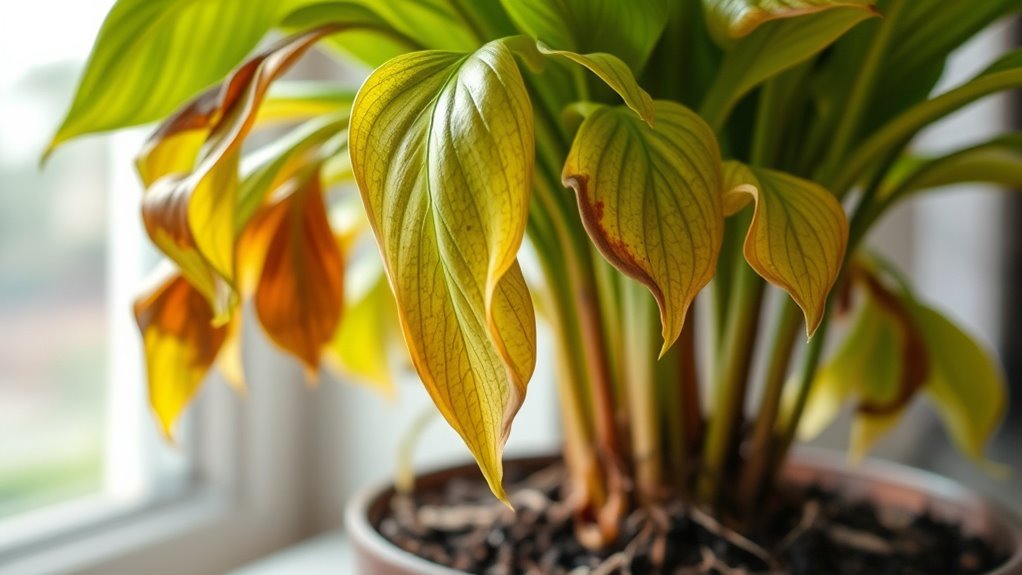
Plants usually give clues when they’re not feeling well, so paying attention to these signs can help you address issues early. One of the most common problems is watering issues. If your plant’s leaves are yellowing or wilting, it might be a sign you’re overwatering or underwatering. Overwatering often leads to root rot, which prevents your plant from absorbing nutrients, resulting in droopy, soft leaves and sometimes a foul smell at the soil’s surface. Conversely, underwatering causes leaves to turn crispy, brown at the edges, and stems may feel brittle. To diagnose this, check the soil moisture: if it’s soggy, cut back on watering; if it’s bone-dry, give your plant a good soak. Remember, different plants have different water needs, so research your specific species to find the right balance.
Watch for yellowing, wilting, or crispy leaves to diagnose watering issues early.
Beyond watering issues, pest infestations can profoundly harm your plant’s health. Tiny insects like aphids, spider mites, or scale can hide on leaves and stems, sucking out plant juices and causing stunted growth or discolored patches. You might notice sticky residue, webbing, or small moving specks on your plant’s surface. These pests weaken your plant’s defenses, making it more susceptible to other diseases. To combat pests, inspect your plant regularly, especially on the undersides of leaves where bugs often hide. A gentle spray of water can dislodge some pests, but severe infestations may require insecticidal soap or neem oil. If you spot pests early, you can often wipe them away before they cause serious damage.
Other signs of a struggling plant include discolored or deformed leaves, which could indicate nutritional deficiencies or disease. Pale or yellow leaves might mean your plant isn’t getting enough light or nutrients, while brown spots could point to fungal infections. If your plant’s growth stalls or it drops leaves unexpectedly, it’s worth reviewing its environment—check for proper lighting, humidity, and soil health. Over time, neglecting these signs can lead to more serious problems, like persistent infections or lasting damage to roots and stems.
Ultimately, your attentive observation is key. By noticing subtle changes in your plant’s appearance, you can identify watering issues, pest infestations, or other health problems early on. Acting promptly and adjusting care routines helps ensure your plant recovers and stays healthy. Remember, plants have a way of showing what they need—your job is to listen and respond effectively.
Frequently Asked Questions
How Often Should I Water My Plant During Winter?
During winter plant care, your watering schedule should become less frequent. You typically need to water your plant only when the top inch of soil feels dry, which might be every 2-3 weeks depending on indoor conditions. Avoid overwatering, as cold, damp soil can lead to root rot. Keep an eye on your plant for signs of dehydration or overwatering, and adjust your winter watering routine accordingly.
Can Over-Fertilizing Harm My Plant?
Over-fertilizing can destroy your plant faster than a hurricane, leading to fertilizer burn and serious root damage. Too much fertilizer causes nutrient imbalance, which can result in nutrient deficiency despite all the added food. Always follow the recommended dosage and frequency. Excess fertilizer not only harms your plant’s roots but can also cause leaf burn, wilting, and poor growth, so give it just enough without going overboard.
What Light Conditions Are Best for Indoor Plants?
For indoor plants, you should match their light requirements to their needs; most thrive in bright, indirect light. Adjust your watering schedule accordingly, as plants in brighter spots often need more frequent watering, while those in lower light need less. Keep an eye on their leaves, and if they start to yellow or drop, it might be a sign to change your light conditions or watering habits to keep them healthy.
How Do I Identify Pest Infestations Early?
Did you know that early detection of pests can reduce plant damage by up to 90%? To identify infestations early, regularly inspect your plants for tiny holes, webbing, or discolored spots. Look closely at leaves and stems, especially under leaves and in crevices. Practicing pest prevention and catching problems early can save your plant’s health. Stay vigilant and act quickly to keep pests at bay and your plants thriving.
When Should I Repot My Plant for Optimal Health?
You should repot your plant when it becomes root bound or shows signs of poor health. If the soil nutrients have depleted, the plant struggles to absorb essential nutrients, leading to stunted growth. Repotting provides fresh soil and more space for roots to expand. Ideally, do this during the plant’s active growing season, and choose a slightly larger pot with well-draining soil to promote maximum health.
Conclusion
Just like a plant needs sunlight to thrive, your care fuels its growth. When you notice signs of trouble, listen to these whispers from your green friend—each leaf, stem, or color change tells a story. Addressing these signals keeps your plant alive and vibrant, a symbol of your nurturing spirit. Remember, patience and attention are the roots that sustain health. With love and care, your plant will flourish, a living demonstration of your dedication.
Halloween Picks
halloween
As an affiliate, we earn on qualifying purchases.