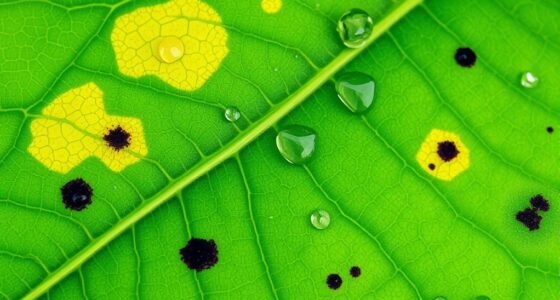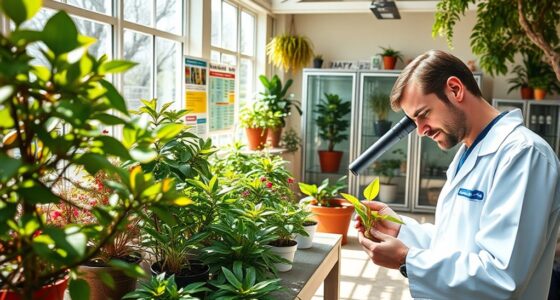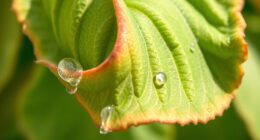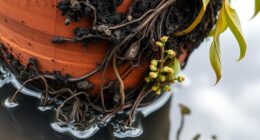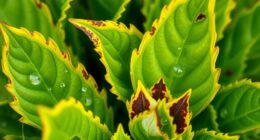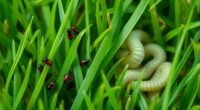
If your plant is showing signs like yellowing or pale leaves, it might need more nutrients or have root issues. Damaged or chewed leaves suggest pests, while wilting or dry soil can mean over- or underwatering. Look for mold, spots, or webbing to check for diseases or pests. Environmental stress like too much sun or low humidity could also be the cause. Keep observing—there’s more to uncover about diagnosing what’s wrong and fixing it.
Key Takeaways
- Look for yellowing, pale leaves or stunted growth indicating nutrient deficiencies.
- Check for pests like insects, webbing, or sticky residue on leaves and stems.
- Observe watering signs: drooping, yellowing, or dry soil suggest over- or underwatering.
- Identify disease symptoms such as spots, mold, or powdery coatings on foliage.
- Assess environmental factors like light and humidity affecting overall plant health.
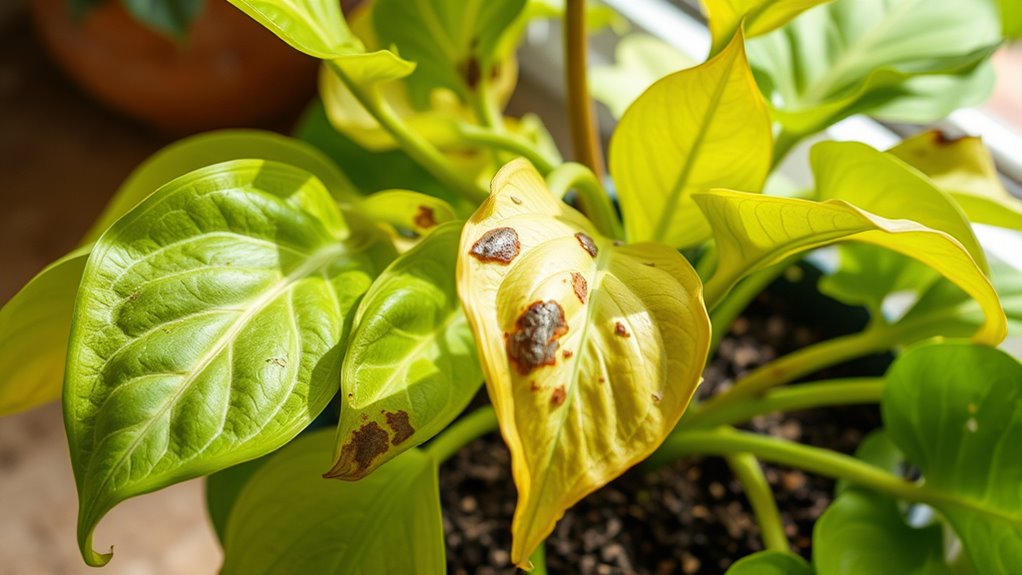
If your plants are showing signs of distress, identifying the problem early can save them. When your plant’s health starts to decline, it’s essential to look for clues that indicate underlying issues. One common cause of poor growth or discoloration is soil nutrient deficiencies. These deficiencies occur when essential nutrients like nitrogen, phosphorus, or potassium are lacking in the soil. You might notice pale or yellowing leaves, stunted growth, or poor flowering — symptoms that signal your plant isn’t getting what it needs from the soil. To confirm this, check the soil’s condition: is it overly compacted, or does it feel depleted? Regular soil testing can help you pinpoint which nutrients are missing, so you can amend the soil accordingly with fertilizers or organic matter. Additionally, understanding color accuracy in related contexts can help you better assess whether your plant’s coloration issues are due to nutrient deficiencies or other problems.
Another common problem stems from pest infestation signs. Pests such as aphids, spider mites, or scale insects often cause visible damage that’s easy to overlook at first. Look for small, moving insects on the undersides of leaves or on stems. Damaged leaves might be chewed, curled, or show spots where pests have fed. You might also see sticky residue (honeydew), which attracts mold, or webbing indicating spider mites. Pests not only weaken plants directly but can also transmit diseases, compounding the problem. Early detection of pest infestation signs is vital; inspect your plants regularly, especially during warm months when pests are most active. If you notice pests, act quickly with appropriate treatments like insecticidal soap, neem oil, or introducing natural predators, depending on the pest type.
Additionally, observe your plant’s overall appearance. Wilting, leaf drop, or unusual spots can be symptoms of multiple issues, including overwatering, underwatering, or disease. Always consider environmental factors like light, humidity, and watering routines, as these can exacerbate existing problems or create new ones. For example, overwatering can lead to root rot, which manifests as yellowing leaves and soft stems, while underwatering causes drooping and dry soil. Diseases often present as spots, mold, or powdery coatings on leaves and stems. Identifying the specific signs helps you determine whether the problem is nutritional, pest-related, or environmental.
Frequently Asked Questions
How Often Should I Water Different Types of Houseplants?
When figuring out your watering schedule, remember that different houseplants have unique needs for plant hydration. Typically, water most plants when the top inch of soil feels dry, but some, like succulents, need less frequent watering. Others, such as ferns, require more consistent moisture. Adjust based on your plant’s environment and season. Regularly check soil moisture to guarantee proper plant hydration and prevent overwatering or underwatering.
What Are Natural Remedies for Common Plant Pests?
Think of your plant’s pests as tiny invaders you can outsmart with natural pest control. You might try neem oil, a powerful organic insecticide, or make a garlic and soap spray to repel bugs. Just like a gardener’s secret weapon, these remedies keep pests at bay without chemicals. Regularly inspecting your plants and using organic solutions helps protect your greenery naturally and effectively.
How Can I Improve Soil Drainage for My Potted Plants?
To improve soil drainage for your potted plants, focus on enhancing soil aeration by mixing in organic amendments like compost or coconut coir. These materials help loosen compacted soil, allowing excess water to escape and air to reach roots. Also, make certain your pot has drainage holes, and avoid overwatering. Regularly aerate the soil with a small fork or stick, promoting healthy root growth and preventing waterlogging.
When Is the Best Time to Repot My Plant?
Think of your plant like a growing child—timing matters. The best time to repot is during seasonal repotting, usually in spring or early summer, when your plant is in its active growth stages. This gives roots space to expand and reduces stress. If your plant shows signs of being root-bound or struggling, it’s a good cue to repot now, ensuring healthy growth and resilience.
Which Fertilizers Are Safest for Indoor Plants?
When choosing fertilizers for your indoor plants, you want safe options like organic fertilizers, which are gentle and eco-friendly. They provide essential nutrients without harsh chemicals. If you prefer quicker results, chemical options are available, but guarantee they’re specifically formulated for indoor plants and used at recommended strengths. Always read labels and follow instructions carefully to avoid over-fertilizing, which can harm your plants.
Conclusion
Just as Da Vinci studied every detail to master his art, paying close attention to your plant’s signals reveals its needs. Recognizing these signs helps you nurture it back to health, turning your green space into a thriving masterpiece. Remember, plants like silent poets—listening and responding to your care. With patience and observation, you’ll transform your thumb from hesitant to confident, ensuring your plant’s story continues with vibrant energy.