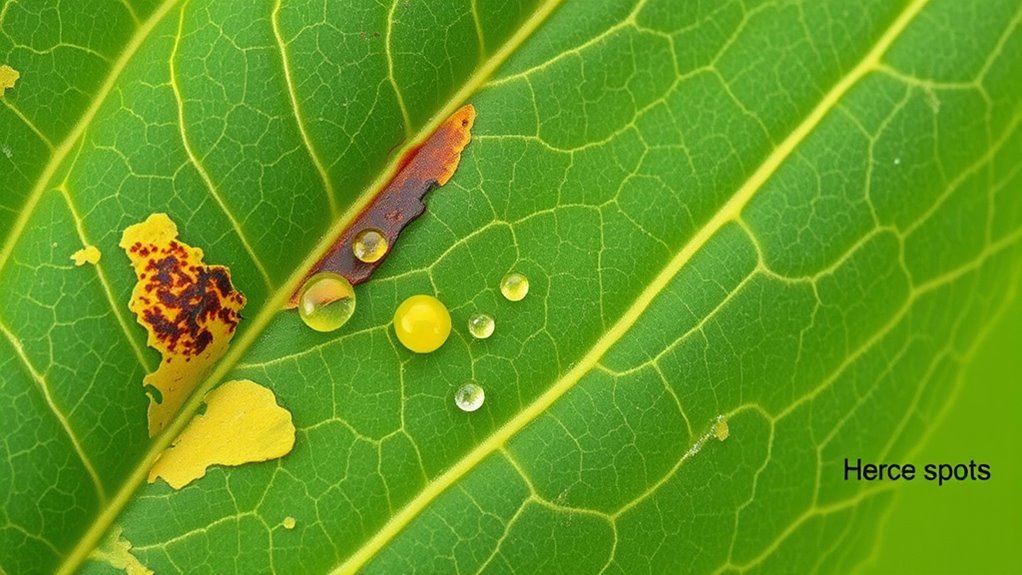

Herbicide drift causes chemical injury that shows up suddenly, with symptoms like leaf curling, yellowing, browning, or necrosis concentrated in specific areas, often aligned with wind direction. Unlike disease, these symptoms develop quickly and lack signs of pathogens such as mold or spores. Damage is typically patchy and localized on new or exposed leaves. If you look closely, you’ll notice no pathogen activity—just chemical stress. Keep exploring to learn how to distinguish herbicide damage from plant diseases more accurately.
Key Takeaways
- Herbicide drift causes rapid, localized leaf injury without pathogen signs, unlike gradual disease development with visible mold or spores.
- Damage from herbicides appears suddenly and is patchy, while disease symptoms tend to spread systematically over time.
- Herbicide injury often affects newer or exposed leaves and reflects wind direction, unlike disease which usually affects broader plant areas.
- No secondary pathogen signs, such as mold or ooze, are present in chemical injury, whereas disease often shows pathogen activity.
- Chemical damage results in leaf scorch, necrosis, and sudden decline, whereas disease symptoms develop gradually with signs like spots or rot.
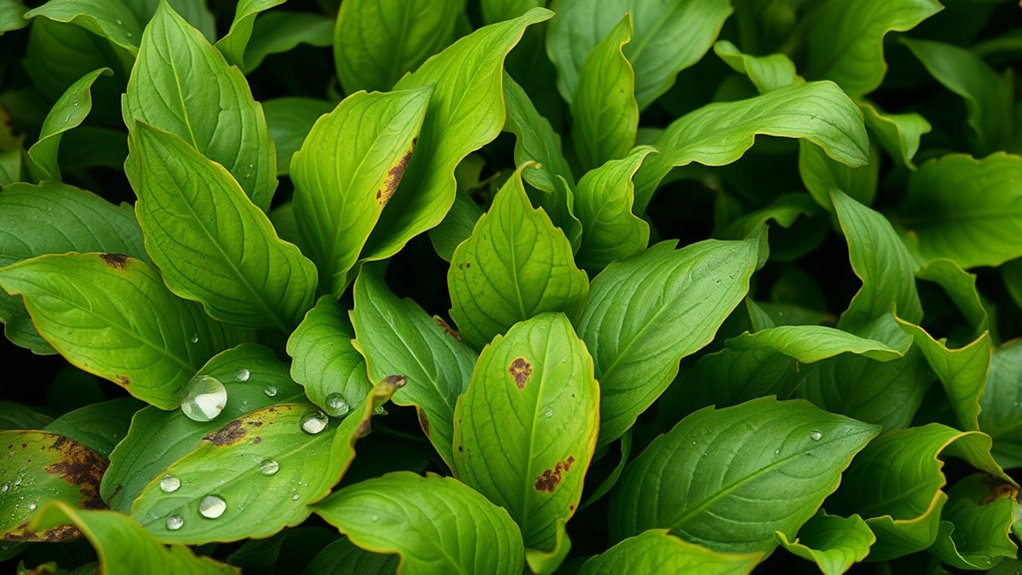
Herbicide drift occurs when chemicals applied to one area accidentally settle on nearby plants, causing visible damage or abnormal growth. When this happens, your plants often show signs of chemical injury, which can look quite different from typical disease symptoms. Chemical injury from herbicide drift usually manifests as leaf curling, yellowing, browning, or necrosis. These symptoms often appear suddenly and are concentrated on specific parts of the plant, especially the newer growth or leaves directly exposed. The damage isn’t caused by a pathogen but by the herbicide’s toxic effects, leading to plant stress that weakens the plant’s overall health.
Herbicide drift causes sudden, localized plant damage like leaf curling and browning, unlike gradual disease symptoms.
You’ll notice that the damage caused by herbicide drift often occurs in a pattern reflecting the wind direction during application, with the affected plants closer to the herbicide source showing more severe symptoms. The injury tends to be spotty or patchy, unlike disease symptoms, which often spread in a more uniform or patterned manner. Because herbicides interfere with plant processes, they induce stress responses, making plants appear wilted, stunted, or with distorted growth. This stress can make plants more vulnerable to secondary issues, but the primary cause remains chemical injury rather than a biological pathogen.
Distinguishing herbicide drift from disease involves observing how symptoms develop over time. Chemical injury symptoms usually appear rapidly after herbicide application, often within hours or a few days. In contrast, disease symptoms tend to develop gradually, with more consistent patterns of spots, mold, or rot that spread over the plant or across a group of plants. Furthermore, herbicide damage is often limited to a specific area without the presence of fungal or bacterial growth, which are typical indicators of disease.
Understanding plant stress caused by herbicide drift also helps you differentiate between the two. When plants are stressed by chemicals, they exhibit symptoms associated with toxin exposure, such as leaf scorch or tissue necrosis, but without the presence of spores, fungal mycelium, or bacterial ooze. You might see a sudden decline in plant vigor following a spray event, whereas disease often shows more gradual deterioration with signs of pathogen activity. Additionally, modern AI analytics can assist in identifying the precise cause of plant symptoms, helping to distinguish between chemical injury and disease more accurately.
Frequently Asked Questions
How Can I Prevent Herbicide Drift in My Fields?
To prevent herbicide drift in your fields, you should establish buffer zones around your application area to minimize drift risk. Always check weather conditions; avoid spraying during windy days or when humidity is low, as these increase drift potential. Use proper equipment calibration and application techniques, and consider spraying during calmer parts of the day. These steps help safeguard your crops and ensure effective herbicide use.
What Specific Crops Are Most Vulnerable to Herbicide Drift?
Did you know that over 60% of herbicide drift cases affect delicate crops? You should be aware that susceptible crops like beans, grapes, and vegetables are especially vulnerable to herbicide impact. Their crop susceptibility makes them prone to damage from drift, leading to yield loss and economic setbacks. To protect these crops, you must implement proper application techniques and buffer zones, ensuring your fields stay safe from inadvertent herbicide contact.
Are There Legal Consequences for Herbicide Drift Damage?
Yes, there are legal consequences for herbicide drift damage. If your crops are affected, you could face legal liability, especially if you’re responsible for the drift. You might need to pay compensation claims to affected neighbors or farmers. It’s essential to document the damage and communicate with the responsible parties. Consulting an attorney can help you understand your rights and options regarding legal actions and potential compensation.
How Long Do Herbicide Drift Symptoms Typically Last?
Herbicide drift symptoms usually last from a few days to several weeks, depending on herbicide persistence and environmental conditions. Notably, studies show symptoms can persist up to six weeks if the herbicide remains active in the plant tissue. The duration of symptom duration varies with factors like herbicide type, weather, and plant health. To minimize lasting damage, early detection and proper management are vital.
Can Herbicide Drift Affect Soil Health or Future Plantings?
Herbicide drift can impact soil health and future plantings by causing soil contamination, which may hinder seed germination and crop growth. Residues from drift can settle on crop residue, affecting decomposition and nutrient cycling. To minimize these effects, you should test your soil regularly, remove contaminated crop residue, and choose resistant plant varieties. Proper application techniques also help reduce drift and protect your soil’s long-term productivity.
Conclusion
If you ignore herbicide drift symptoms, your crops could be forever damaged—stunted, disfigured, and barely able to survive. It’s like a silent killer creeping through your fields, destroying your hard work in an instant. Don’t let this invisible menace ruin your entire season. Act quickly and accurately identify the signs before it’s too late. Protect your livelihood now, because once herbicide drift takes hold, there’s no turning back—your farm’s future hangs in the balance.