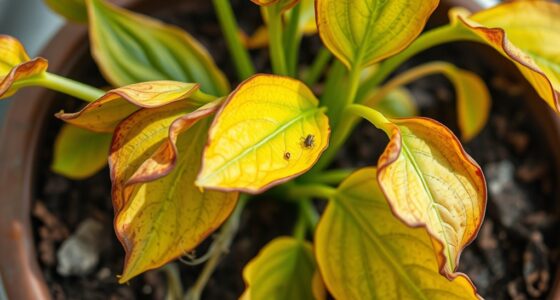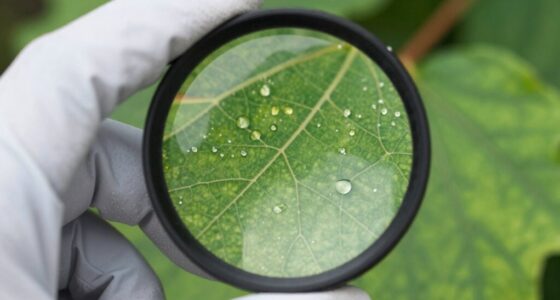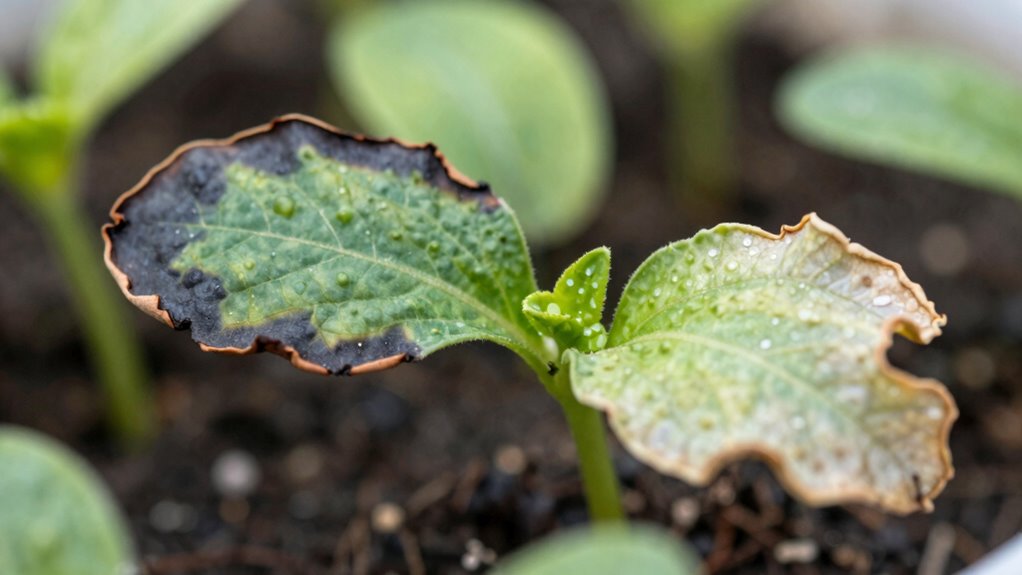
To tell light burn from heat stress on seedlings, look for specific signs. Light burn usually causes leaf scorching, bleaching, or crispy edges, often concentrated where the light is closest. In contrast, heat stress causes wilting, curling, or yellowing of leaves, often affecting the whole plant, especially under high temperatures. Recognizing these differences helps you adjust your environment promptly. Keep exploring to gain more detailed insights on effectively managing these issues.

Get garden gear delivered free with Prime
- Fast, free delivery on millions of items
- Prime Video, Amazon Music and more included
- Member-only deals all year
Key Takeaways
- Light burn typically causes leaf scorching, bleaching, or crispy edges, mainly on the top or exposed leaves.
- Heat stress results in wilting, curling, or yellowing, often affecting the entire plant, especially under high temperatures.
- Light burn symptoms are localized and appear near the light source, while heat stress symptoms are more uniform across the plant.
- Check the proximity of lights; close lights often cause burn, whereas high ambient temperatures indicate heat stress.
- Adjust lighting and environmental conditions to observe if symptoms improve or shift, aiding in accurate diagnosis.

If you notice your seedlings exhibiting leaf discoloration or damage, consider their environment first. In cases of light burn, lowering the light intensity or increasing the distance between the light source and your seedlings helps prevent further damage. Make sure your lighting schedule aligns with the needs of your plants, avoiding prolonged exposure to intense light. If heat stress seems to be the culprit, check your grow area’s temperature and humidity levels. Ventilation, fans, or air conditioning may be necessary to reduce heat buildup. Overly high temperatures can also cause your seedlings to become more susceptible to pest infestation, as stressed plants weaken their defenses. An infestation can further exacerbate symptoms, making it harder to differentiate between stress and pest damage. Additionally, maintaining proper environmental controls is crucial to prevent these issues from occurring in the first place. Proper light management is essential to prevent both light burn and heat stress, ensuring your seedlings grow healthy and strong. Monitoring plant health indicators can help you catch early signs of stress before they worsen. Recognizing the importance of consistent environmental conditions can help maintain optimal growth and reduce stress-related problems. Both light burn and heat stress can lead to secondary problems, like nutrient deficiency, if left unchecked. When your seedlings are stressed, they may struggle to absorb nutrients properly, leading to deficiencies that manifest as yellowing or stunted growth. Regularly adjusting your environment based on plant stress responses can improve overall plant resilience. Always monitor for pests, which can hide in damaged or stressed foliage, and address any infestations promptly. Proper environmental controls—consistent temperature, humidity, and light levels—are *essential* to avoiding these problems. In sum, paying close attention to your seedlings’ symptoms and environment allows you to distinguish between light burn and heat stress, ensuring you take targeted actions to promote healthy, vigorous growth.
As an affiliate, we earn on qualifying purchases.
Frequently Asked Questions
Can Light Burn or Heat Stress Damage Seedlings Permanently?
Light burn or heat stress can cause temporary damage to seedlings, but they usually recover if conditions improve promptly. However, if the damage is severe or prolonged, it might lead to permanent issues, affecting growth and health. Be mindful of nutrient deficiencies and pest infestations, which can worsen stress effects. Providing proper light, temperature, and nutrients helps seedlings heal and prevents long-term damage.
What Are the Long-Term Effects of Light Burn on Seedlings?
Light burn can seriously stunt your seedlings’ growth, but with proper care, they can bounce back stronger than ever. Long-term effects include slowed development, weak resilience, and increased vulnerability to diseases. To minimize damage, focus on seedling resilience through recovery strategies like adjusting light intensity, ensuring proper watering, and providing shade. With patience and attentive care, your seedlings can recover and thrive, turning a stressful event into a growth opportunity.
How Can I Prevent Light Burn While Maintaining Proper Lighting?
To prevent light burn while providing proper lighting, you should carefully manage light intensity and duration. Keep the light intensity at a safe level, avoiding excessive brightness that can scorch seedlings. Additionally, limit light duration to prevent overstimulation; typically, 12-16 hours of light per day works well. Adjust your grow lights gradually, and monitor your seedlings closely for signs of stress, ensuring they get enough light without damage.
Do Different Plant Species Show Symptoms Differently?
Different plant species show symptoms differently, like a diverse palette of colors and shapes. You’ll notice that species variation affects how symptoms like leaf discoloration, curling, or scorched edges appear. Symptom differentiation becomes essential, as some plants might exhibit subtle signs, while others display more dramatic damage. Recognizing these differences helps you identify whether your seedlings are suffering from light burn or heat stress, ensuring you respond appropriately.
Are There Specific Light Types More Likely to Cause Burn or Stress?
Certain light types, like LEDs with specific spectra, are less likely to cause burn or stress compared to HID lights, which emit more heat and broader spectrum. You should pay attention to the light spectrum; full-spectrum LEDs often provide gentle, balanced light, reducing risk. Avoid placing seedlings too close to high-intensity HID lights, as their intense heat and broad spectrum can cause damage, leading to stress or light burn.
As an affiliate, we earn on qualifying purchases.
Conclusion
By learning to distinguish light burn from heat stress, you’ll watch your seedlings thrive under the right conditions. Recognize the signs like scorched leaves or wilting, and adjust your light or temperature accordingly. Keep a close eye, stay attentive, and respond promptly. Just as a gardener tends to each plant’s needs, you’ll nurture healthy growth, avoiding damage and fostering resilience. With awareness and care, your seedlings will flourish, reaching toward the sun with strength and vigor.
seedling grow light distance meter
As an affiliate, we earn on qualifying purchases.
As an affiliate, we earn on qualifying purchases.
humidity and temperature monitor for plants
As an affiliate, we earn on qualifying purchases.
As an affiliate, we earn on qualifying purchases.
Columbus Day / Indigenous Peoples' Day Picks
long weekend sales
As an affiliate, we earn on qualifying purchases.