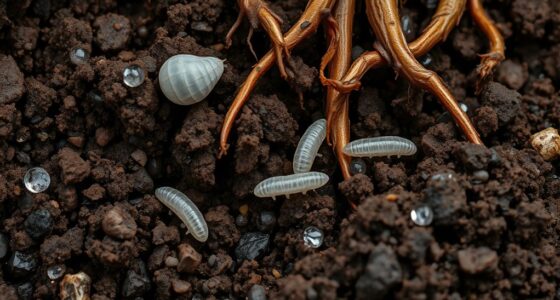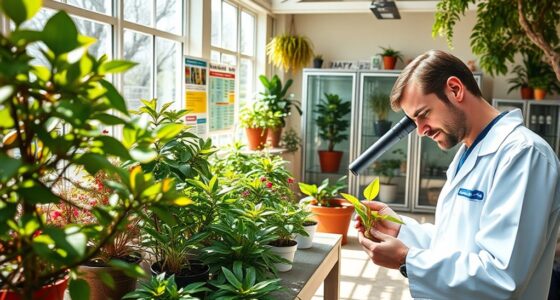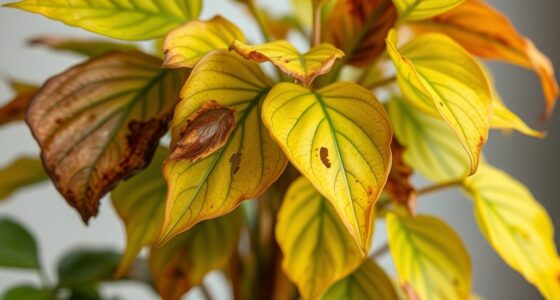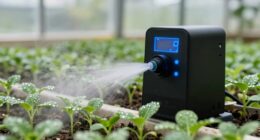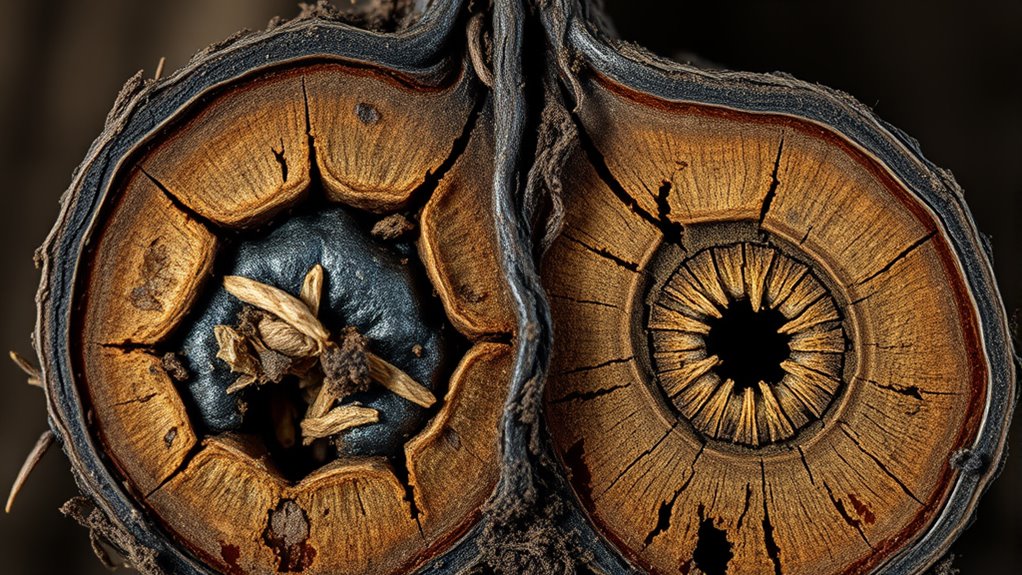
To tell if your plant has rot or insect damage, check the roots carefully. Root rot usually causes soft, brown, or black decay, often from overwatering and poor drainage. Insect feeding looks like tiny holes, tunnels, or chewed roots caused by pests like nematodes or root maggots. Understanding the soil conditions and inspecting roots closely helps you identify the cause. Keep exploring to learn how proper care can prevent both issues and keep your plants healthy.
Key Takeaways
- Root rot is caused by overwatering and poor drainage, leading to decay; insect feeding involves pests attacking weakened roots.
- Symptoms like rotted roots suggest rot, while insect damage may show tunneling or pests on roots.
- Proper soil drainage and moisture management prevent root rot, reducing insect vulnerability.
- Nutrient deficiencies weaken roots, making them more susceptible to both rot and insect attacks.
- Soil tests and targeted treatments help distinguish and address root rot versus insect feeding issues.
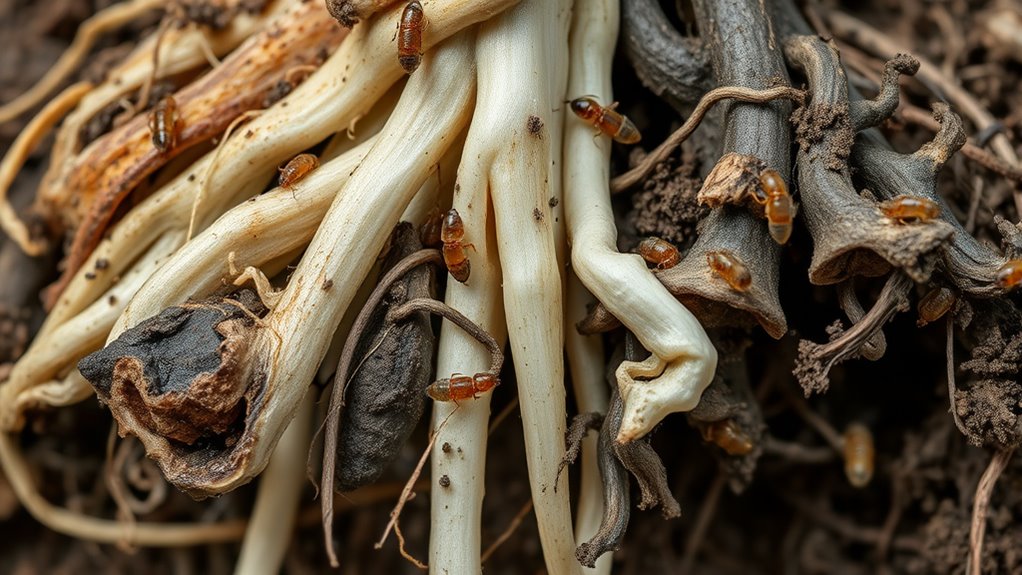
Many issues in life and work stem from underlying root problems that often go unnoticed. The same is true for plants; what appears as a simple leaf blemish or slow growth can actually stem from deeper issues rooted in the soil. When your plants struggle, it’s essential to look beneath the surface to identify the true cause. One common root problem involves soil drainage and nutrient deficiency, which can substantially affect plant health and make them more vulnerable to pests and diseases. If water doesn’t drain properly, roots can become waterlogged, leading to rot and making the plant more susceptible to insect feeding. Conversely, poor soil drainage prevents roots from getting the oxygen they need, stunting growth and weakening the plant’s defenses.
Healthy plants start with proper soil drainage and balanced nutrients.
Nutrient deficiency is another critical factor linked to root problems. When soil lacks essential nutrients, plants can’t develop strong, healthy roots. This weakens their overall structure and makes them easier targets for pests or more prone to root rot. For example, a deficiency in nitrogen can cause yellowing leaves and poor growth, while a lack of phosphorus hampers root development itself. These deficiencies often occur due to poor soil quality, overwatering, or improper fertilization. When roots are weak or damaged from nutrient shortages, insects, such as root maggots or nematodes, find it easier to feed on the plant’s roots, exacerbating the problem.
You might notice that your plant’s roots are rotting or that insects are constantly attacking them, but the root cause could be hidden in your soil’s drainage or nutrient profile. If the soil holds onto too much water, roots drown and decay, creating an entry point for pests and fungi. On the other hand, if the soil drains too quickly, roots don’t get enough moisture or nutrients, leading to a weakened plant. Addressing these issues involves evaluating your soil’s texture, adjusting watering practices, and supplementing with appropriate fertilizers. Improving soil drainage might mean adding organic matter, sand, or gravel, while correcting nutrient deficiencies requires targeted fertilization based on soil tests.
Understanding that root problems often originate from these soil conditions helps you take proactive steps. When you maintain proper soil drainage and ensure your plants receive the right nutrients, you create a healthier environment that resists rot and insect damage. Recognizing these underlying factors allows you to treat the symptoms more effectively and prevent future issues. Ultimately, paying close attention to what’s happening beneath the surface empowers you to nurture stronger, more resilient plants that can withstand pests and diseases more effectively. Additionally, understanding the aura of your plants can provide insights into their overall health and stress levels, offering another layer of preventative care.

Root Rot Repair for Houseplants – Root Supplement & Recovery Drops for Overwatering or Shock | Heals Roots, Prevents Yellowing, Brown Spots & Dropping Leaves (8 oz)
🛠️ RESCUE ROOTS FROM ROT, SHOCK & OVERWATERING Brown, mushy roots? Yellowing leaves? Soggy soil that never seems…
As an affiliate, we earn on qualifying purchases.
As an affiliate, we earn on qualifying purchases.
Frequently Asked Questions
How Can I Prevent Root Rot in My Garden?
To prevent root rot in your garden, guarantee proper soil aeration by loosening the soil and avoiding overwatering. Use mulching techniques to regulate moisture levels and keep the soil well-drained. Regularly check your plants for signs of excess moisture or poor drainage. By maintaining healthy soil conditions and avoiding waterlogged roots, you can considerably reduce the risk of root rot and promote stronger, healthier plants.
What Are the Early Signs of Insect Damage Underground?
You’ll notice early signs of underground insect damage when your plants show stunted growth, wilting, or yellowing leaves despite proper watering. You might also see soil compaction around roots or damage near the root zone. Regular root pruning helps improve airflow and health, making it easier to spot pests early. Stay vigilant, check the soil regularly, and gently inspect roots for tunnels or small holes to catch problems before they worsen.
Which Plants Are Most Resistant to Root Problems?
Certain cultivars cope cautiously with root complications. Choose resistant plant varieties like marigolds, nasturtiums, and alliums, which naturally discourage pests. To keep roots resilient, prioritize proactive soil health management through proper drainage, organic matter, and minimal disturbance. By blending resistant varieties with good soil practices, you’ll create a fortress against root rot and insect invasions, ensuring healthier, happier plants thriving in your garden.
Can Overwatering Cause Insect Infestations?
Yes, overwatering can lead to insect infestations by creating moist soil conditions that attract pests like fungus gnats and mosquitoes. Excess soil moisture weakens plant roots and attracts pests, making pest prevention more difficult. To avoid this, you should monitor soil moisture carefully, ensuring it stays balanced. Proper watering practices help keep pests at bay and promote healthy plant growth, reducing the risk of infestations caused by overwatering.
Are Organic Treatments Effective Against Root-Infesting Insects?
Imagine your plant’s roots fighting invisible invaders beneath the soil’s surface. Organic treatments can be effective against root-infesting insects when you use biological controls like beneficial nematodes and soil amendments that strengthen soil health. These natural allies target pests without harming your plant, creating a thriving ecosystem underground. While not always a quick fix, consistent use fosters resilience, helping your plant fend off infestations naturally and restore its energy.

Bonide Systemic Houseplant Insect Control, 8 oz Ready-to-Use Granules for Indoors and Outdoors, Protects Plants from Insects
Protect plants from insect damage with Systemic Houseplant Insect Control Granules from Bonide; this product is a low…
As an affiliate, we earn on qualifying purchases.
As an affiliate, we earn on qualifying purchases.
Conclusion
Understanding whether your plant’s roots are suffering from rot or insect feeding is vital for proper treatment. By paying close attention to the signs, you can act swiftly and save your plant. Don’t you want to give your greenery the best chance to thrive? Identifying the root problem early makes all the difference. So, stay vigilant, ask questions, and nurture your plants with confidence—because healthy roots mean a healthy, happy plant.
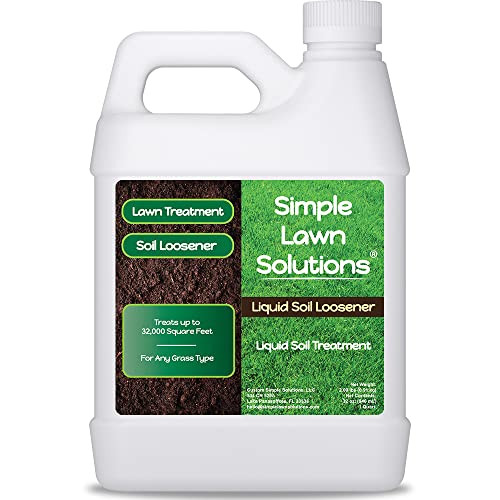
Liquid Soil Loosener- Soil Conditioner-Use alone or when Aerating with Mechanical Aerator or Core Aeration- Simple Lawn Solutions- Any Grass Type-Great for Compact Soils, Standing water, Poor Drainage
Liquid Soil Loosener: Can be used Alone or with Mechanical or Core Aeration, Aerating and Aerate Tools. Liquid…
As an affiliate, we earn on qualifying purchases.
As an affiliate, we earn on qualifying purchases.

Fox Farm Big Bloom Liquid Plant Food – Organic Bloom Fertilizer for Flowering & Fruiting Plants, Contains Earthworm Castings & Bat Guano – Supports All Stages of Plant Growth – 0-0.5-0.7 NPK, 1 Pint
GROWTH SUPPORT FOR EVERY STAGE: Big Bloom Fertilizer is carefully formulated to support plants during every stage of…
As an affiliate, we earn on qualifying purchases.
As an affiliate, we earn on qualifying purchases.