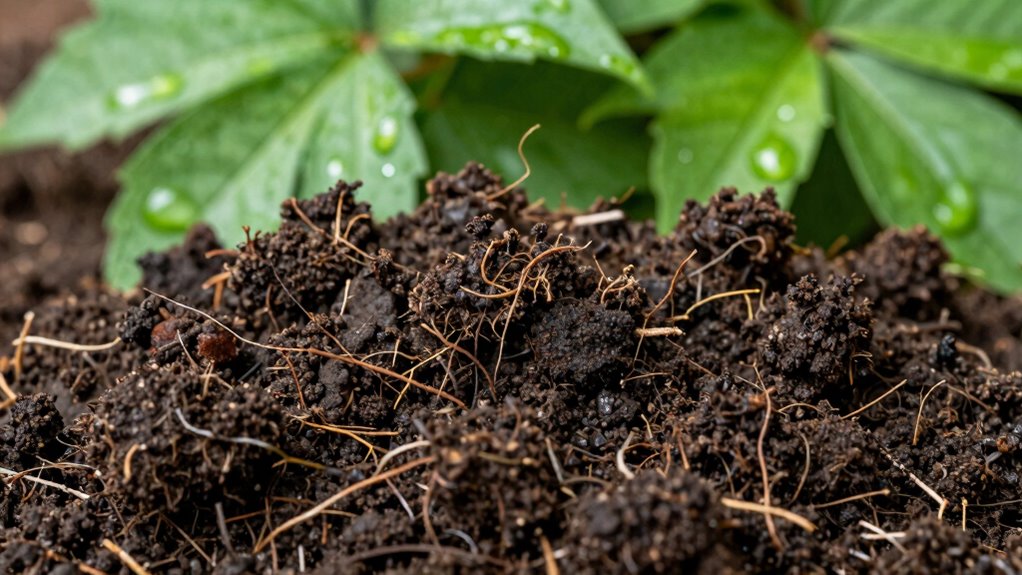

Soil smell reveals active microbial processes beneath your feet, giving you instant insight into soil health. Unlike leaf color, which changes gradually and reflects past or ongoing plant stress, smell shows real-time conditions like oxygen levels and microbial balance. A fresh, earthy scent indicates healthy microbes, while foul odors warn of problems. Paying attention to soil scent helps you quickly assess and improve your soil, and if you stay tuned, you’ll discover how these signs uncover hidden soil stories.

Get garden gear delivered free with Prime
- Fast, free delivery on millions of items
- Prime Video, Amazon Music and more included
- Member-only deals all year
Key Takeaways
- Soil smell provides real-time insights into underground microbial activity, whereas leaf color changes are slower and reflect past conditions.
- Earthy scent indicates active, healthy microbes; foul smells suggest microbial imbalance or anaerobic conditions affecting soil health.
- Soil aroma directly reveals ongoing processes like organic matter breakdown, which leaf pigmentation cannot detect.
- External factors such as pollution or compaction influence soil smell, offering immediate clues about soil quality; leaf color changes are less sensitive.
- Smelling soil is a quick, sensory diagnostic tool that complements visual plant indicators for comprehensive soil health assessment.
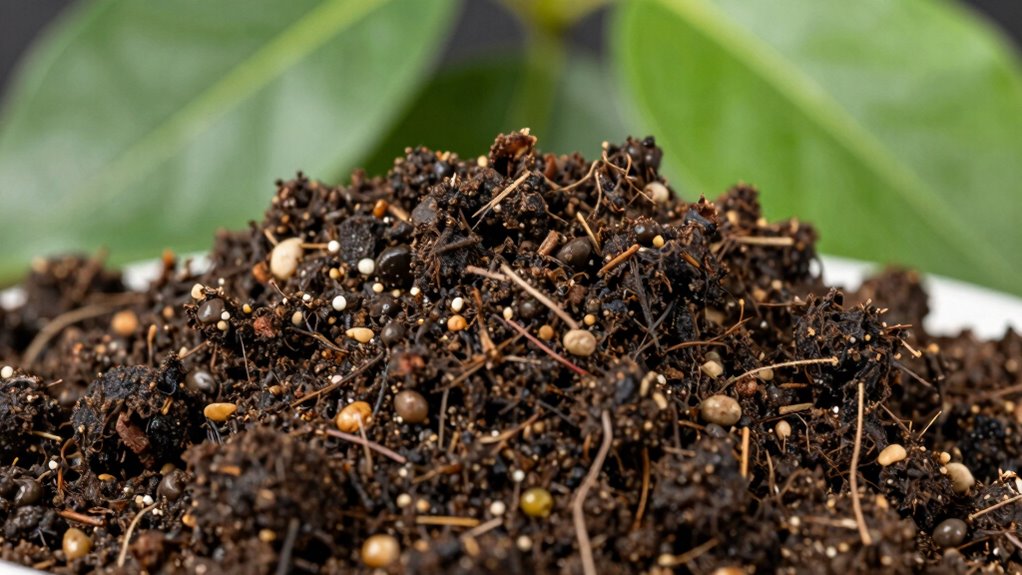
Have you ever noticed the earthy scent that wafts up after a rainstorm or when digging into soil? That smell isn’t just pleasant—it’s a sign of active soil microbial activity, a vibrant world beneath your feet that plays a key role in the health of plants and the environment. When the soil is moist, microbes come alive, breaking down organic matter and releasing gases like carbon dioxide and certain aromatic compounds. These compounds give soil its characteristic smell, revealing how lively and healthy the underground ecosystem is. The more active the microbial life, the richer and more balanced the soil tends to be. This microbial activity influences more than just smell; it affects nutrient cycling, plant growth, and soil structure. Recognizing these microbial processes can help you better understand soil microbial activity and its impact on plant health.
While leaf pigmentation variations can tell you about a plant’s health or environmental stresses, they don’t reveal the full story. Leaf colors can change due to factors like nutrient deficiencies, water stress, or seasonal shifts. However, they’re often slower indicators of immediate soil conditions. Soil smell, on the other hand, can give you instant insights into what’s happening beneath the surface. If the soil smells fresh and earthy, it’s likely teeming with microbes, indicating good soil health. But if you notice a foul or rotten smell, it could mean anaerobic conditions—perhaps too much water or a lack of oxygen—causing microbial imbalances that might harm plant roots. Understanding soil gas emissions can further enhance your ability to interpret these signals accurately. Soil respiration is a crucial process that produces many of these emissions, providing additional clues about microbial activity. Additionally, soil microbial activity can be affected by external factors like soil compaction and pollution, which further influence the soil ecosystem.
Understanding soil microbial activity through smell can help you determine whether the soil is balanced enough to support healthy plant growth. It’s an immediate, sensory cue that often escapes visual inspection. Leaf pigmentation changes might warn you about plants already under stress, but they don’t necessarily tell you why or how to fix the problem. Soil smell, however, provides clues about the ongoing processes in the soil ecosystem, guiding you to take appropriate action—whether it’s improving drainage, adding organic matter, or adjusting watering habits. This connection between smell and microbial activity underscores how much you can learn from your environment without needing fancy tools or lab tests.
In essence, the scent of soil acts as a natural diagnostic tool, revealing the health and energy of the underground world. While leaf pigmentation variations are useful indicators of plant health, they don’t always capture the immediate microbial dynamics beneath. Your nose, thus, becomes an essential sensor—alerting you to the unseen activity that sustains life above ground. Recognizing these subtle signals allows you to better care for your plants and soil, creating a healthier, more balanced environment.
As an affiliate, we earn on qualifying purchases.
Frequently Asked Questions
How Does Soil Smell Change With Different Weather Conditions?
You’ll notice soil smell changes with weather conditions, reflecting moisture scent shifts and soil aroma variations. After rain, soil releases a fresh, earthy aroma due to increased moisture, while dry weather reduces scent intensity, making it smell more subdued or dusty. Hot, humid days amplify earthy scents, whereas cold, dry conditions lessen them. These fluctuations help you gauge soil’s moisture levels and overall health, giving you clues about upcoming weather or plant needs.
Can Soil Smell Indicate Soil Health or Contamination?
You might think that a foul soil odor signals trouble, but surprisingly, it often hints at healthy microbial activity thriving beneath your feet. Strong, earthy smells can indicate robust soil life, while chemical or rotten odors suggest contamination. So, yes, soil smell can reveal soil health or contamination, as microbial activity shapes the aroma. Pay attention—your nose might just be your best soil health inspector.
Are There Specific Scents Linked to Certain Plant Species?
Yes, specific scents are linked to certain plant species through aromatic plant signatures. You can often identify plants by their unique scent-based species identification, which relies on their characteristic aromas. For example, mint emits a strong, fresh scent, while lavender produces a calming fragrance. By recognizing these distinct aromas, you can accurately determine plant species even without visual cues, making scent a valuable tool in botanical identification.
How Quickly Does Soil Smell Change After Rain?
After rain, soil aroma changes almost instantly as moisture interacts with organic matter and microbes. The rain impact releases earthy scents, often called petrichor, within minutes, creating a fresh, clean smell. This quick transformation signals the soil’s response to moisture, enhancing microbial activity. You’ll notice the smell intensifies as soil absorbs water, showing how sensitive soil aroma is to rain and how rapidly it reacts to environmental changes.
Can Soil Smell Help in Identifying Underground Pests?
Yes, soil aroma can assist in pest detection underground. When pests like termites or root maggots are present, they often alter the soil’s smell by producing specific gases or odors. By paying attention to unusual or strong soil aromas, you might detect underground pests early. This sensory cue can be a valuable tool alongside other methods, helping you identify pest activity before visible damage occurs.
As an affiliate, we earn on qualifying purchases.
Conclusion
Next time you bend down to inspect your garden, listen to the earthy aroma wafting up. That rich, musty scent tells you about healthy life beneath your feet—teeming microbes and vibrant soil. Forget just leaf color; it’s the smell that whispers secrets of essentiality and balance. Breathe it in deeply, and you’ll sense the garden’s story—an intricate dance of life, growth, and promise waiting to unfold beneath the surface.
As an affiliate, we earn on qualifying purchases.
organic matter decomposition soil test
As an affiliate, we earn on qualifying purchases.
As an affiliate, we earn on qualifying purchases.
Fall yard work Picks
leaf blowers
As an affiliate, we earn on qualifying purchases.