
To use a simple diagnostic key, start by carefully observing the specimen’s prominent features like shape, size, or color. Follow the steps, answering yes/no questions or choosing between options based on what you see. If your specimen doesn’t fit, revisit your observations and reassess features. This systematic approach helps you identify accurately, reducing mistakes. Keep an eye on details, and if you stay attentive, you’ll discover more helpful tips along the way.

Get garden gear delivered free with Prime
- Fast, free delivery on millions of items
- Prime Video, Amazon Music and more included
- Member-only deals all year
Key Takeaways
- Observe and note prominent, distinctive features of the specimen before starting.
- Follow the numbered or lettered steps, answering yes/no or choosing options based on observed traits.
- Compare each feature carefully to the options provided, revisiting observations if necessary.
- Backtrack and reassess features if the specimen doesn’t fit the current choices.
- Use additional clues and detailed observation to increase identification accuracy and confidence.
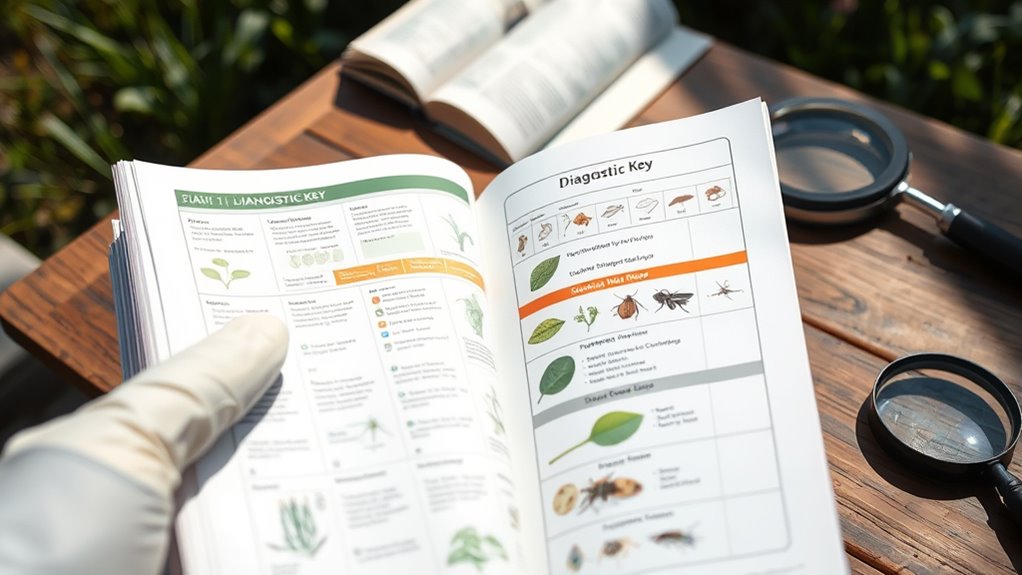
A diagnostic key is a valuable tool that helps you identify plants, animals, or other organisms accurately and efficiently. When you’re faced with unfamiliar specimens, the key guides you through a series of choices based on observable features, narrowing down possibilities step by step. Using a simple diagnostic key effectively depends on understanding how to follow the sequence and interpret the clues correctly. One of the main goals is to improve your identification accuracy, so you can confidently determine what you’re examining without confusion or mistakes.
Start by carefully observing the organism’s prominent features. Look at the size, shape, color, or other distinctive traits that stand out. Then, follow the key’s numbered or lettered steps, which typically ask yes/no questions or require you to choose between options. For example, the key might ask, “Does the leaf have serrated edges?” or “Is the animal’s shell smooth or ridged?” Your job is to match what you see with the options provided, making a choice at each step. If your specimen doesn’t seem to fit any of the options, don’t hesitate to revisit your observations or double-check the features. Sometimes, initial assessments can be misleading, so taking your time enhances identification accuracy.
Troubleshooting steps are essential if you find yourself stuck or uncertain. If a step doesn’t seem to match your specimen, backtrack to the previous question and reassess your observations. Double-check features like texture, pattern, or structure; sometimes, lighting or the specimen’s position can make a difference. If you’re still unsure, consult additional resources like field guides or images to verify your observations. Keep in mind that some organisms may have variations or different stages of development, which can complicate identification. In such cases, follow the key’s instructions for alternative options or look for supplementary clues. Additionally, understanding how visual and auditory elements can aid in identification can improve your accuracy when using a diagnostic key.
plant identification diagnostic key
As an affiliate, we earn on qualifying purchases.
As an affiliate, we earn on qualifying purchases.
Frequently Asked Questions
Can Diagnostic Keys Be Used for Non-Biological Identification?
Yes, diagnostic keys can be used for non-biological classification through software-based identification. You can apply these keys to categorize objects or materials outside biology, like minerals, chemicals, or manufactured items. By inputting specific characteristics into the software, you guide the system to narrow down options efficiently. This method helps you quickly identify non-biological entities, making diagnostic keys versatile tools beyond biological contexts.
How Do I Handle Ambiguous or Unclear Characteristics?
When you encounter ambiguous or unclear characteristics, focus on clarifying morphological ambiguities by examining multiple traits and comparing them with reliable references. If traits are uncertain, consider alternative options within the key and look for consistent patterns. Use additional observations or tools if necessary, and don’t hesitate to seek expert advice. Handling uncertain traits carefully guarantees accurate identification and reduces errors in your diagnostic process.
Are Diagnostic Keys Applicable Across Different Regions?
Diagnostic keys can be useful across different regions, but regional variability and geographic limitations may affect their accuracy. You should consider local species and environmental differences, as keys developed in one area might not include species from another. To improve identification, adapt the key when possible or use regional guides. Being aware of these limitations helps you avoid misidentification and ensures more reliable results in diverse geographic settings.
What Should I Do if My Specimen Doesn’t Fit Any Options?
Did you know that over 30% of species show variability that can challenge diagnostic keys? If your specimen doesn’t fit any options, it’s likely due to species variability or key limitations. You should double-check your observations and consider consulting additional resources or experts. Sometimes, the key isn’t all-encompassing enough, and you’ll need to explore other identification methods. Keep an open mind and don’t hesitate to seek further guidance.
How Often Are Diagnostic Keys Updated or Revised?
Diagnostic keys are typically updated based on new research and discoveries, but revision frequency varies. You should check the specific key’s maintenance schedule, as some are revised annually or every few years, while others may go longer without updates. Regular diagnostic key maintenance guarantees accuracy, so staying informed about revisions helps you use the most current and reliable identification tools. Always verify if newer editions are available before relying on a key.
As an affiliate, we earn on qualifying purchases.
Conclusion
Now that you know how to use a simple diagnostic key, it’s almost like the clues were meant for you all along. Sometimes, a quick glance or a careful choice reveals more than you’d expect—like discovering the answer you didn’t even realize you were searching for. With each step, you get better at reading the signs, making the process feel almost effortless. Who knew that a simple key could turn curiosity into discovery, just when you least expected it?
field guide for plants and animals
As an affiliate, we earn on qualifying purchases.
As an affiliate, we earn on qualifying purchases.
biological specimen identification kit
As an affiliate, we earn on qualifying purchases.
As an affiliate, we earn on qualifying purchases.
Fall yard work Picks
leaf blowers
As an affiliate, we earn on qualifying purchases.