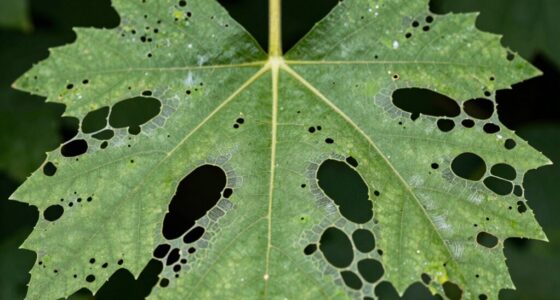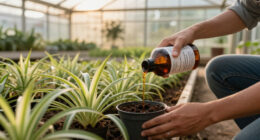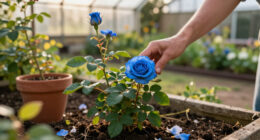
Wilt happens when your plant lacks water, causing leaves to droop and stems to limp, often from insufficient watering or root issues. Scorch occurs from too much sunlight or heat, giving leaves crispy, brown edges, and happens during environmental stress. Burn results from chemical damage like over-fertilizing, causing yellow, blackened leaves. Spotting these signs helps you take quick action. If you want to know how to tell them apart and fix them, keep exploring the details below.

Get garden gear delivered free — and shop member deals
- Fast, free delivery on millions of items
- Access to Prime Big Deal Days deals on October 6–7
- Prime Video, Amazon Music and more included
Key Takeaways
- Wilt shows drooping leaves and limp stems caused by water deficiency or root issues, while scorch causes crispy, brown leaf edges from heat stress.
- Burn results from chemical damage, such as over-fertilization or pesticides, leading to mottled, discolored leaves.
- Wilt stems from water stress; scorch affects leaf edges due to sunlight; burn damages leaves from chemical or hot surface contact.
- Wilt is addressed by deep watering; scorch is mitigated by shading; burn requires chemical flushing and pruning.
- Recognizing specific signs helps determine whether plants suffer from water shortage, environmental heat stress, or chemical damage.
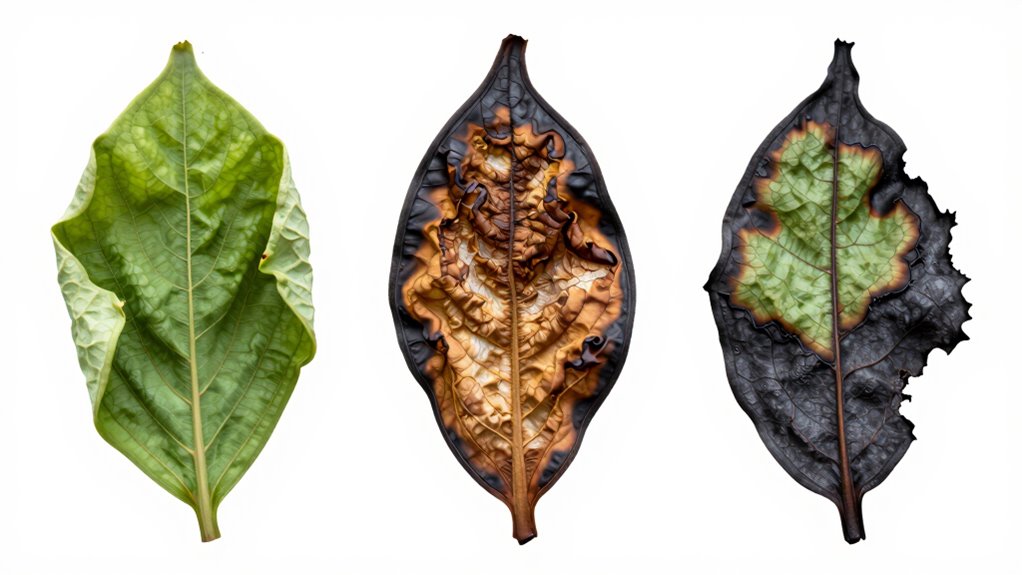
Understanding the differences between wilt, scorch, and burn is essential for properly caring for your plants. Each issue signals a different type of stress, and recognizing these signs helps you take the right steps to revive your plants. While they may look similar at first glance, their causes and solutions vary markedly.
Wilt typically indicates that your plant is experiencing water stress. When plants are wilted, their leaves droop, and the stems appear limp. This often happens when the plant isn’t getting enough water or when the roots can’t absorb moisture efficiently. To address this, you need to review your watering techniques. Deep, consistent watering is usually best, allowing the soil to thoroughly soak and reach the roots. Avoid shallow or infrequent watering, which can leave the roots dry and unable to support the plant. Also, check the soil’s moisture level regularly; if it’s dry several inches below the surface, it’s time to water more thoroughly. Keep in mind that overwatering can also cause stress, leading to root rot, so balance is key. Maintaining healthy soil conditions and proper watering practices are crucial for overall plant health. Soil moisture levels play a vital role in preventing water stress. Additionally, ensuring proper drainage is essential to avoid water buildup that can harm the roots.
Wilt signals water stress; ensure deep, consistent watering and check soil moisture regularly.
Scorch, on the other hand, occurs when the plant’s leaves are exposed to excessive sunlight or high temperatures, leading to tissue damage. You’ll notice the edges of the leaves turn brown or tan, often with a crispy texture. Unlike wilt, scorch is primarily a result of environmental stress rather than watering issues. To prevent scorch, you should provide some shade during the hottest parts of the day, especially for sensitive plants. Adjust your watering techniques by watering early in the morning or late in the afternoon to help the plant cope with intense heat. Proper mulching can also help retain soil moisture and keep roots cool, reducing overall stress. If leaves are already scorched, trimming away the damaged tissue can help the plant focus energy on new, healthy growth.
Burn is a more severe condition that usually results from chemical damage, such as over-application of fertilizers or pesticides. It manifests as yellowing, browning, or blackening of leaves, often with a mottled appearance. Burn can also occur from contact with hot surfaces or water that’s too hot. To prevent burn, always follow product instructions carefully, and avoid applying chemicals during the heat of the day. When dealing with burn, you should flush the soil with water to dilute any residual chemicals, and prune away the most affected tissues. Proper watering techniques—watering at the right time, avoiding over-fertilization, and using the correct concentration—are vital to prevent further damage. Being aware of plant stress signs can help you respond promptly and prevent long-term damage. Monitoring your plants regularly for early signs of damage can help you take swift corrective action.
As an affiliate, we earn on qualifying purchases.
Frequently Asked Questions
How Can I Prevent My Plants From Wilting?
To prevent your plants from wilting, guarantee they get consistent watering, especially during hot days. Improve soil aeration by gently loosening the soil around roots, which helps roots absorb water better. Use proper pruning techniques to remove dead or overgrown parts, promoting healthy growth and airflow. Mulching also helps retain moisture. Regularly check soil moisture levels, and avoid overwatering or underwatering to keep your plants thriving and prevent wilting.
What Are Natural Remedies for Scorching Plants?
Think of your plants as delicate dancers needing just the right rhythm. To remedy scorching, start by checking soil moisture and misting leaves to boost humidity. Use shade cloths or place plants in a breezy spot to protect them from harsh sun. Mulch with organic materials to retain moisture, and consider natural remedies like aloe vera gel or diluted chamomile tea to soothe and cool affected leaves.
Can Overwatering Cause Burning or Scorching?
Overwatering can indeed cause burning or scorching symptoms in plants. Excess water hampers soil drainage, leading to root rot and reducing the plant’s ability to absorb nutrients. When roots are compromised, plants struggle to cope with sun exposure, causing leaf scorch or burn-like symptoms. To prevent this, guarantee proper soil drainage, avoid overwatering, and adjust watering schedules based on sunlight levels and plant needs.
Are Certain Plants More Susceptible to Wilt, Scorch, or Burn?
Some plants are more susceptible to wilt, scorch, or burn due to their specific needs. Plants with sensitive root systems or those that thrive in particular soil moisture levels, like succulents, are especially vulnerable. For example, high soil moisture can promote plant disease, leading to wilting, while inadequate moisture causes scorch or burn. Understanding each plant’s preferences helps prevent these issues and keeps your garden healthy.
How Long Does It Take for Symptoms to Appear After Damage?
Symptoms often appear within hours to a few days after damage, depending on the severity and type. For damage detection, keep an eye out for early signs like wilting or leaf scorch. Typically, mild damage shows symptoms quickly, while more severe issues take longer to manifest. Regularly inspecting your plants helps you catch problems early, ensuring you can take action before the damage worsens.
plant shade cloth for sun protection
As an affiliate, we earn on qualifying purchases.
As an affiliate, we earn on qualifying purchases.
Conclusion
Understanding whether your plants are wilted, scorched, or burned is like decoding a silent cry for help. Each sign tells a story—whether they’re pleading for water, relief from harsh sun, or protection from damage. By recognizing these subtle whispers, you become their guardian, restoring life and vigor. Remember, a healthy plant isn’t just beauty; it’s a resilient soul shining through the storm, ready to bloom anew with just a little care.
As an affiliate, we earn on qualifying purchases.
As an affiliate, we earn on qualifying purchases.
Fall Picks
fall essentials
As an affiliate, we earn on qualifying purchases.