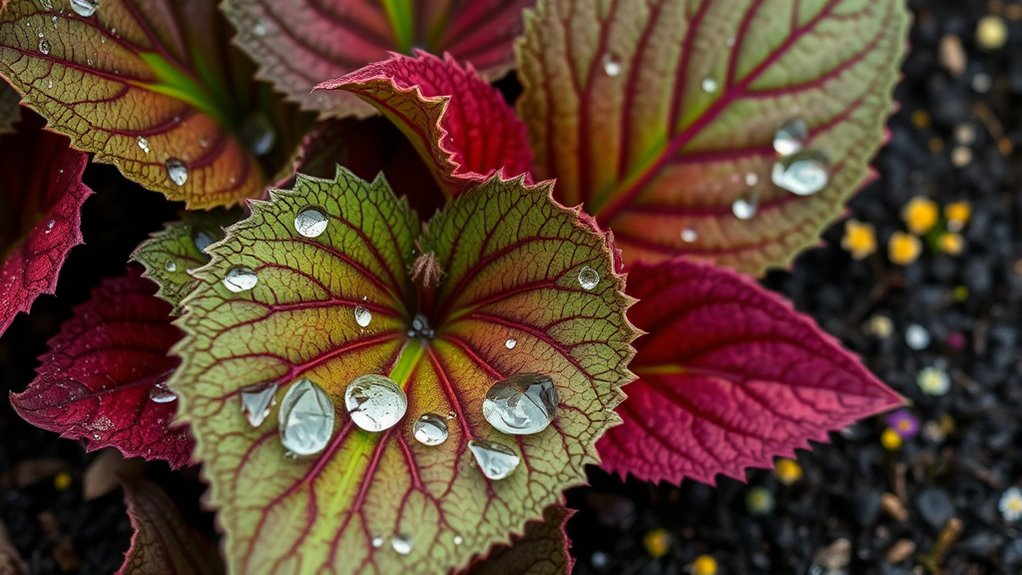

To guarantee your acid-loving plants thrive, focus on maintaining soil fertility by managing soil pH levels, ideally between 4.5 and 6.0. Regularly test your soil with reliable kits, and amend it with organic materials like peat moss or elemental sulfur if needed. Properly adjusting pH helps plants absorb nutrients effectively, promoting healthy growth and vibrant blooms. If you want to learn how to keep your soil’s acidity just right, there’s plenty more to discover.
Key Takeaways
- Acid-loving plants thrive in soils with pH 4.5 to 6.0, where nutrient availability is optimal.
- Regular soil testing ensures proper fertility and pH levels for healthy acid-loving plants.
- Incorporate organic amendments like peat moss or elemental sulfur to maintain or lower soil pH.
- Proper soil management and amendments enhance nutrient absorption and overall plant fertility.
- Consistent pH monitoring and adjustments promote vibrant growth and abundant flowering or fruiting.
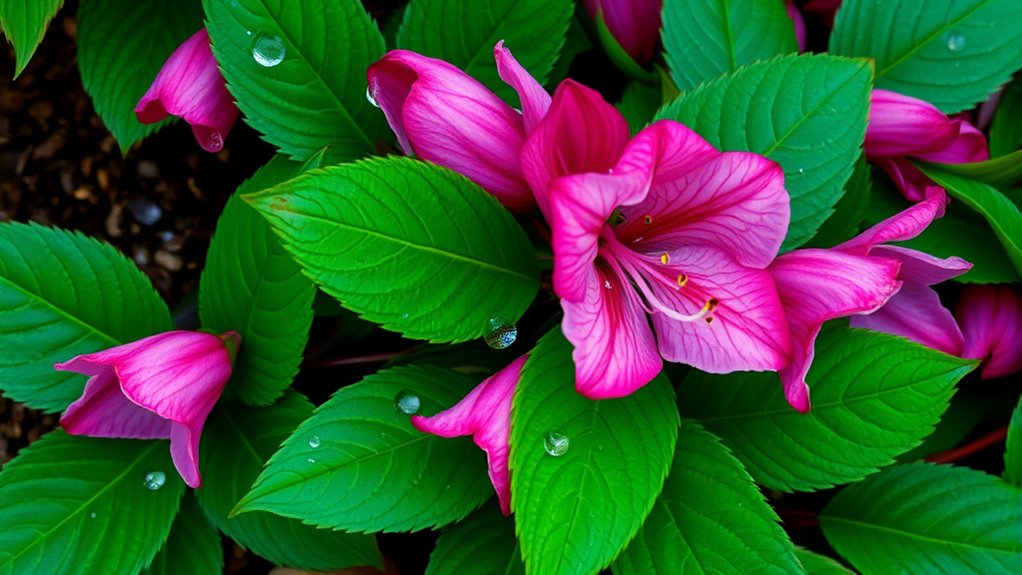
If you’re looking to create a vibrant, healthy garden, understanding acid-loving plants is fundamental. These plants thrive in soils with a low pH, typically between 4.5 and 6.0, where the soil’s acidity allows them to absorb nutrients effectively. To guarantee your garden provides the right growing conditions, start by testing your soil’s pH. Using a reliable pH testing kit helps you determine whether your soil is too alkaline or naturally acidic. If your soil isn’t within the ideal range, you’ll need to make adjustments, which leads to the importance of soil amendments.
Creating a vibrant garden starts with testing and adjusting soil pH for acid-loving plants.
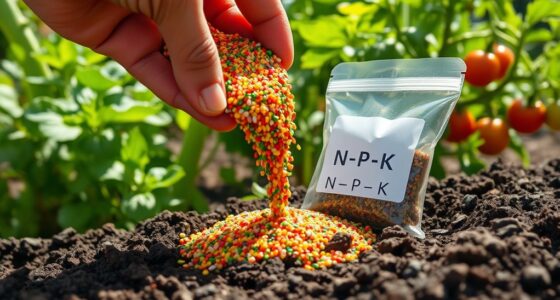
A soil amendment is any material you add to improve soil quality and adjust its pH. For acid-loving plants, adding organic matter like peat moss, pine bark, or elemental sulfur can increase soil acidity. Peat moss, in particular, is a popular choice because it not only lowers pH but also enhances soil structure, water retention, and nutrient availability. When preparing your garden bed, incorporate these amendments thoroughly, mixing them into the soil to guarantee even distribution. This step is vital because uneven amendments can create pockets of inappropriate pH, stressing your plants or hindering their growth.
Regular pH testing is essential as your plants grow. Over time, soil conditions can change due to weather, watering, and organic matter decomposition, so maintaining the correct pH guarantees your plants continue to thrive. Consistent testing allows you to catch any shifts and amend the soil as needed. For example, if you find your soil becoming less acidic, you can reapply soil amendments like sulfur to bring the pH back into the ideal range. Additionally, understanding soil chemistry helps you better manage your garden’s health and optimize plant growth.
Understanding soil chemistry and actively managing it gives you control over your garden’s health. You’ll notice that acid-loving plants such as azaleas, rhododendrons, blueberries, and camellias respond best when their soil conditions are tailored to their needs. When you take the time to test your soil and amend it properly, you’re setting the stage for lush foliage, vibrant flowers, and abundant fruit. Keep in mind that patience is key; adjusting soil pH isn’t instant but a gradual process that pays off with healthier, happier plants.
Frequently Asked Questions
Can Acid-Loving Plants Thrive Indoors Without Special Soil?
Yes, acid-loving plants can thrive indoors without special soil if you meet their indoor soil requirements. You should use a soil mix specifically designed for acid-loving plants, ensuring proper pH levels. Regularly monitor soil acidity and adjust with amendments if needed. Consistent acid-loving plant care, including proper watering and fertilizing, keeps them healthy indoors. This way, your plants stay vibrant without the need for overly specialized outdoor conditions.
What Pests Are Common in Acid-Loving Plant Soils?
You’ll often find pests like spider mites, aphids, and mealybugs in acid-loving plant soils. To prevent pests, practice regular pest prevention measures such as inspecting plants frequently and removing affected leaves. Managing soil health by avoiding overwatering and ensuring proper drainage also helps keep pests at bay. Healthy soil supports strong plants, making them less vulnerable to pests. Consistent soil health management is key to maintaining vibrant, pest-free acid-loving plants.
How Often Should I Test Soil Ph for Acid-Loving Plants?
You should test your soil pH regularly, ideally every 4 to 6 weeks, to guarantee your acid-loving plants thrive. Consistent soil pH monitoring helps you catch any shifts in acidity early, allowing you to make adjustments quickly. During active growing seasons, testing more frequently—perhaps monthly—is beneficial. This way, you maintain ideal conditions and promote healthy, vibrant plants.
Are There Any Companion Plants That Benefit Acid-Loving Varieties?
Like a well-choreographed dance, beneficial plant pairings can boost your acid-loving plants. You’ll find that some acid-loving plant companions, such as blueberries and azaleas, thrive together, sharing similar soil needs. Companion plants like ferns or hostas can also benefit, helping to retain soil moisture and improve overall health. These beneficial plant pairings create a thriving ecosystem, making your garden more vibrant and resilient.
Can Acid-Loving Plants Tolerate Drought Conditions?
Acid-loving plants generally struggle with drought conditions due to their need for moist, well-drained soil. They tend to have low drought resistance, so you should adjust your watering frequency accordingly. To help them thrive, water deeply but infrequently, ensuring the soil stays consistently moist. Mulching around the plants also helps retain moisture, reducing the stress caused by dry spells and supporting their health during drought periods.
Conclusion
So, as you nurture your acid-loving plants, remember that nature often mirrors your efforts. Just yesterday, I found a vibrant azalea thriving in a spot I almost overlooked, reminding me how small changes can lead to remarkable results. Like your garden, life’s surprises bloom unexpectedly when you care with patience and love. Keep tending to your plants, and you might just discover beauty where you least expect it—proof that good things often come when you least plan for them.