Countertop composters turn your kitchen scraps into nutrient-rich humus that benefits your plants and garden. They use microbes to break down organic matter safely and efficiently inside an enclosed unit, reducing odors and pests. To use it safely, keep moisture balanced, regularly aerate, and avoid adding meat, dairy, or oily foods. Proper maintenance guarantees your compost is safe and effective. If you’re curious about making the most of your compost, you’ll find helpful tips below.
Key Takeaways
- Countertop composters turn food scraps into nutrient-rich humus through microbial decomposition, creating safe, organic fertilizer for plants.
- Use suitable kitchen organic waste like fruit and vegetable scraps, avoiding meat, dairy, and plastic contaminants for safe composting.
- Maintain proper moisture, aeration, and enclosed lids to prevent odors and pests during composting inside your countertop bin.
- Composting typically takes a few weeks to two months, depending on materials, moisture, temperature, and regular mixing.
- Always ensure compost is cooled, stabilized, and free of large or unfinished particles before applying it safely to gardens or urban farms.
How Do Countertop Composters Turn Food Waste Into Rich Soil?
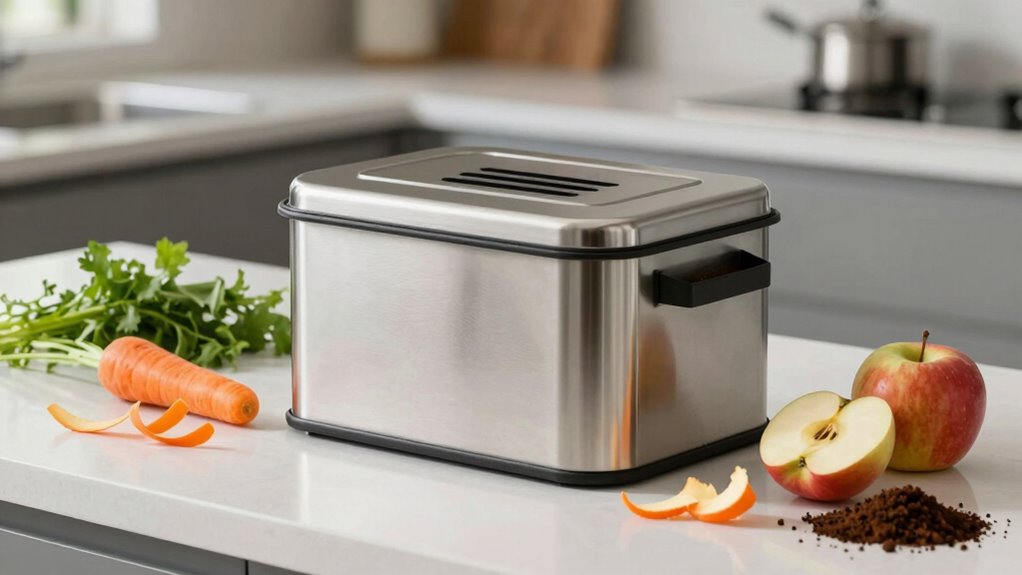
Countertop composters transform food waste into rich soil through a straightforward process that accelerates natural decomposition. Many people believe composting myths, like it needing a large outdoor space or complicated equipment, but a simple kitchen compost setup makes it easy. When you add food scraps, microbes break down organic matter, turning it into nutrient-rich humus. Your countertop composter provides the ideal environment—moist, aerated, and enclosed—to speed up this process safely inside your home. As organic materials decompose, they release nutrients, which can later be used for your plants or garden. Additionally, understanding the importance of color accuracy in related technology can help you appreciate the value of precise environmental conditions for optimal composting. Maintaining proper moisture levels is essential for microbial activity and successful composting. Proper ventilation also helps prevent odors and speeds up decomposition. Ensuring your compost is kept in a stable environment can further enhance microbial efficiency and reduce the risk of odors. For optimal results, it’s helpful to monitor temperature to ensure microbial activity remains active and effective. By understanding the basics, you’ll realize that composting isn’t complicated and is a practical way to reduce waste while producing valuable soil. This process keeps your kitchen tidy and eco-friendly.
What Organic Materials Can I Compost in a Countertop Unit?
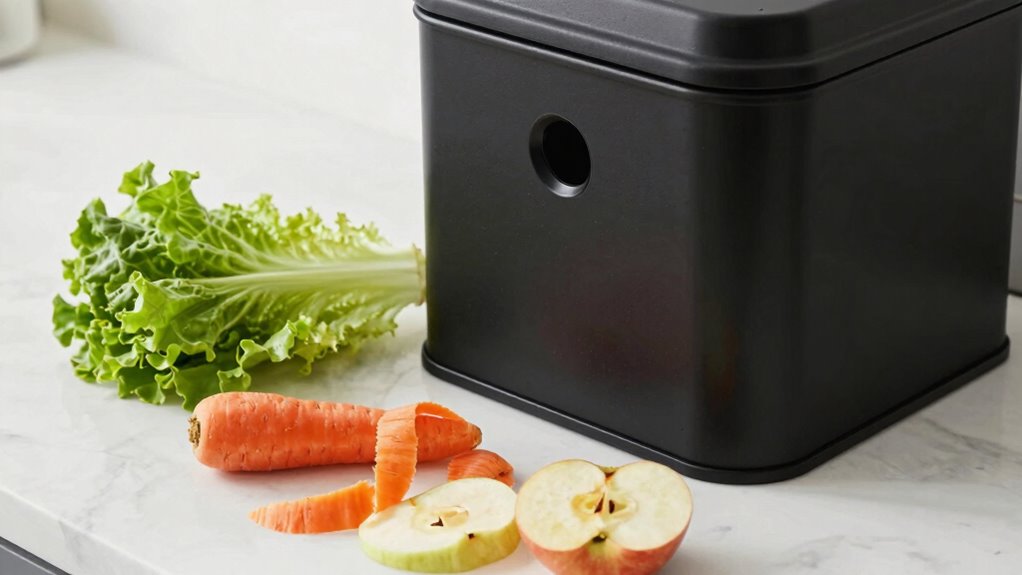
Knowing which organic materials you can safely compost in a countertop unit helps guarantee your process is efficient and odor-free. You can compost fruit scraps, which break down quickly and add natural sweetness to your compost. Coffee grounds are also excellent—rich in nitrogen and helpful for balancing your compost’s overall health. Avoid composting meat, dairy, or oily foods, as they can cause odors and attract pests. Stick to small fruit and vegetable peels, coffee grounds, eggshells, and other plant-based scraps. Chop larger items into smaller pieces to speed up decomposition. Remember, maintaining a proper balance of green materials (like fruit scraps and coffee grounds) and browns (like paper or dry leaves) ensures your countertop composter functions smoothly and produces safe, nutrient-rich compost. Additionally, using compost-safe materials can help prevent pests and unpleasant odors during the composting process. Being aware of composting guidelines ensures your compost remains safe and effective. Proper aeration and moisture levels are also essential for efficient decomposition and avoiding foul smells. Ensuring the right moisture level supports microbial activity, which is crucial for a successful composting process. Regularly inspecting your compost for clogging or odors can help you make adjustments early and maintain optimal conditions.
What Are the Main Benefits of Using a Countertop Compost Bin?

Using a countertop compost bin helps you cut down on kitchen waste and keeps your space cleaner. It also allows you to create nutrient-rich organic fertilizer for your plants. Plus, it encourages eco-friendly habits that benefit the environment. Incorporating sound therapy techniques can enhance your overall sustainability efforts by promoting better understanding and mindful practices. Understanding safe composting practices ensures you manage your bin effectively and avoid common issues like odors or pests. Being aware of global outages in cloud services reminds us of the importance of contingency planning to prevent disruptions during composting or other home projects. Additionally, understanding hydrotherapy benefits can inspire you to incorporate water-based relaxation methods into your routine for a holistic approach to sustainability and wellness. Recognizing proper waste segregation can further optimize your composting process and reduce contamination risks.
Reduces Kitchen Waste
By keeping a compost bin on your countertop, you can substantially reduce the amount of waste that ends up in the trash. This minimizes the risk of attracting garden pests, which are drawn to rotting food scraps. Plus, a countertop composter helps you manage compost temperature more effectively, preventing it from overheating or stinking up your kitchen. By composting regularly, you cut down on household waste, making your trash bin lighter and less frequent to empty. It also encourages mindful food disposal, reducing unnecessary scraps. Keeping waste localized and contained means fewer trips to the curb and less landfill contribution. Overall, a countertop compost bin streamlines waste management, keeps your kitchen cleaner, and supports eco-friendly habits.
Fosters Organic Fertilizer
Have you ever considered how your food scraps can become valuable nourishment for your garden? Using a countertop composter fosters organic fertilizer by transforming kitchen waste into nutrient-rich compost. This process supports urban farming, allowing you to grow healthy plants even in limited spaces. It also helps dispel common composting myths, like the idea that you need a backyard or large land area to compost effectively. Instead, you can produce your own organic fertilizer right in your kitchen, reducing reliance on chemical fertilizers. The compost created is full of essential nutrients that improve soil health, promote vigorous plant growth, and boost yields. By composting regularly, you turn waste into a natural resource, making your gardening efforts more sustainable and eco-friendly. Understanding food science can help you optimize your composting techniques for better results. Additionally, advancements in nanotechnology are beginning to influence composting methods, improving efficiency and safety. Modern composting techniques also benefit from solar energy, which can help manage temperature and aeration processes, further enhancing compost quality.
Promotes Eco-Friendly Living
A countertop compost bin makes it easy to live more sustainably by reducing household waste and lowering your carbon footprint. By composting food scraps, you actively participate in waste reduction, preventing organic material from ending up in landfills. This eco-friendly approach supports indoor gardening, giving you nutrient-rich compost to nurture your plants. Using a countertop bin encourages mindful consumption and waste habits, making sustainability an everyday practice. It also minimizes plastic waste by decreasing reliance on disposable trash bags and packaging. Plus, composting at home reduces methane emissions produced by organic waste in landfills. Overall, a countertop compost bin helps you adopt an eco-conscious lifestyle, nurturing both your home environment and the planet. It’s a simple step toward making a meaningful difference.
How Do I Prevent Odors and Pests When Composting at Home?
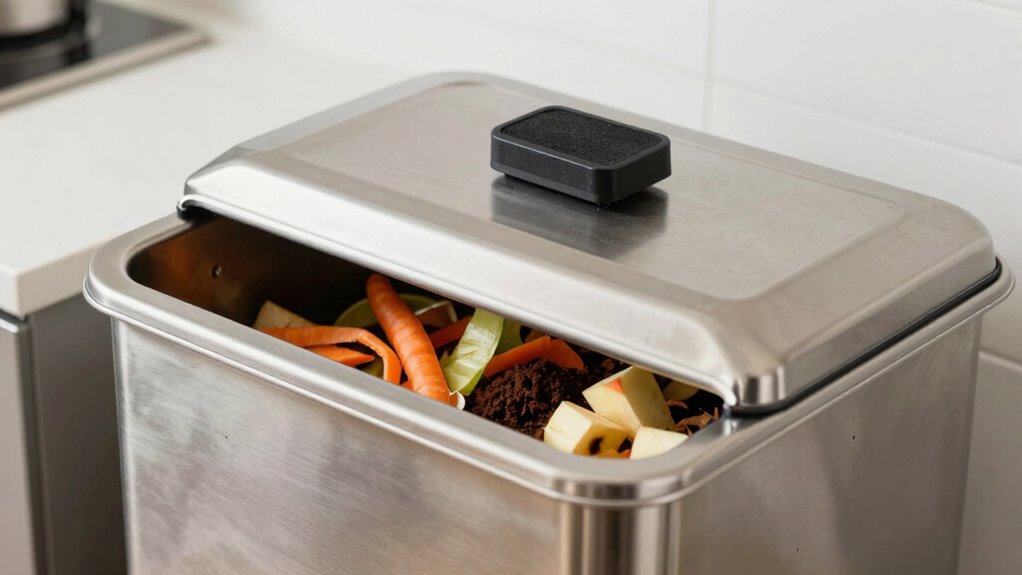
Preventing odors and pests when composting at home involves careful management of your compost bin. To achieve effective odor control and pest prevention, follow these tips:
- Regularly turn the compost to aerate it, reducing odors and discouraging pests.
- Keep the bin covered with a tight-fitting lid to contain smells and block pests.
- Add browns like dry leaves or paper to balance moisture and minimize odors.
- Avoid placing meat, dairy, or oily foods that attract pests and cause unpleasant smells.
- Ensuring proper airflow and moisture levels is essential for maintaining a healthy compost environment.
- Monitoring temperature can help prevent odors and inhibit pest activity, keeping your compost safe and efficient. Additionally, maintaining appropriate humidity levels encourages decomposition and minimizes odor buildup.
- Using proper composting techniques can further optimize the process and reduce potential issues with odors and pests.
Maintaining proper moisture levels and good airflow is key. By staying vigilant with these practices, you’ll keep your countertop compost clean, odor-free, and pest-resistant.
What Are Best Practices for Maintaining My Countertop Compost System?

Maintaining your countertop compost system involves regular attention to guarantee it functions efficiently and stays odor-free. To do this, always keep the compost covered with a layer of dry material like shredded paper or sawdust, which helps control moisture and odors. Regularly empty the compost to prevent buildup and potential pests, especially if you use it for indoor plants. Proper kitchen organization also plays a role—designate a specific container or spot for your compost to keep your space tidy. Rinse the container occasionally to avoid residue and odors. Additionally, understanding vintage design principles can help you integrate your compost system seamlessly into a retro-inspired kitchen aesthetic. By following these practices, your compost system remains clean, odor-free, and easy to manage, making it a seamless part of your kitchen routine and a reliable source of nutrient-rich material for your indoor plants.
How Long Does It Take to Make Compost in a Countertop Composter?
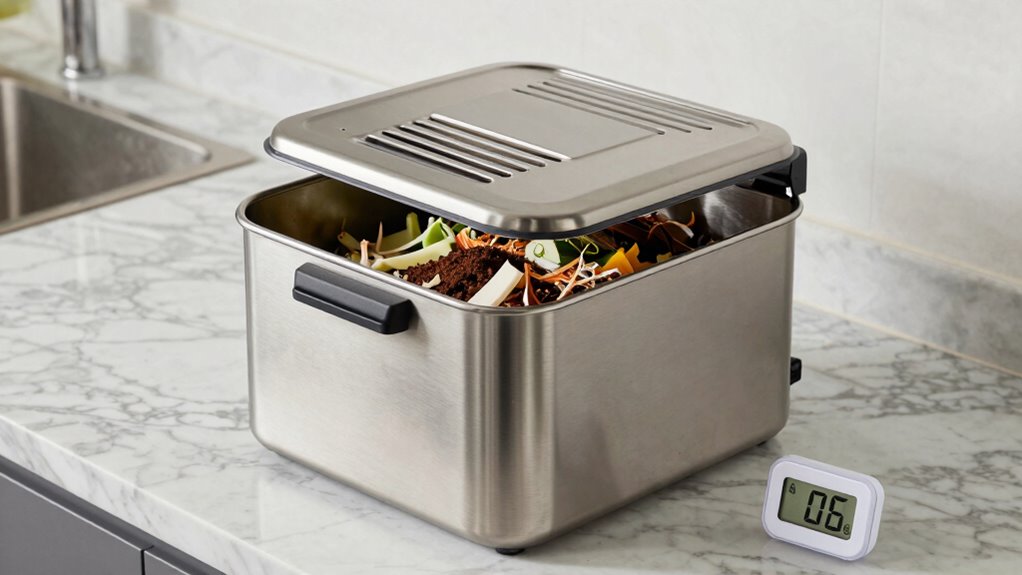
The time it takes to produce compost in a countertop composter varies depending on factors like temperature, moisture levels, and the types of materials you add. Typically, your composting timeline ranges from a few weeks to two months. Here’s what influences this process:
Composting in a countertop composter takes a few weeks to two months, depending on conditions.
- Material Breakdown – Soft scraps decompose faster than tougher materials.
- Aeration – Regular mixing accelerates the decomposition process.
- Moisture Levels – Keeping it moist but not soggy speeds up microbial activity.
- Temperature – Warmer environments promote quicker composting, especially when environmental conditions are optimized.
- Cookie Preferences – Managing cookie settings can enhance your browsing experience and help you better understand your composting progress.
Understanding these factors helps you manage expectations and optimize your countertop composter’s efficiency. The decomposition process is ongoing, but with proper care, you’ll see usable compost sooner rather than later, making your kitchen waste both eco-friendly and valuable.
What Materials Should I Avoid Composting in My Countertop System?
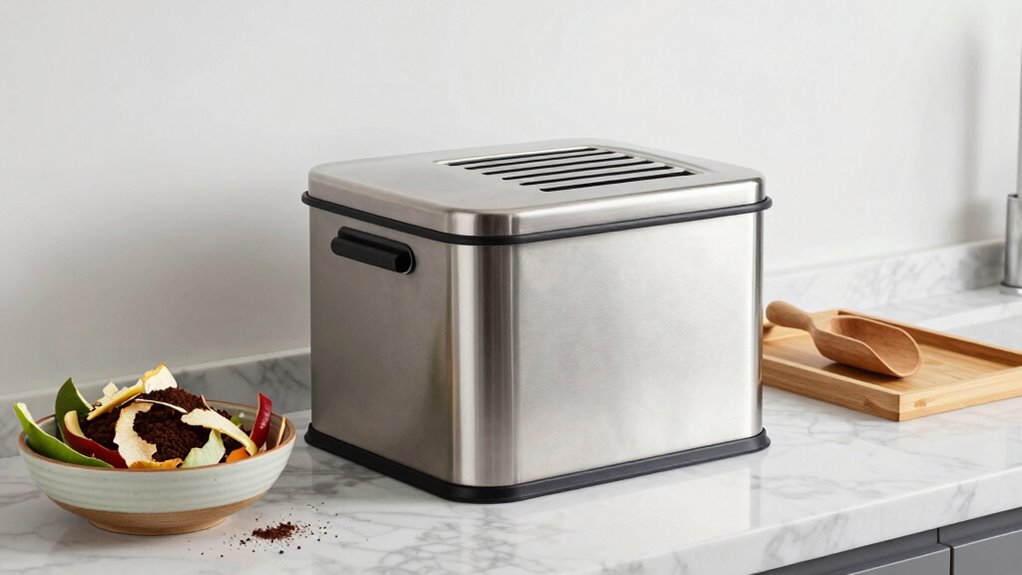
While countertop composters are convenient, some materials can disrupt the composting process or cause odors, so it’s important to know what to avoid. Toxic materials, such as meat, dairy, oily foods, or processed snacks, can attract pests and produce unpleasant smells. Avoid adding plastic contaminants like plastic wraps, bags, or packaging, as they won’t decompose and can contaminate your finished compost. Non-biodegradable items should never go in your composter, as they can introduce toxins and slow the process. Additionally, treated wood or painted materials may contain chemicals harmful to your compost and future plants. Sticking to organic waste ensures a safe, efficient composting process and prevents issues caused by toxic materials or plastic contaminants.
How Can I Use the Compost From My Countertop Bin in My Garden?

Once your compost is ready, you can start preparing it for your garden by breaking up clumps and removing any unfinished materials. Before applying, make sure the compost has cooled and stabilized to avoid harming your plants. Always use compost sparingly and mix it well into your soil to promote healthy growth and prevent issues.
Preparing Compost for Garden
After you’ve collected enough compost in your countertop bin, it’s essential to prepare it properly before using it in your garden. First, check the compost temperature; it should be between 135°F and 160°F to ensure it’s safe and fully decomposed. Second, manage moisture; it should be damp but not soggy, so add water or dry materials as needed. Third, sift the compost to remove large particles or unfinished material, creating a fine, uniform mix. Fourth, give it a gentle mix to aerate and distribute moisture evenly. By controlling compost temperature and moisture, you’ll produce rich, healthy compost that nourishes your garden and avoids potential issues like mold or pests. Proper preparation guarantees your compost is safe and effective for your plants.
Applying Compost Safely
To use your countertop compost safely in your garden, you need to understand the best practices for applying it without harming your plants or introducing pests. Always ensure the compost is fully matured and free of strong odors, which can attract household pests. Follow local composting regulations to prevent overapplication and contamination. When spreading compost, do so evenly to avoid creating hotspots that pests might target. Keep compost away from edible plant roots and avoid applying when heavy rain is forecasted to prevent runoff. Use the following guidelines:
| Do’s | Don’ts |
|---|---|
| Apply in moderation, avoiding overuse | Apply when compost is overly wet or smelly |
| Spread evenly across garden beds | Use near edible crops if compost isn’t fully mature |
| Follow local composting regulations | Forget to water the composted soil after application |
| Keep compost away from household pests | Apply during pest season without precautions |
What Features Should I Look for When Choosing a Countertop Compost Bin?
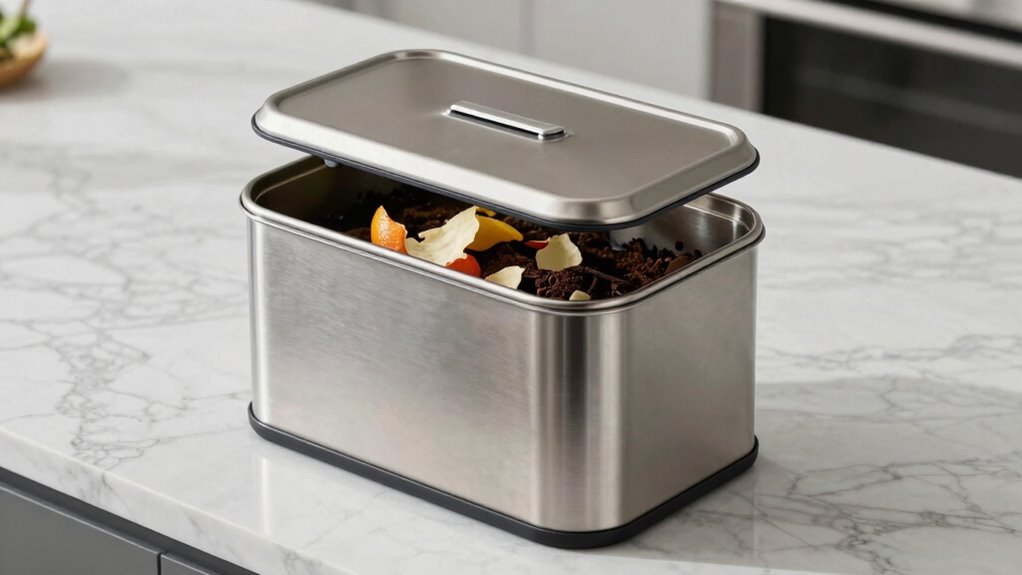
When choosing a countertop compost bin, it’s essential to take into account features that make the process convenient and odor-free. First, consider the compost bin capacity to guarantee it suits your household’s waste volume without needing frequent emptying. Second, look for lid safety features that prevent spills and keep odors contained. Third, opt for a bin with good ventilation to reduce moisture buildup and odors. Fourth, choose a durable, easy-to-clean material like stainless steel or BPA-free plastic. These features help maintain a tidy kitchen, promote safe use, and make composting more manageable. Prioritizing capacity, lid safety, and material quality ensures your countertop compost bin functions effectively and safely in your daily routine.
How Can I Incorporate Kitchen Composting Safely Into My Routine?
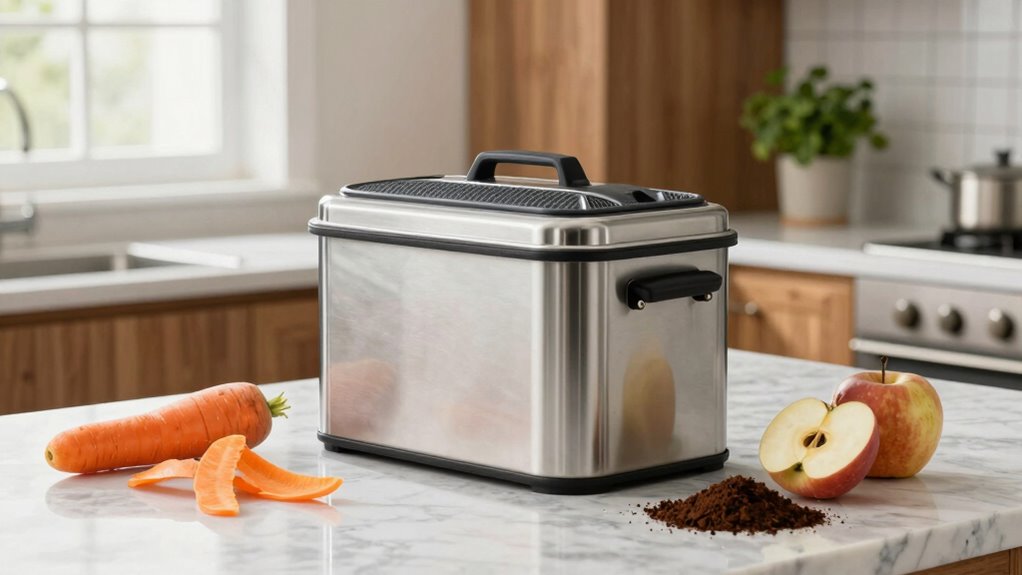
Incorporating kitchen composting safely into your routine begins with establishing simple, consistent habits. Start by setting designated days for composting and regularly emptying your countertop bin to prevent odors and pests. Educate yourself to dispel common composting myths, such as the idea that only yard waste can be composted; many kitchen scraps are perfect for urban farming efforts. Keep your compost bin covered and maintain a balanced mix of greens and browns to promote healthy decomposition. Always wash your hands afterward to prevent any contamination. By staying informed and disciplined, you’ll make composting a seamless part of your daily routine, contributing to sustainable urban farming and reducing waste effectively and safely.
Frequently Asked Questions
How Often Should I Empty My Countertop Compost Bin?
You should empty your countertop compost bin every 1 to 2 days to maintain kitchen cleanliness and prevent odors. Regular compost maintenance helps avoid overflows and keeps your space fresh. Check the bin frequently, especially if you’re adding food scraps daily. By staying on top of emptying it, you guarantee your compost stays odor-free and your kitchen remains tidy, making the process simple and effective.
Can I Compost Dairy and Meat in a Countertop Composter?
You’re walking a tightrope with dairy composting and meat disposal in a countertop composter. It’s best to avoid putting dairy and meat in your bin because they can attract pests and create odors. While some composters claim they can handle these, it’s safer to keep them out to prevent problems. For a pest-free, smell-free experience, stick to fruit, vegetable scraps, and coffee grounds instead.
What Is the Ideal Size for a Countertop Compost Container?
You should choose a countertop compost container with a compost volume of about 1 to 2 gallons, which is compact yet sufficient for daily kitchen scraps. Look for container dimensions around 8-10 inches in diameter and 4-6 inches tall, making it easy to handle and fit on your countertop. This size helps prevent overflow, keeps odors manageable, and makes sure you can regularly empty and clean it for safe, effective composting.
How Do I Troubleshoot Bad Odors in My Compost Bin?
If your compost bin smells bad, check for poor odor control and inadequate bin ventilation. First, turn or mix the compost to aerate it, which helps reduce odors. Add dry materials like shredded paper or sawdust to balance moisture and nitrogen. Make sure your lid is secure and the vent holes are open, allowing air to circulate freely. Regular maintenance keeps unwanted smells at bay and keeps your compost fresh.
Is It Safe to Keep Composting Indoors Long-Term?
Yes, it’s safe to keep composting indoors long-term if you manage indoor air quality and pest prevention effectively. Use a sealed, odor-proof container, and verify it has proper ventilation to reduce odors and moisture buildup. Regularly empty and clean your compost bin, and keep it away from pests. With these precautions, you can compost indoors sustainably without compromising your home’s health or cleanliness.
Conclusion
Now that you know how to turn kitchen scraps into rich soil safely, imagine what’s possible when you master the art of countertop composting. With a few simple steps, you can transform waste into garden gold—and maybe even surprise yourself with the lush results. But the real question is: are you ready to take your composting journey to the next level and reveal nature’s hidden treasures right in your own kitchen? The choice is yours.