
Cover crops as green manure naturally enrich your soil, boosting nutrients, reducing erosion, and suppressing weeds. They improve soil structure by creating channels for water and air while decomposing to release essential nutrients like nitrogen and phosphorus. Using crop rotation with legumes and cereals helps maintain soil fertility and prevent pests. These practices promote sustainable, eco-friendly farming that supports long-term land health. To find out how to maximize these benefits, continue exploring these effective soil-improving strategies.
Key Takeaways
- Cover crops naturally enrich soil by fixing nutrients and releasing organic matter, reducing reliance on chemical fertilizers.
- They improve soil structure by breaking up compacted layers and creating channels for water and air movement.
- Cover crops suppress weeds and prevent soil erosion by providing a protective canopy.
- Incorporating cover crops into crop rotation maintains soil fertility and minimizes pest and disease buildup.
- They promote sustainable farming practices by enhancing soil health and supporting eco-friendly land management.

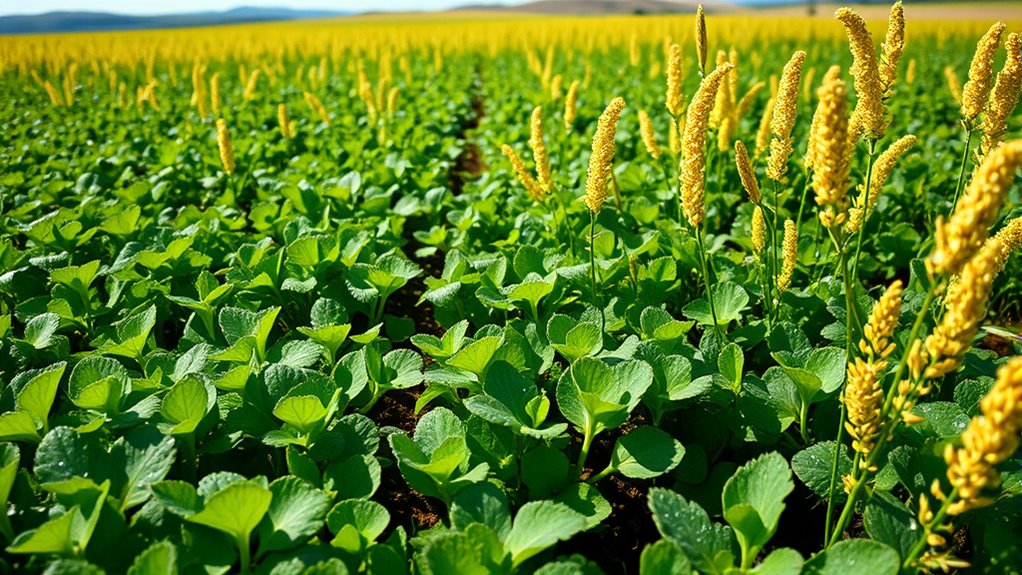
Have you ever wondered how farmers improve soil health naturally? One effective method is through the use of cover crops as green manure. These crops are planted not to harvest for food but to enhance the soil’s quality. When you plant cover crops, you’re engaging in a form of soil enrichment that boosts nutrients, reduces erosion, and suppresses weeds. This practice is especially valuable in sustainable farming because it minimizes the need for chemical fertilizers and promotes long-term soil vitality.
Using cover crops as green manure naturally enriches soil and promotes sustainable farming practices.
Incorporating cover crops into your farming system can markedly improve soil structure and fertility. As these plants grow, their roots penetrate deep into the soil, breaking up compacted layers and creating channels for water and air to circulate. When you till or incorporate these cover crops into the soil, they decompose and release essential nutrients, such as nitrogen, phosphorus, and potassium. This process naturally fertilizes the soil, making it more fertile and productive for your next crop. It’s a form of natural soil enrichment that supports healthy plant growth without relying heavily on synthetic inputs.
Crop rotation plays a pivotal role in maximizing the benefits of cover crops as green manure. By rotating different types of cover crops with your main crops, you can prevent nutrient depletion and reduce the buildup of pests and diseases. For instance, planting legumes like clover or vetch during one season can fix atmospheric nitrogen, enriching the soil for subsequent crops that need high nitrogen levels. The next season, you might switch to a cereal cover crop, which can help scavenge residual nutrients and prevent weed growth. This cycle maintains a healthy, balanced soil ecosystem, ensuring each crop benefits from the previous one’s contributions.
Using cover crops as green manure also helps control soil erosion. Their fast-growing foliage shields the soil from wind and water runoff, especially during off-season periods when your main crops aren’t growing. This protection preserves topsoil and maintains the land’s productivity. Plus, cover crops can suppress weeds by outcompeting them for space and resources, reducing the need for herbicides. As you incorporate these plants into your farming routine, you’re fostering a resilient, nutrient-rich soil environment that supports sustainable agriculture.
Ultimately, integrating cover crops as green manure into your farming practices offers a natural and efficient way to improve soil health. By focusing on soil enrichment, crop rotation, and the importance of soil nutrients, you can build a more sustainable, productive system that benefits your crops and the environment alike. It’s a simple yet powerful approach that aligns with eco-friendly farming principles and promotes long-term land stewardship.
![No-Till Cover Crop 13-Seed Mix (1 lb. Bag): [50% Clovers Plus Fenugreek, Vetch, Flax, Cowpeas, Buckwheat, Forage Peas, Millet, Lentils, Crimson Clover, Sweet Yellow, White Clover, Medium Red Clover]](https://m.media-amazon.com/images/I/61tz3UL4ZfL._SL500_.jpg)
No-Till Cover Crop 13-Seed Mix (1 lb. Bag): [50% Clovers Plus Fenugreek, Vetch, Flax, Cowpeas, Buckwheat, Forage Peas, Millet, Lentils, Crimson Clover, Sweet Yellow, White Clover, Medium Red Clover]
High-Quality, Nitro-Coated, All-Natural Seed Mix, From USA only
As an affiliate, we earn on qualifying purchases.
As an affiliate, we earn on qualifying purchases.
Frequently Asked Questions
How Do Cover Crops Improve Soil Fertility Naturally?
You can improve soil fertility naturally by planting cover crops, which enhance soil nutrient cycling and boost microbial diversity. These plants fix nitrogen, making essential nutrients available for future crops. Their roots break up compacted soil, increasing aeration and water retention. As they decompose, they add organic matter, feeding beneficial microbes. This process creates a healthier, more productive soil ecosystem without synthetic fertilizers, supporting sustainable farming practices.
What Are the Best Cover Crops for Different Climates?
You should choose cover crops based on your climate for ideal results. In cooler areas, consider oats or winter rye for their resilience and soil protection. Warmer regions benefit from cowpeas or sunn hemp, which fix nitrogen and thrive in heat. Selecting the right cover crop for your climate ensures climate-specific benefits like erosion control, improved soil structure, and enhanced fertility, making your soil healthier naturally.
How Long Does It Take for Cover Crops to Decompose?
Ever wondered how quickly cover crops break down? Typically, the decomposition timeline depends on crop type, climate, and soil conditions. Usually, it takes a few weeks to several months for cover crops to decompose fully, facilitating the soil enrichment process. By understanding this, you can better plan your planting schedule, ensuring your soil benefits from the organic matter and nutrients released during decomposition. Isn’t healthy soil worth the wait?
Can Cover Crops Be Used in Organic Farming Systems?
Yes, you can definitely use cover crops in organic farming systems. To do so effectively, you should focus on proper cover crop selection and cover crop management. Choose species that suit your soil and climate, and manage them by timing their planting and termination carefully. This approach helps improve soil fertility, suppress weeds, and enhance overall farm sustainability, making cover crops a valuable tool in organic practices.
Are There Any Pests Associated With Cover Crops?
Yes, there are pests associated with cover crops. You need to be aware of cover crop pests that can damage your crops or attract unwanted insects. Effective pest management involves monitoring pests regularly and using integrated pest management strategies. By staying vigilant and employing eco-friendly controls, you can minimize pest issues and protect your organic system without relying heavily on chemical pesticides.
No-Till Cover Crop 13-Seed Mix (1 lb. Bag): [50% Clovers Plus Fenugreek, Vetch, Flax, Cowpeas, Buckwheat, Forage Peas, Millet, Lentils, Crimson Clover, Sweet Yellow, White Clover, Medium Red Clover]
High-Quality, Nitro-Coated, All-Natural Seed Mix, From USA only
As an affiliate, we earn on qualifying purchases.
As an affiliate, we earn on qualifying purchases.
Conclusion
By planting cover crops as green manure, you nourish your soil like a gardener tending to their soul, knowing that what you nurture today will flourish tomorrow. Just as the ancient farmers understood the cycle of growth and renewal, your efforts create a lasting legacy of fertility and resilience. Embrace this practice, for in nourishing the earth, you also cultivate patience and wisdom—reminding us all that true growth requires both patience and care.

Outsidepride Perennial White Dutch Clover Seed – 2 lbs. Nitrocoated, Inoculated Clover Seeds for Lawn Alternative, Erosion Control, Food Plots, Ground Cover, & Pasture Mixtures in USDA Zones 3-10
PREMIUM QUALITY CLOVER SEED: This high-quality white clover seed is perfect for erosion control, creating a lush lawn…
As an affiliate, we earn on qualifying purchases.
As an affiliate, we earn on qualifying purchases.

No-Till Garden Farm and Garden Cover Crop Mix Seeds – 5 Lbs – Blend of Gardening Cover Crop Seeds: Hairy Vetch, Daikon Radish, Forage Collards, Triticale, More
🌱 Diverse 9-Seed Cover Crop Mix – Non-GMO & Heirloom – Includes Austrian Field Pea, Hard Red Winter…
As an affiliate, we earn on qualifying purchases.
As an affiliate, we earn on qualifying purchases.