
Epsom salt, mainly magnesium sulfate, can boost your garden’s soil and plant health by improving nutrient absorption and encouraging greener, stronger growth. It’s useful for sandy or nutrient-poor soils and may help deter pests like slugs and aphids when applied properly. Use it in moderation, watering it into the soil or spraying on leaves, but be cautious of overuse. Discover more about how it can work in your garden as you explore further.
Key Takeaways
- Epsom salt, mainly magnesium sulfate, benefits soil by enhancing nutrient absorption and promoting healthier plant growth.
- It can improve soil quality in sandy, acidic, or nutrient-deficient conditions, supporting greener, stronger plants.
- Evidence suggests Epsom salt may help deter pests like slugs and aphids when used as a diluted spray.
- Proper, light applications are recommended to avoid salt buildup and potential plant harm.
- While useful, Epsom salt is most effective as part of an integrated soil and pest management strategy.

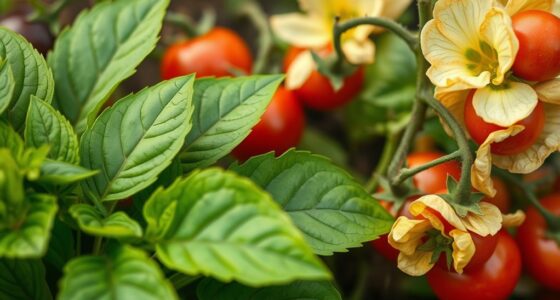
Have you considered how Epsom salt can benefit your garden? Many gardeners turn to this natural mineral for its supposed advantages, especially when it comes to soil enrichment and pest control. Epsom salt is primarily magnesium sulfate, and it offers a simple way to boost plant health without resorting to chemical fertilizers. When you add Epsom salt to your soil, you’re providing magnesium, which is essential for chlorophyll production and photosynthesis. This can lead to healthier, greener plants, especially in soils deficient in magnesium. By improving soil quality, Epsom salt helps your plants absorb nutrients more effectively, resulting in stronger stems, better flowering, and increased fruit production. It’s a straightforward, cost-effective way to enhance soil conditions, especially if your garden’s soil is sandy, acidic, or lacking in nutrients.
Beyond soil enrichment, many gardeners believe Epsom salt can aid in pest control. While it’s not a pesticide, some use it as a natural deterrent against certain pests. For example, applying a diluted Epsom salt solution around plants may help repel slugs, aphids, and other soft-bodied pests. The theory is that the salt’s abrasive texture or its effect on plant surface chemistry can make plants less attractive or less accessible to pests. Some gardeners have also found that Epsom salt can improve the overall vigor of plants, making them more resilient to pest attacks. Healthier plants are generally less susceptible to pest damage, so using Epsom salt as part of your gardening routine could contribute to a more pest-resistant garden. However, it’s worth noting that Epsom salt isn’t a guaranteed pest solution; it works best as a complementary practice alongside other pest management methods.
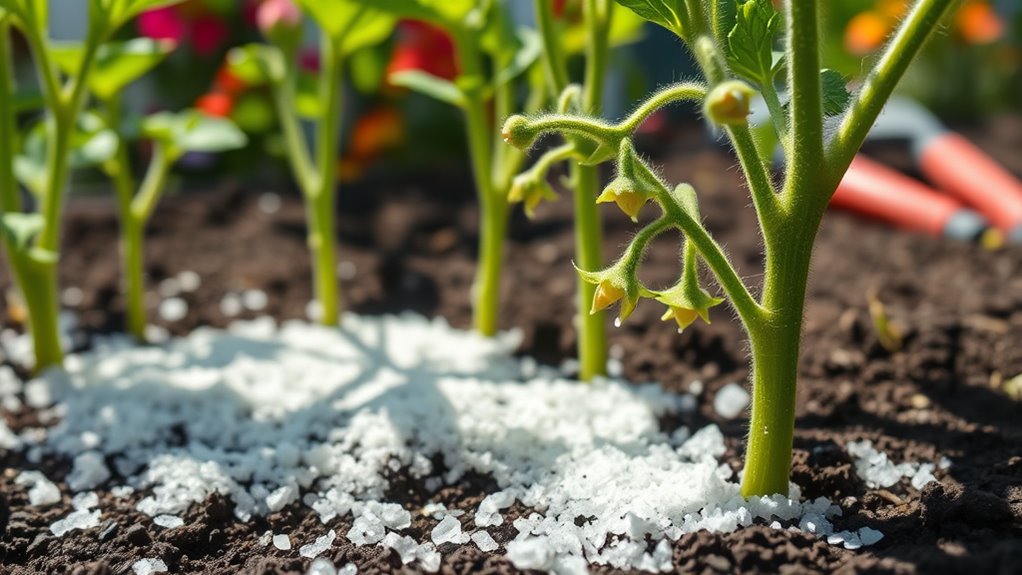
When applying Epsom salt, it’s important to do so in moderation. Overdoing it can lead to nutrient imbalances or salt buildup in the soil, which might harm your plants rather than help them. Typically, a light application every few weeks during the growing season is enough to see benefits. Dissolving Epsom salt in water and watering directly into the soil or spraying it on leaves can be effective methods. Always monitor your plants’ response and adjust your usage accordingly. While Epsom salt isn’t a cure-all, it’s a versatile, natural supplement that can improve soil health and potentially reduce pest problems when used wisely. Incorporating it thoughtfully into your gardening routine can lead to healthier plants and a more pest-resistant garden environment. Additionally, understanding the best practices for application ensures you avoid potential soil issues and maximize the benefits.
Frequently Asked Questions
Can Epsom Salt Replace Traditional Fertilizers?
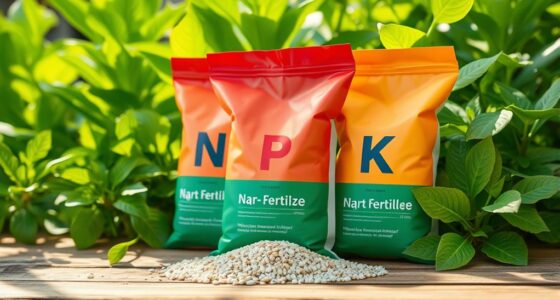
Epsom salt can’t replace traditional fertilizers because it mainly provides magnesium and sulfur, which are just part of a fertilizer comparison. While it can boost soil health for specific plants, it doesn’t supply the full range of nutrients plants need. Rely on balanced fertilizers for overall growth, and use Epsom salt as a supplement if magnesium deficiency shows up. It’s not a complete fertilizer but a helpful addition.
How Often Should I Apply Epsom Salt to My Garden?
You should apply Epsom salt to your garden about once a month during the growing season. Focus on seasonal timing, applying it when plants need a boost, such as early spring or mid-summer. Keep an eye on your plants’ health, and adjust application frequency if you notice signs of magnesium deficiency or poor growth. Regular but moderate use helps make certain your garden gets the benefits without overdoing it.
Are There Specific Plants That Benefit Most From Epsom Salt?
Think of certain plants as the stars of the garden show, shining brighter with Epsom salt application. Tomatoes, peppers, roses, and peppers often benefit most from Epsom salt, as it boosts their magnesium and sulfur levels. These plant-specific benefits help improve growth, flowering, and overall health. If you’re looking to give your garden a natural boost, applying Epsom salt to these plants can make a noticeable difference.
Is Epsom Salt Safe for Organic Gardening?
Yes, epsom salt is generally safe for organic gardening when used appropriately, as it doesn’t contain synthetic chemicals. It can enhance soil health by providing magnesium and sulfur, essential nutrients for plant growth. Just make certain you follow organic certification guidelines and avoid overuse, which can disrupt soil balance. When used responsibly, epsom salt supports healthy plants without compromising your garden’s organic integrity.
What Are the Signs of Epsom Salt Deficiency in Plants?
Think of your plants like a well-tuned orchestra, where magnesium deficiency can cause the leaves to lose their vibrant green hue, turning yellow or pale. You’ll notice leaf discoloration, especially between the veins, and sometimes, plant growth slows down. These signs indicate magnesium deficiency, which epsom salt can help remedy. If you see these symptoms, consider supplementing with Epsom salt to restore your plants’ health and keep the symphony playing smoothly.
Conclusion
As you sprinkle Epsom salt around your garden, you might notice a subtle shift—like a sudden burst of green in an otherwise dull patch. Sometimes, small things align perfectly, enhancing your plants’ health without extra effort. While evidence is mixed, trying a bit here and there could be just enough to give your garden that little boost it needs. After all, nature often surprises us when we least expect it.