To time fertilization effectively, identify your grass type—cool-season grasses like fescue thrive with spring and fall applications, while warm-season grasses such as Bermuda need fertilization during peak growth in late spring and summer. Aim to fertilize when the grass shows active growth and soil warms up, using organic options whenever possible. Proper timing helps boost health and avoids problems. Keep going to discover more tips on aligning your fertilization schedule for a lush lawn.
Key Takeaways
- Fertilize cool-season grasses in early spring and fall during active growth periods, following soil temperature guidelines.
- Apply warm-season grasses fertilizer in late spring through summer when soil warms above 70°F and growth is vigorous.
- Conduct soil testing to determine nutrient needs and select appropriate organic fertilizers for each grass type.
- Time fertilization to avoid early spring or late fall for warm-season grasses to prevent runoff and disease issues.
- Use organic fertilizers during peak growth phases to promote soil health, dense turf, and sustainable lawn care.
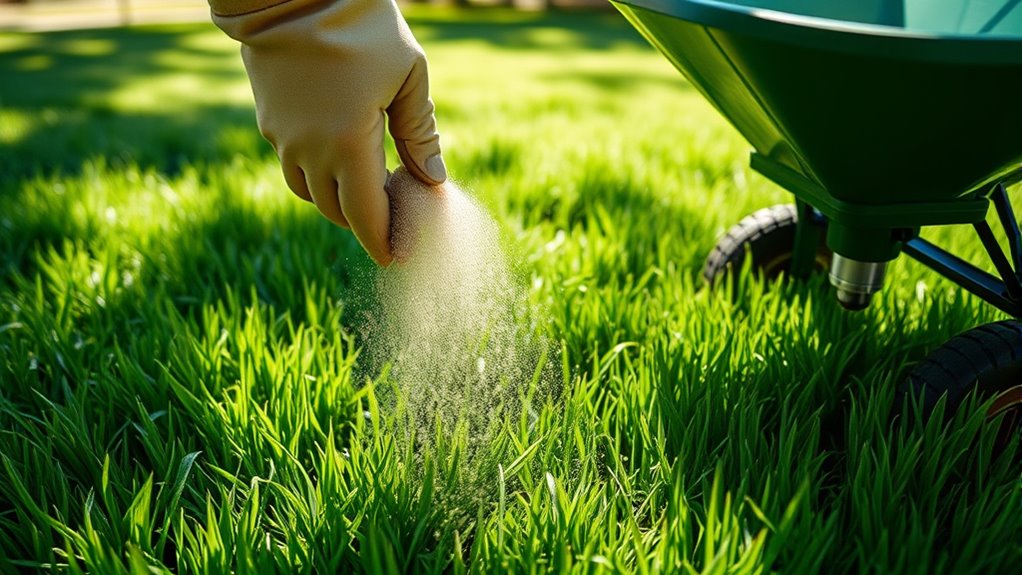
Fertilizing your lawn is crucial for promoting healthy growth and vibrant greenery. To do this effectively, you need to understand the right timing for your specific grass type. Before applying any fertilizer, it’s wise to start with soil testing, which helps determine your soil’s nutrient levels and pH balance. This step guarantees you don’t over-fertilize or under-fertilize, both of which can harm your lawn. Once you know what your soil needs, you can choose the best fertilizer, including organic options that provide nutrients naturally, promoting sustainable and healthy turf.
Cool-season grasses, like Kentucky bluegrass, fescues, and ryegrass, thrive when fertilized during their active growth periods in early spring and fall. In spring, fertilize once the grass begins to grow actively, usually when soil temperatures reach around 50-55°F. Fall fertilization should be done about six to eight weeks before the first expected frost, giving the grass time to recover and store nutrients for winter dormancy. For these grasses, soil testing can reveal deficiencies that organic fertilizers can address, such as composted manure or fish emulsion, which release nutrients slowly and improve soil health. Incorporating natural soil amendments can further enhance soil fertility and support overall lawn health.
Warm-season grasses, including Bermuda, St. Augustine, and zoysiagrass, are best fertilized during their peak growth in late spring through summer. These grasses grow vigorously when soil temperatures are consistently above 70°F. Apply fertilizer when the grass shows vigorous green growth and the soil has warmed sufficiently. Soil testing again plays a crucial role here — it guides you in selecting organic fertilizers rich in nitrogen, such as blood meal or seaweed extracts, which support lush growth. Avoid fertilizing too early in spring or late in fall, as these grasses are less active then, and unnecessary fertilization can lead to nutrient runoff or disease susceptibility.
Regardless of the grass type, always follow the recommended application rates based on your soil test results. Organic fertilizers are a great choice because they improve soil structure and microbial activity over time, leading to a healthier lawn. Applying organic fertilizers at the right time ensures the nutrients are available when your grass needs them most, encouraging dense, vibrant turf. Remember, consistent soil testing and proper timing will help you avoid common problems like thatch buildup, disease, or weak growth. By aligning your fertilization schedule with your grass type’s growth cycle and your soil’s needs, you give your lawn the best foundation for sustained vitality and beauty.
Frequently Asked Questions
How Do I Identify My Grass Type Accurately?
To identify your grass type accurately, start with grass identification by examining its blade texture, color, and growth pattern. Turf variety varies in leaf width, color, and response to mowing. You can compare your lawn’s characteristics to online guides or consult a local extension office. Taking a sample to a nursery or using a lawn identification kit can also help you determine the specific turf variety, ensuring you fertilize at the right time.
Can Over-Fertilizing Damage My Lawn?
Yes, over-fertilizing can damage your lawn by causing excessive growth, making it more vulnerable to pests and diseases. It can also lead to nutrient runoff, harming the environment. To avoid this, follow proper fertilizing schedules, and focus on lawn pest management and organic weed control strategies. Remember, a balanced approach promotes healthy, lush grass without risking overuse of fertilizers.
What Are Natural Fertilizer Options for Lawns?
You can use natural fertilizer options like organic compost and fish emulsion to boost your lawn’s health. Organic compost enriches the soil with essential nutrients and improves its structure, while fish emulsion provides a quick boost of nitrogen. Both are eco-friendly choices that promote healthy growth without the risk of over-fertilizing. Incorporate organic compost into your soil and apply fish emulsion every few weeks for ideal results.
How Does Soil Ph Affect Fertilizer Effectiveness?
Think of your soil as a garden of treasure chests. If the treasure chest’s lock (soil pH) isn’t the right fit, fertilizer nutrients can’t open their full potential. When fertilizer pH is off, soil nutrients become less available, making fertilizing less effective. Keeping soil pH in the right range ensures your lawn’s nutrients are accessible, helping your grass grow strong and healthy.
Is It Necessary to Water Immediately After Fertilizing?
Yes, it’s generally best to water immediately after fertilizing. This watering helps establish a proper watering schedule, ensuring the fertilizer dissolves and penetrates the soil for better absorption. If you don’t water right away, the nutrients may sit on the surface and wash away with rain or watering. Proper watering also prevents fertilizer burn and promotes healthy grass growth, making your fertilizing efforts more effective.
Conclusion
By timing your fertilizing schedule to your grass type, you’re giving your lawn the best chance to thrive, like a well-tuned orchestra. Just as each instrument plays its part at the right moment, your grass needs nutrients at specific times to stay healthy and lush. Stick to the recommended schedule, and you’ll enjoy a vibrant, green lawn that’s the envy of your neighborhood. Proper fertilization truly makes all the difference, like a secret ingredient for a perfect lawn.