Lime and sulfur are effective for adjusting soil pH, but they serve opposite purposes. Use lime if you need to raise acidity and make soil less acidic, which benefits plants like vegetables and turf. On the other hand, add sulfur if your soil is too alkaline and you want to lower the pH for crops like blueberries or azaleas. Choosing the right one depends on your current soil condition; keep exploring to learn more about their applications.
Key Takeaways
- Lime raises soil pH by neutralizing acidity, suitable for acidic soils needing alkalinity increase.
- Sulfur lowers soil pH by producing sulfuric acid, ideal for alkaline soils needing acidity enhancement.
- Lime acts quickly to increase pH, but effects can take months; sulfur adjustments also develop gradually.
- Application rates depend on soil test results and soil type, requiring proper measurement for effectiveness.
- Organic amendments can support pH stability but are less immediate than lime or sulfur for pH adjustments.
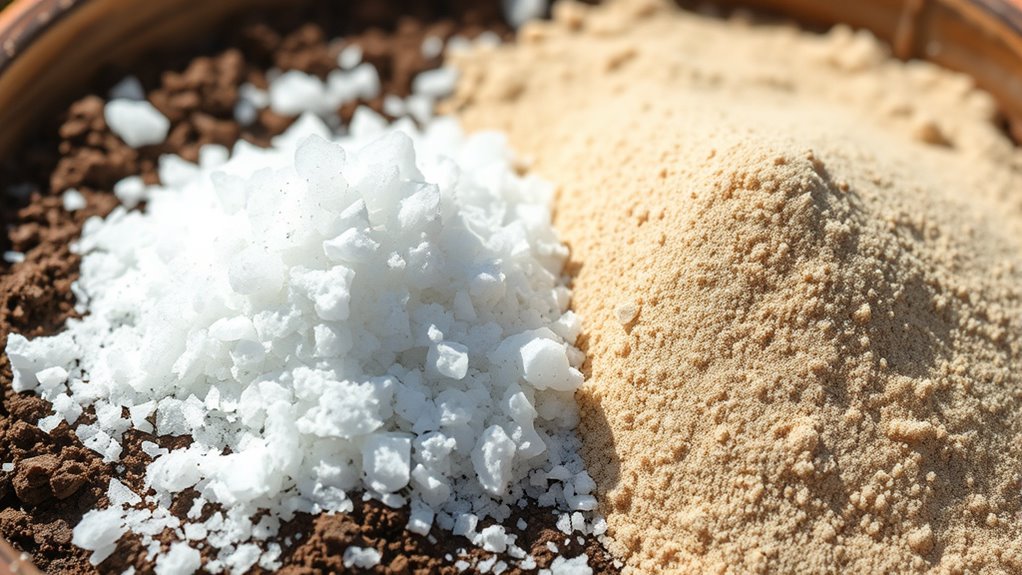
Have you ever wondered why some plants thrive while others struggle in the same soil? The answer often lies in the soil’s pH level. Knowing your soil’s pH is essential because it affects nutrient availability and overall plant health. To determine this, pH testing is your first step. You can use simple home test kits or more precise digital meters to get an accurate reading. Once you know the pH, you can decide whether it needs adjusting to better suit your plants’ needs.
Understanding your soil’s pH helps ensure your plants thrive and stay healthy.
If your soil tests show it’s too acidic (a low pH), you’ll want to raise the pH to create a more neutral or alkaline environment. Conversely, if it’s too alkaline (a high pH), lowering it will make nutrients more accessible to your plants. The key to successful soil pH adjustment is applying the right amendment techniques. For raising soil pH, lime is the most common choice. It’s available in various forms, such as granular or pelletized lime, and works by neutralizing soil acidity. When applying lime, it’s crucial to follow the recommended dosage based on your pH test results and soil type. Incorporate it into the soil thoroughly through tilling or mixing to ensure even distribution. Keep in mind that lime doesn’t work overnight; it can take several months to see full results, so patience and proper timing are important.
On the other hand, if you need to lower your soil’s pH, sulfur is often the go-to amendment. Elemental sulfur reacts with soil bacteria, producing sulfuric acid that decreases pH. When using sulfur, you should also adhere to recommended application rates and evenly incorporate it into the soil. It’s best to do this well before planting, as sulfur’s effects take time to develop—sometimes several weeks to months. Using amendment techniques like incorporating organic matter, such as compost or peat moss, can also help stabilize pH levels and improve soil structure. Organic amendments can gradually influence pH and promote healthier soil biology. Regular pH testing after amendments is essential to monitor progress and avoid overcorrecting. Adjusting soil pH isn’t an one-time fix; it’s an ongoing process. By understanding how to properly test your soil and apply amendments like lime and sulfur, you give your plants the best chance to flourish. Proper pH management ensures nutrients are available and your garden stays healthy, productive, and vibrant. Monitoring soil pH regularly and understanding the effects of amendments helps maintain optimal conditions for your plants’ growth.
Frequently Asked Questions
How Often Should I Test My Soil Ph?
You should test your soil pH at least once a year to keep an accurate pH monitoring schedule. If you’re making adjustments with lime or sulfur, consider testing every 6 months to guarantee your soil remains within the ideal range. Regular soil testing frequency helps you catch pH changes early, allowing you to make timely adjustments and maintain perfect growing conditions for your plants.
Can Lime or Sulfur Harm Beneficial Soil Microbes?
Hold your horses, don’t worry—lime and sulfur won’t wipe out beneficial microbes if used properly. When you adjust soil pH, you support microbial health and maintain soil balance. Overapplication might temporarily disrupt microbial activity, but it’s usually reversible. Just follow recommended application rates and timing, and your soil microbes will thrive, keeping your garden healthy and productive, much like a well-oiled machine in the age of chivalry.
What’s the Best Time of Year to Adjust Soil Ph?
You should modify soil pH during the fall or early spring, aligning with seasonal timing that allows amendments to settle before planting. This timing helps you avoid disrupting beneficial microbes and guarantees ideal nutrient availability. Incorporate crop rotation strategies to prevent soil imbalance, and always test your soil beforehand. Adjustments made at these times give your soil ample opportunity to stabilize, promoting healthier crops and better yields throughout the growing season.
Are There Organic Alternatives to Lime and Sulfur?
Yes, you can use organic amendments like compost, pine needles, or elemental sulfur to adjust your soil pH naturally. These options support microbial health, improve soil structure, and promote plant growth. Like balancing a diet, choosing organic amendments helps maintain soil vitality, fostering a healthy environment for your plants. Regularly monitoring your soil’s pH ensures these natural methods effectively create the essential conditions for your garden’s success.
How Long Does It Take for Ph Changes to Take Effect?
You’ll notice pH changes within a few weeks, but soil buffering can slow the process. Lime typically raises pH in 2-4 months, while sulfur lowers it over several months. Factors like soil type, organic matter, and previous amendments affect how quickly pH stabilizes. To guarantee effective adjustment, regularly test your soil, and be patient—soil buffering means changes gradually settle, leading to more stable pH over time.
Conclusion
When it comes to adjusting your soil pH, choosing between lime and sulfur is like wielding a magic wand for your garden. Lime can raise your soil’s pH quickly, turning acidic chaos into a balanced paradise, while sulfur gently lowers it, creating harmony beneath your plants’ roots. With the right approach, you’ll transform your soil faster than you can say “blooming masterpiece.” Trust me, your garden will thank you with a flourish of vibrant life!