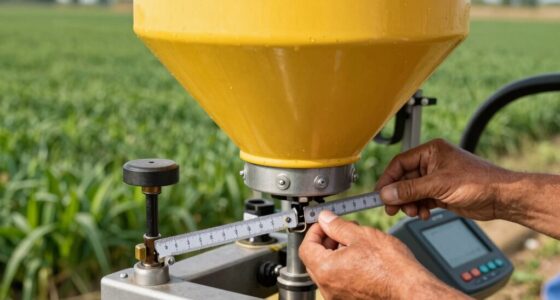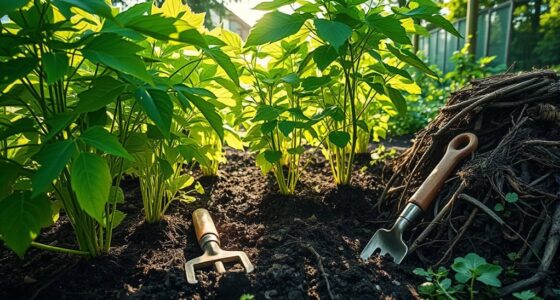
Slow-release nitrogen sources are great for your garden because they provide a steady supply of nutrients over time, reducing the need for frequent applications. They help prevent nutrient leaching and environmental runoff, meaning less waste and pollution. These fertilizers often contain coated or stabilized nitrogen that releases gradually with soil processes, supporting healthy plant growth and diversity. For more tips on choosing the best options to suit your garden, keep exploring how these fertilizers can work for you.
Key Takeaways
- Common slow-release nitrogen sources include coated fertilizers, urea formaldehyde, and natural options like composted manure.
- Coated fertilizers release nitrogen gradually through soil moisture and temperature, providing steady plant nutrition.
- Organic sources such as compost, worm castings, and plant-based amendments offer natural slow-release nitrogen.
- Using slow-release nitrogen reduces application frequency, minimizes leaching, and supports sustainable gardening practices.
- Selecting appropriate slow-release options depends on plant needs, soil conditions, and gardening scale for optimal results.

Using slow-release nitrogen sources can considerably improve your garden’s health by providing a steady supply of nutrients over time. Unlike quick-acting fertilizers that deliver a rapid nutrient boost but often lead to loss through leaching, slow-release options ensure your plants receive consistent nourishment. This consistency enhances fertilizer longevity, meaning your plants can utilize the nitrogen gradually, reducing the need for frequent applications. When nitrogen is released slowly, it stays available in the soil longer, minimizing nutrient leaching — a process where water carries away soluble nutrients before plants can absorb them. This not only conserves your fertilizer investment but also protects the environment from excess runoff. Additionally, slow-release fertilizers typically contain coated or chemically stabilized nitrogen, which oxidizes gradually or is released through natural soil processes, further supporting their steady nutrient supply.
By choosing slow-release fertilizers, you’re actively controlling the timing and rate of nutrient delivery. These fertilizers typically contain coated or chemically stabilized nitrogen, which oxidizes gradually or is released through natural soil processes. As a result, your garden benefits from a balanced nutrient supply that matches plant uptake, leading to healthier growth, better flowering, and increased crop yields. You’ll notice fewer signs of nutrient deficiency or excess, since the nitrogen is provided at a rate your plants can absorb efficiently.
One of the major advantages of slow-release nitrogen sources is their ability to maintain fertilizer longevity. Because the nutrients are released over an extended period, you won’t need to apply fertilizer as frequently. This is especially useful if you’re managing a large garden or want to reduce labor and costs. Additionally, slow-release fertilizers tend to produce less runoff compared to quick-release types, which often flush away excess nutrients with rain or irrigation. This not only benefits your plants but also helps prevent environmental issues like water pollution caused by nutrient leaching into groundwater or nearby waterways. Recognizing the importance of soil chemistry can help gardeners optimize their use of slow-release fertilizers for maximum benefit.
Furthermore, slow-release fertilizers are generally more forgiving for amateur gardeners, as they reduce the risk of over-fertilization and nutrient imbalances. Their controlled release rate aligns better with the natural nutrient cycle, promoting sustainable gardening practices. Whether you’re growing vegetables, flowers, or lawns, incorporating slow-release nitrogen sources helps create a resilient, nutrient-rich environment. It’s an effective way to support plant health while reducing waste and environmental impact, making your gardening efforts more efficient and eco-friendly.
Frequently Asked Questions
How Do Slow-Release Nitrogen Sources Compare to Liquid Fertilizers?
Slow-release nitrogen sources offer better fertilizer efficiency and more consistent nutrient availability compared to liquid fertilizers. You’ll notice steady growth because the nutrients are released gradually over time, reducing the risk of leaching or runoff. Liquid fertilizers provide quick nutrient boosts, but their effects are short-lived. With slow-release options, you can minimize application frequency and make certain your plants receive a steady supply of nitrogen for healthier, sustained growth.
Are Slow-Release Nitrogen Options Environmentally Sustainable?
Yes, slow-release nitrogen options are generally more environmentally sustainable. They minimize nutrient leaching, reducing water pollution, and often use organic alternatives that improve soil health. By releasing nitrogen gradually, they guarantee plants get steady nourishment without excess runoff. This approach supports eco-friendly gardening practices, helping you grow healthy plants while protecting the environment. Using slow-release options aligns with sustainable gardening goals and promotes long-term soil vitality.
Can Slow-Release Nitrogen Be Used for Indoor Gardening?
Yes, you can use slow-release nitrogen for indoor gardening. It provides steady indoor plant nutrition, reducing the risk of over-fertilizing. Just keep in mind that fertilizer timing is key; apply it according to your plant’s growth cycle. Slow-release options are convenient because they release nutrients gradually, ensuring your indoor plants get consistent nourishment without frequent fertilizing. This approach promotes healthy, vibrant indoor plants with less effort.
What Are the Potential Drawbacks of Slow-Release Nitrogen Fertilizers?
Using slow-release nitrogen fertilizers can lead to potential issues like soil buildup, where excess nutrients accumulate over time, and nutrient imbalance, which can harm plant health. You might find that plants don’t receive nutrients as quickly as needed during peak growth, and prolonged application can cause long-term soil problems. To avoid these drawbacks, monitor your soil regularly and combine slow-release fertilizers with other nutrient management practices.
How Long Do Slow-Release Nitrogen Fertilizers Typically Last?
Slow-release nitrogen fertilizers typically last between 8 to 12 weeks, depending on factors like soil type, weather, and application methods. You’ll appreciate the advantage of aligning nutrient timing with plant needs, maintaining soil fertility steadily without sudden surges. This slow, steady supply supports sustained growth, minimizes runoff, and maximizes garden gains. Remember, monitoring your garden helps you modify timing and ensure your plants get the nutrients they need when they need them most.
Conclusion
Choosing the right slow-release nitrogen sources not only nurtures your garden steadily but also aligns with nature’s quiet rhythm. As your plants thrive, you’ll notice how these gentle feeds coincide perfectly with their growth cycles, creating a harmony that feels almost serendipitous. By understanding and utilizing these options, you’re not just tending to your garden—you’re partnering with it, allowing the slow, steady release of nutrients to naturally foster vibrant, healthy plants over time.