If you spot brown marmorated stink bugs on your fruit trees, act quickly to minimize damage. Use targeted insecticides like pyrethroids or neonicotinoids during vulnerable stages, and monitor your trees regularly for early signs. Encourage natural predators like parasitic wasps by planting flowering plants nearby. Combining responsible pesticide use with attracting beneficial insects creates an effective, eco-friendly control strategy. Keep watching to discover more tips on managing this invasive pest and protecting your harvest.
Key Takeaways
- Brown marmorated stink bugs threaten fruit crops by feeding on developing fruit, causing deformities and yield loss.
- Monitoring for early detection is crucial to manage infestations effectively.
- Use targeted insecticides like pyrethroids and neonicotinoids during vulnerable bug stages, following label instructions.
- Promote natural predators such as parasitic wasps and beneficial insects to reduce stink bug populations sustainably.
- Implement integrated pest management combining responsible pesticide use, habitat diversification, and sanitation for optimal control.
If you grow fruit trees, you’ve probably noticed the brown marmorated stink bug becoming more active this season. This invasive pest can cause significant damage to your crops, making it essential to understand your options for managing them effectively. When dealing with these bugs, you might wonder about pesticide options and whether natural predators can help control their population. Both strategies play a role in integrated pest management, but knowing how to use them responsibly is key.
Managing brown marmorated stink bugs requires responsible pesticide use and encouraging natural predators.
Pesticide options are available, but you should approach them carefully. Insecticides containing ingredients like pyrethroids or neonicotinoids can be effective against stink bugs when applied properly. However, timing is vital—applying pesticides when bugs are most active or before they lay eggs can prevent further infestation. Always read labels and follow application instructions to minimize environmental impact and avoid harming beneficial insects. Remember, overuse of chemical controls can lead to resistance, so they should be part of a broader management plan rather than your sole method.
Natural predators also offer a sustainable way to keep stink bug numbers in check. Certain predatory insects, like parasitic wasps and assassin bugs, naturally prey on stink bugs and can help reduce their population over time. Encouraging these beneficial insects involves creating a diverse garden environment with flowering plants that attract them. You might also consider introducing specific predators available commercially, but ensure they’re compatible with your local ecosystem. Relying on natural predators reduces chemical use and promotes a healthier, balanced garden ecosystem.
Additionally, maintaining vetted pest control methods can enhance your efforts and reduce reliance on chemical pesticides. Combining pesticide options with nurturing natural predators creates a holistic approach. For instance, you can apply targeted insecticides during vulnerable stages of stink bug development while simultaneously planting nectar-rich flowers that attract beneficial insects. Monitoring your trees regularly helps you catch infestations early, allowing you to act swiftly with pesticides if needed, and to encourage predator activity. Proper sanitation—removing fallen fruit and debris—also limits breeding sites for stink bugs, reducing their numbers naturally.
Ultimately, managing brown marmorated stink bugs on your fruit trees requires a combination of strategies. Using pesticides thoughtfully and promoting natural predators can protect your harvest without causing undue harm to the environment. By staying vigilant and applying integrated pest management principles, you can keep these pests in check and enjoy healthy, bountiful fruit trees season after season.
Frequently Asked Questions
How Can I Distinguish Brown Marmorated Stink Bugs From Other Pests?
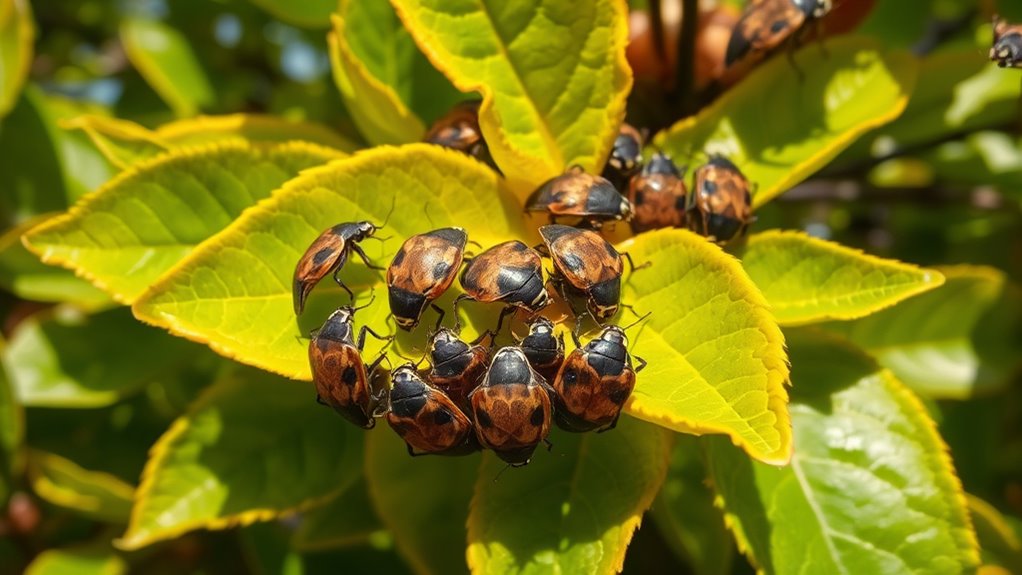
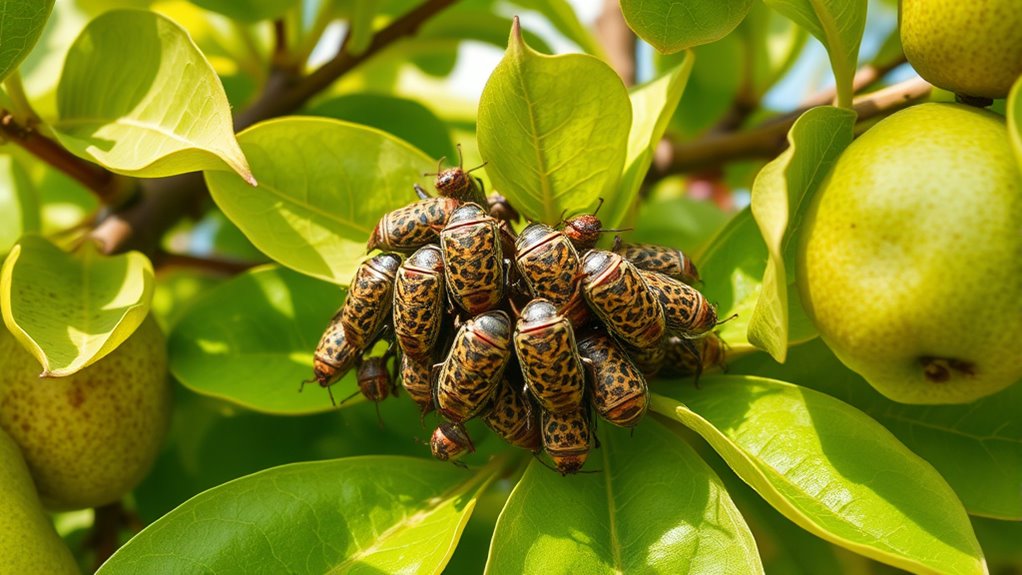
You can distinguish brown marmorated stink bugs by their unique color pattern and body shape. They have a shield-shaped body about 1.25 cm long, with a mottled brown color and distinctive white bands on their antennae and legs. Unlike other pests, their rounded shield and alternating light and dark markings make them stand out. Keep an eye out for these features to identify them quickly and take appropriate action.
Are There Natural Predators That Control Brown Marmorated Stink Bugs?
Yes, natural predator management can help control brown marmorated stink bugs. You might introduce beneficial insects like parasitic wasps, which naturally target these pests. These predators help keep populations in check without chemical use. To succeed, encourage habitat diversity and avoid pesticides that harm beneficial insects. Regularly monitor your trees to guarantee the predators are active, creating a balanced environment that naturally reduces stink bug numbers.
What Is the Lifecycle Duration of the Brown Marmorated Stink Bug?
Like a ticking clock, the lifecycle duration of the brown marmorated stink bug spans about 6 to 8 months. You need to understand this timing for effective pest management, as their development includes egg, nymph, and adult stages. Knowing their cycle helps you plan interventions at the right moments, preventing damage. Stay vigilant through each phase, and you’ll better control this pest before it causes extensive harm.
Do Certain Fruit Tree Varieties Attract More Stink Bugs?
Certain fruit tree varieties do attract more stink bugs because of pest attraction factors like scent, fruit ripeness, and skin texture. You’ll notice they prefer varieties with sweeter, softer, or more aromatic fruits. To reduce their presence, consider planting less attractive varieties or using pest management strategies. Monitoring and timely intervention can help you protect your trees from these pests and minimize damage to your fruit crops.
Can Stink Bugs Cause Permanent Damage to Fruit Trees?
Yes, stink bugs can cause permanent damage to your fruit trees. They feed on fruits and leaves, leading to deformities, scars, and reduced yields. To prevent this, you should conduct regular damage assessments and implement pest prevention measures early. Catching infestations quickly helps minimize long-term damage, ensuring your trees stay healthy and productive. Staying vigilant and proactive is key to protecting your fruit trees from lasting harm.
Conclusion
As the brown marmorated stink bug quietly visits your fruit trees, it’s like a shadow drifting through a sunlit garden. While it may seem harmless, its presence hints at the need for gentle care and watchful eyes. By keeping an eye on these little visitors, you help maintain the orchard’s harmony. With patience and attention, you’ll guarantee your trees continue to flourish, turning each season into a vibrant canvas of growth and abundance.