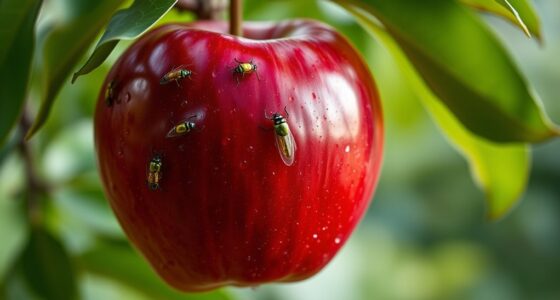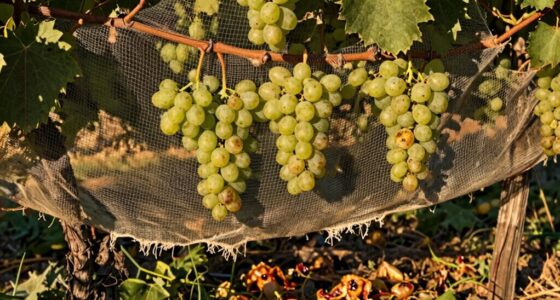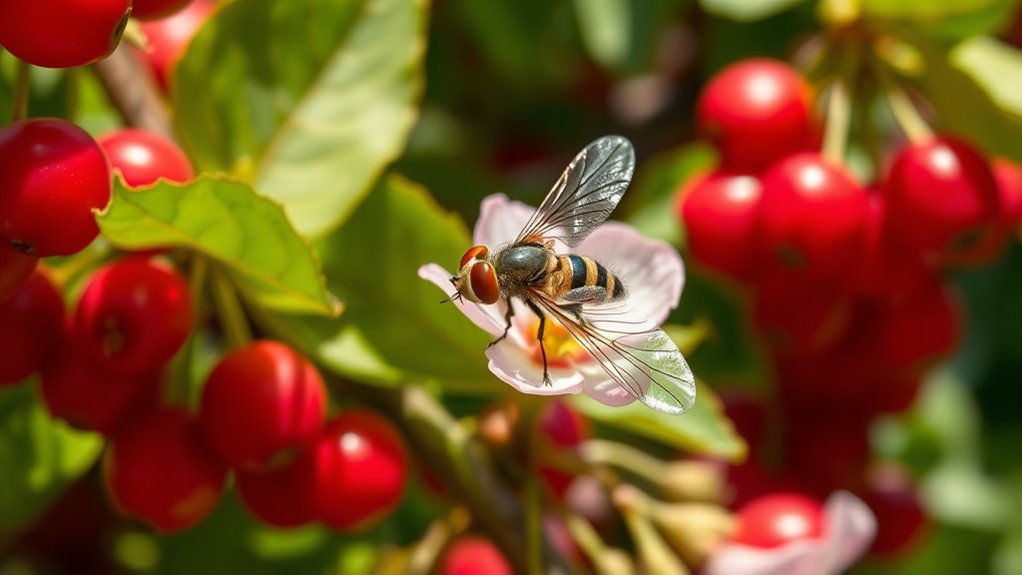

If you notice small punctures or rotting spots in your backyard cherry fruit, cherry fruit flies could be the cause. These tiny pests lay eggs inside ripening fruit, leading to maggots that cause the cherries to rot and fall early. To protect your trees, consider using biological controls like parasitic wasps, organic options such as neem oil, or physical barriers like fine mesh netting. To discover more effective strategies, keep exploring solutions tailored to keep your trees healthy.
Listen free for 30 days with Audible
Thousands of audiobooks and originals — cancel anytime.
As an affiliate, we earn on qualifying purchases.
Key Takeaways
- Cherry fruit flies lay eggs inside ripening cherries, causing premature fruit drop and rot.
- Biological control with parasitic wasps effectively reduces cherry fly populations naturally.
- Planting companion plants and maintaining orchard hygiene help deter cherry fruit flies.
- Organic treatments like neem oil and physical barriers such as mesh netting can prevent infestations.
- Regular monitoring for punctures and maggots enables early detection and timely pest management.
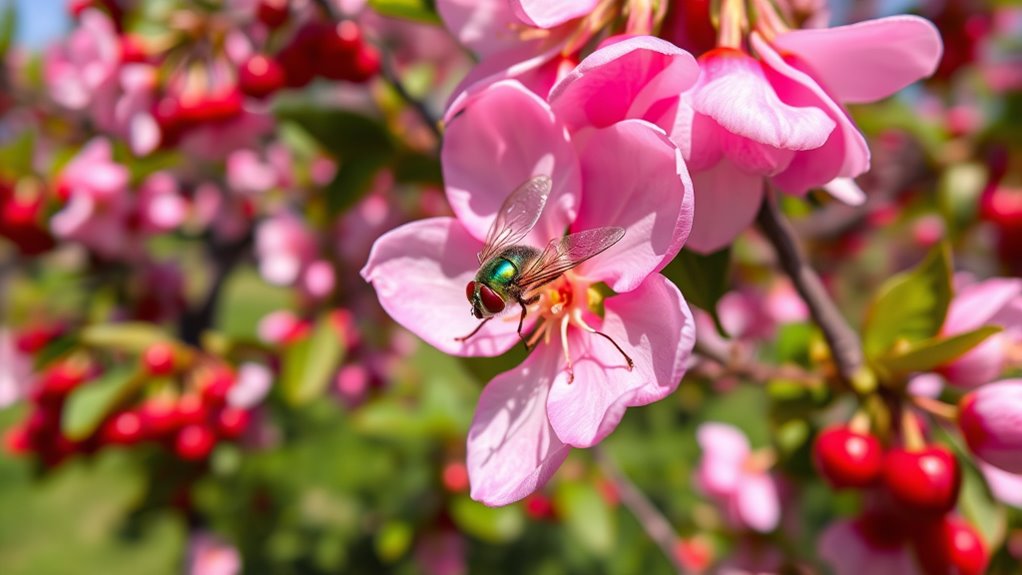
Have you ever wondered what threatens the health of your cherry trees? One of the biggest culprits is the cherry fruit fly, a tiny pest that can quickly ruin your harvest if left unchecked. These flies lay their eggs inside ripening fruit, and when the larvae hatch, they feed on the cherry flesh, causing the fruit to rot and fall prematurely. If you want to protect your backyard trees without relying solely on chemical pesticides, it’s essential to understand some effective, eco-friendly approaches. Biological control is gaining popularity as a sustainable method to manage cherry fruit fly populations. This strategy involves introducing natural enemies, like parasitic wasps, that specifically target the pests. These beneficial insects lay their eggs inside the fly larvae, preventing them from developing further and reducing the overall pest numbers. Biological control is advantageous because it minimizes chemical residues on your fruit and is less disruptive to beneficial insects and pollinators. Additionally, creating a pest-resistant environment by planting companion plants can help deter cherry fruit flies from infesting your trees. In addition to biological control, exploring pesticide alternatives can help you manage cherry fruit flies safely and effectively. Many organic options are available, such as insecticidal soaps or neem oil, which can deter or kill the pests without harmful chemicals. These products are usually less toxic to humans, pets, and the environment, making them a preferable choice for backyard orchards. Applying these treatments at the right time—just before or during the fly’s active period—can substantially reduce infestation levels. It’s also helpful to use physical barriers, like fine mesh netting, to prevent flies from reaching your fruit altogether. Combining these methods creates a thorough pest management plan that’s both natural and effective. Monitoring your cherry trees closely is key to early detection. Look for signs of fly activity, such as small puncture marks on fruit or tiny maggots inside. If you notice an increase in pest presence, act quickly by applying biological control agents or pesticide alternatives. Keep in mind that the success of these methods depends on timing and consistency. Regularly inspecting your trees and maintaining good orchard hygiene—like removing fallen fruit and pruning for good air circulation—can further reduce pest-friendly environments. By integrating biological control with pesticide alternatives and preventive practices, you can protect your cherry trees healthily and sustainably. This approach not only safeguards your harvest but also supports a balanced ecosystem in your backyard.
parasitic wasps for cherry fruit fly control
As an affiliate, we earn on qualifying purchases.
As an affiliate, we earn on qualifying purchases.
Frequently Asked Questions
How Can I Prevent Cherry Fruit Flies From Entering My Yard?
To prevent cherry fruit flies from entering your yard, start seasonal management by removing fallen and rotting fruit regularly. Use organic deterrents like sticky traps or homemade sprays with neem oil to keep flies away. Cover your trees with fine mesh netting during the season, and prune trees to improve airflow. These steps help reduce fly attraction and protect your cherries naturally and effectively throughout the season.
Are There Natural Predators That Control Cherry Fruit Fly Populations?
Think of natural predators as your backyard’s silent guardians, quietly keeping cherry fruit fly populations in check. Birds, parasitic wasps, and certain beetles act as biological control agents, snatching up larvae and eggs before they can wreak havoc. By encouraging these beneficial creatures with diverse plantings and avoiding pesticides, you create a natural army that helps control the pests, turning your yard into a thriving fortress against cherry fruit flies.
When Is the Best Time to Apply Insecticides for Cherry Fruit Flies?
You should apply insecticides during the early stages of cherry fruit fly activity, typically in late spring or early summer, to maximize effectiveness. Timing optimization is vital, so monitor your trees closely for signs of infestation. Proper insecticide scheduling ensures you target the flies before they lay eggs, reducing damage. Always follow label instructions and consider applying treatments during the cooler parts of the day for better coverage and safety.
Do Cherry Fruit Flies Affect Other Fruit Trees Nearby?
Think of cherry fruit flies as neighborhood gossip—they can spread their influence beyond just cherry trees. Yes, they affect nearby fruit trees through cross species impact, especially if those trees are similar or close together. In orchard management, you need to monitor all susceptible trees, not just cherries, to prevent infestation. Ignoring one tree can allow the pests to migrate, making your entire garden vulnerable. Stay vigilant across all your fruit trees.
Can I Use Homemade Traps to Catch Cherry Fruit Flies Effectively?
Yes, you can use DIY traps with homemade bait to catch cherry fruit flies effectively. Create traps using simple materials like plastic bottles or jars, and add a homemade bait such as a mixture of apple cider vinegar and a few drops of dish soap. Place these traps near your trees, and the flies will be attracted to the bait and get caught. Regularly check and replace the bait for best results.
organic neem oil for fruit trees
As an affiliate, we earn on qualifying purchases.
As an affiliate, we earn on qualifying purchases.
Conclusion
If you notice cherry fruit flies in your backyard trees, acting quickly can save your harvest. For example, Sarah saw tiny flies on her cherry trees and started trapping them early. Within weeks, she reduced the infestation and saved most of her fruit. Keep an eye out for signs, use traps, and apply proper treatments to protect your trees. With prompt action, you can enjoy healthy cherries and prevent a full-blown infestation.
As an affiliate, we earn on qualifying purchases.
pest monitoring tools for cherry trees
As an affiliate, we earn on qualifying purchases.
As an affiliate, we earn on qualifying purchases.
Fall yard work Picks
leaf blowers
As an affiliate, we earn on qualifying purchases.