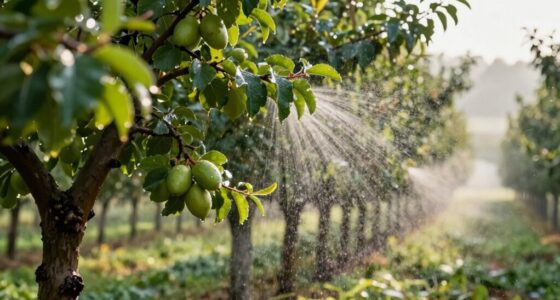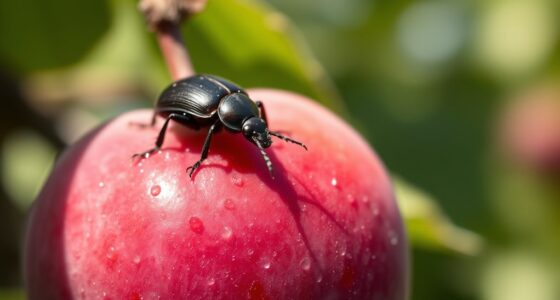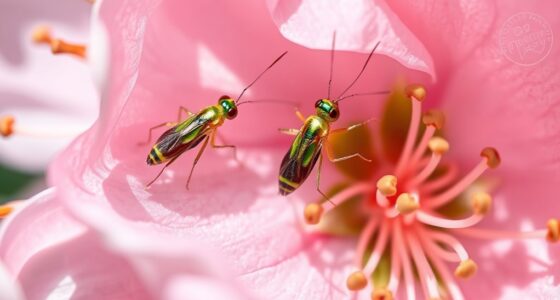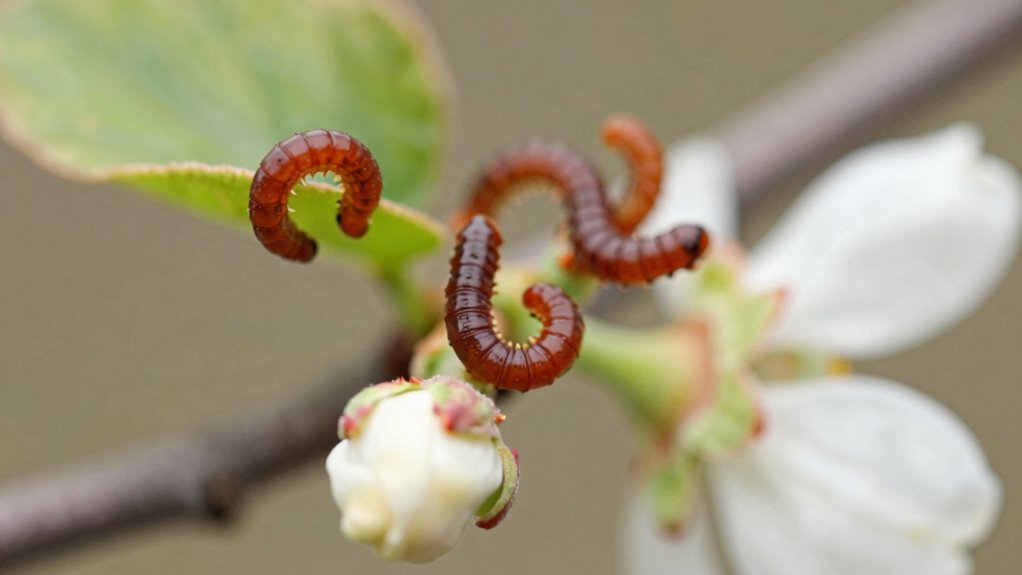

Early signs of fruit worm activity often appear before the fruit forms, such as small holes, webbing, or eggs on foliage. You might notice tiny worms or larvae in freshly picked fruit or damage that happens early in the season. Monitoring these signs closely can help you intervene early. Using organic methods like beneficial insects, organic sprays, and physical barriers can prevent infestations. Keep watching for more tips to protect your crop effectively.

Get garden gear delivered free with Prime
- Fast, free delivery on millions of items
- Prime Video, Amazon Music and more included
- Member-only deals all year
Key Takeaways
- Fruit worms often lay eggs on flower buds or immature fruit, causing damage before fruit maturity.
- Early pest activity includes small holes, webbing, or larvae on young foliage or blossoms.
- Monitoring for tiny worms or eggs during flowering helps detect infestations early.
- Implementing physical barriers and removing infested plant debris can prevent early pest establishment.
- Using organic controls like beneficial insects or neem oil early disrupts the pest’s life cycle before fruit formation.
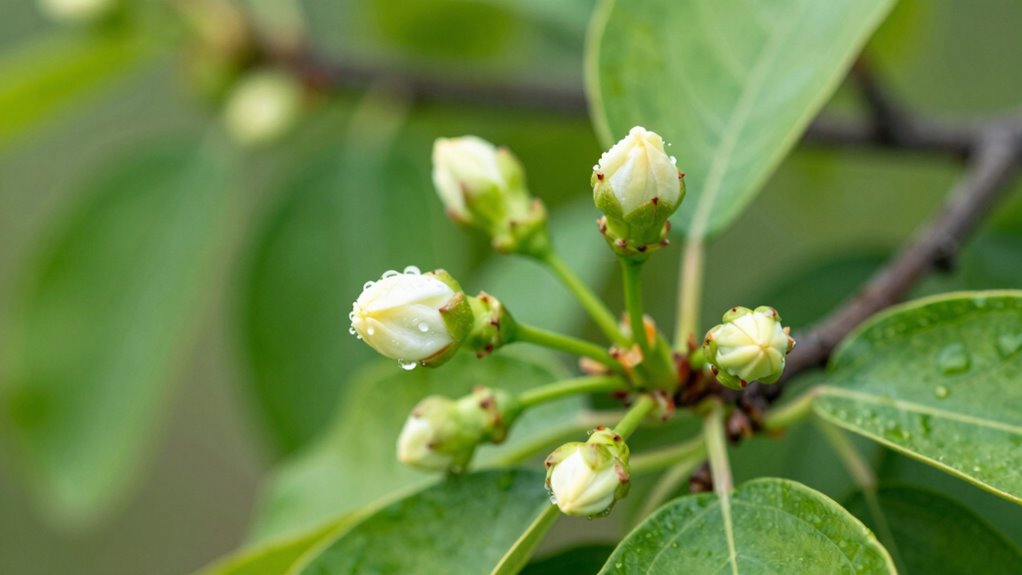
Have you ever noticed small worms or larvae in your freshly picked fruit? It’s a common problem that often starts long before the fruit even reaches maturity. These tiny invaders are usually the larvae of fruit flies or moths, and their presence indicates that pest management needs to begin early in the growing process. If you wait until the fruit is visibly damaged, it might be too late to effectively control the infestation. Instead, proactive measures are essential to protect your crop from these pests before they cause significant damage.
Starting pest management early involves monitoring your trees or plants regularly for signs of pest activity. Look for small holes, webbing, or eggs on the fruit or nearby foliage. Once you identify the presence of pests, you can implement organic solutions that target them without relying on harmful chemicals. For example, introducing beneficial insects like parasitic wasps can help naturally control pest populations. These insects lay their eggs inside pest larvae, effectively reducing their numbers over time. Additionally, applying organic sprays such as neem oil or insecticidal soap can disrupt the life cycle of these pests without harming your plants or the environment.
Another effective organic solution involves crop sanitation. Removing fallen or infested fruit from the ground prevents larvae from maturing and spreading to healthy fruit. Covering your plants with fine mesh or netting can also be a physical barrier that keeps adult pests from laying eggs on your fruit. Timing is vital—apply these organic solutions early in the season, ideally before pests have a chance to establish a foothold. Proper pruning to improve air circulation and reduce humidity can make your plants less attractive to pests, since many larvae thrive in moist environments. Recognizing pest activity early allows for more effective intervention and better crop protection. Maintaining an understanding of pest biology can further enhance your pest management strategy, ensuring you stay ahead of potential infestations. Regularly inspecting your plants and understanding the pest life cycle can help you implement timely and targeted control measures. Being familiar with integrated pest management practices can also support sustainable and environmentally friendly pest control efforts. Being aware of pest behavior can help you predict and prevent infestations more effectively.
As an affiliate, we earn on qualifying purchases.
Frequently Asked Questions
What Specific Fruit Varieties Are Most Affected by Early Worm Infestations?
You’ll find that early worm infestations most affect susceptible fruit varieties like apples, peaches, and berries. To combat this, consider planting pest-resistant varieties designed to deter worms. Additionally, employing organic insect control methods, such as beneficial insects or organic sprays, helps reduce infestations without harming your plants or environment. Regular monitoring and early intervention are key to protecting your fruit from these damaging pests.
Can Early Worm Infestations Be Prevented With Natural Remedies?
Yes, you can prevent early worm infestations with natural remedies. Use natural repellents like neem oil or garlic spray to deter pests. Additionally, try companion planting by growing pest-repelling plants like marigolds or basil near your fruit trees. These methods create a less inviting environment for worms, reducing infestations without chemicals. Consistent application and strategic planting help keep your fruits healthy and worm-free throughout the season.
How Do Fruit Worms Originate Before Fruit Formation?
You might think fruit worms only appear after fruit forms, but they actually originate earlier, often from eggs laid on or near buds and blossoms. Prevention strategies like early inspection and organic treatments can stop them before they damage your crop. Regularly monitor your plants and use natural methods, such as neem oil or beneficial insects, to keep these pests at bay. Acting early is key to protecting your fruit!
Are There Any Early Signs to Detect Worm Presence Before Fruit Appears?
Yes, you can spot early signs of worms before fruit appears by observing pest lifecycle and damage indicators. Look for tiny, silken webbing or small holes in leaves, which suggest pest activity. You might also notice distorted or wilted foliage, indicating larvae feeding beneath the surface. Regularly inspecting plants helps catch these early signs, allowing prompt action before the worms cause significant damage or fruit formation is affected.
What Environmental Factors Contribute to the Early Development of Fruit Worms?
Imagine a farm where poor soil health and low pest resistance create the perfect environment for fruit worms to develop early. Soil that’s nutrient-deficient or overly moist can encourage pest buildup, giving worms a head start before fruit forms. These conditions weaken plant defenses, making it easier for worms to infest. To prevent this, improve soil health and boost pest resistance through proper fertilization and integrated pest management strategies.
beneficial insects for pest control
As an affiliate, we earn on qualifying purchases.
As an affiliate, we earn on qualifying purchases.
Conclusion
So, now you see how the fruit worm problem begins even before the fruit forms, sneaking in early like a stealthy thief. Staying vigilant and understanding the life cycle helps you catch these pests early. Think of it as catching a small crack before it turns into a big leak — prevention is your best tool. By staying proactive, you can protect your plants and enjoy healthy, delicious fruit without the worry.
As an affiliate, we earn on qualifying purchases.
As an affiliate, we earn on qualifying purchases.
Halloween Picks
halloween
As an affiliate, we earn on qualifying purchases.