
Tree guards can effectively protect bark from animals and damage, but if they are poorly installed or made from low-quality materials, they may trap moisture and attract mice, which can harm the tree. Moisture buildup creates fungal risks and weakens bark, while mice nesting inside can cause further damage. Proper installation, ventilation, and sturdy materials are key to avoiding these issues. Understanding how to choose and apply the right guards helps guarantee your trees stay healthy—if you explore further, you’ll find out how to do this effectively.

Get garden gear delivered free with Prime
- Fast, free delivery on millions of items
- Prime Video, Amazon Music and more included
- Member-only deals all year
Key Takeaways
- Proper installation with ventilation gaps prevents moisture buildup and reduces fungal and pest risks.
- Using high-quality, wildlife-resistant materials enhances guard durability and effectiveness.
- Installing guards slightly away from the trunk encourages airflow and minimizes trapped moisture.
- Regular maintenance and monitoring help detect and address moisture or pest issues early.
- Incorporating moisture management techniques ensures long-term bark protection without trapping harmful conditions.
Have you ever wondered how to keep young trees safe from damage? Tree guards are a popular solution, designed to protect bark from physical injuries caused by animals, equipment, or weather. They can be highly effective when used correctly, but it’s essential to understand potential pitfalls. One major concern is wildlife interference. Animals like deer, rabbits, and rodents often see young trees as easy targets, gnawing on bark or rubbing against trunks, which can cause serious harm. Properly installed tree guards act as a barrier, preventing these animals from reaching the vulnerable bark. However, not all guards are equally effective against wildlife. Some animals learn to bypass or damage certain materials, so choosing a guard with durable, wildlife-resistant features is key. Guard material durability matters because it determines how well the protection holds up over time. Cheap or flimsy materials may break down quickly, exposing the tree to damage or allowing animals to breach the barrier. High-quality materials, such as thick plastic, metal, or specially treated plastics, can withstand chewing, rubbing, and weathering, ensuring long-lasting protection.
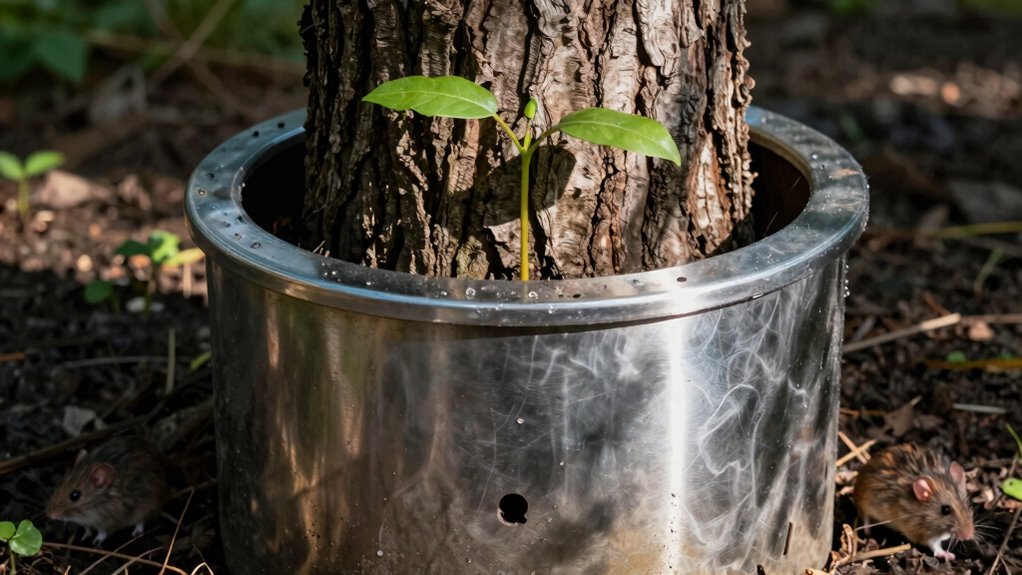
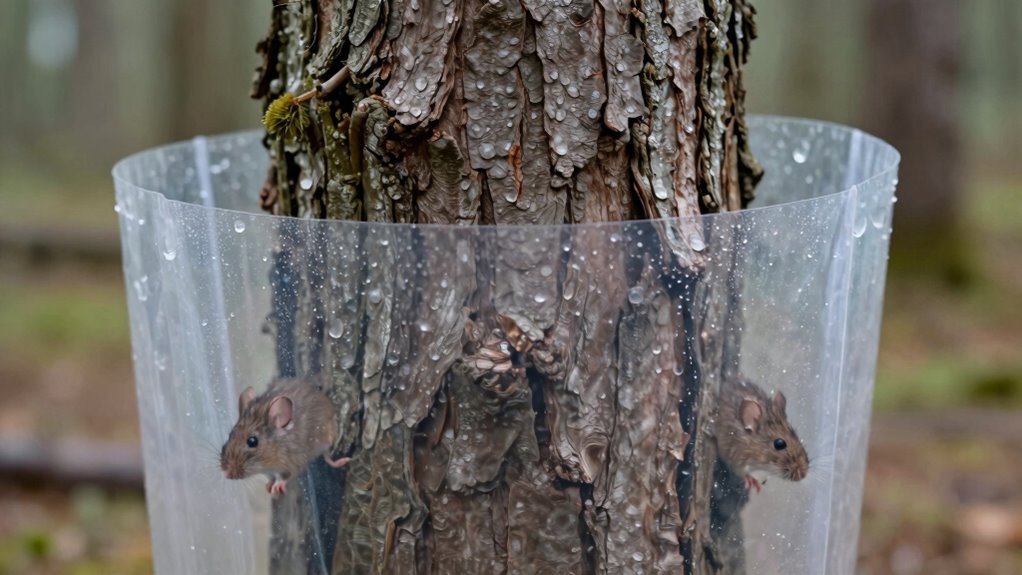
But beware—while tree guards save bark from physical harm, they can also create unintended issues if not monitored. One common problem is moisture buildup. When guards trap rainwater or dew, moisture can accumulate around the trunk, creating a damp environment that promotes fungal growth and decay. Over time, this weakens the bark and can lead to disease or pest infestations. If moisture gets trapped, it’s easy for mice and other rodents to take advantage. Mice, in particular, are notorious for nesting in the sheltered space between the guard and the trunk, gnawing at bark and causing damage that can be just as harmful as physical attacks from larger animals. To prevent this, you should ensure your tree guards have ventilation gaps or are installed slightly away from the trunk, allowing air circulation and reducing moisture build-up. Additionally, understanding the importance of material resistance can help in selecting guards that withstand wildlife and weather over time. Proper installation techniques and maintenance are crucial to prevent moisture accumulation and ensure the guard remains effective. Incorporating adequate ventilation can significantly reduce moisture buildup and improve overall tree health. Being aware of moisture management strategies is crucial for maintaining the health and safety of your trees over the long term.
high quality tree guards for young trees
As an affiliate, we earn on qualifying purchases.
As an affiliate, we earn on qualifying purchases.
Frequently Asked Questions
Are There Eco-Friendly Tree Guard Options Available?
Yes, eco-friendly tree guard options are available. You can opt for biodegradable wraps that break down naturally, reducing environmental impact. Additionally, natural repellents can protect your trees from pests without harmful chemicals. These options help you safeguard your trees while staying environmentally conscious. Choosing biodegradable and natural solutions guarantees you support healthy ecosystems and minimize waste, making your gardening practices more sustainable and eco-friendly.
How Long Do Tree Guards Typically Last?
Tree guards can last anywhere from 5 to 15 years, but durability concerns often hinge on material degradation over time. If made from sturdy, eco-friendly materials, they weather the elements better, extending their lifespan. However, exposure to sun, rain, and wind can cause deterioration, reducing effectiveness. Regular inspections help catch early signs of wear, ensuring your guard continues protecting the tree without becoming a liability.
Can Tree Guards Be Reused Annually?
Yes, you can reuse tree guards annually if you perform proper tree guard maintenance. Regularly check for damage and clean off debris to prevent moisture buildup, which can trap pests like mice and encourage wildlife interactions that harm the tree. Reusing guards saves money and resources, but guarantee they remain in good condition to protect the tree effectively. Proper maintenance minimizes wildlife interactions that could damage the bark.
Do Different Tree Species Require Specific Guard Types?
You might notice that different tree species often require specific guard types due to species compatibility and the need for guard customization. It’s no coincidence—each species has unique growth habits and bark characteristics that demand tailored protection. By customizing guards, you guarantee they fit well, prevent moisture buildup, and keep pests like mice out. This thoughtful approach enhances the trees’ health, proving that one size rarely fits all in tree care.
Are There Signs Indicating a Tree Guard Is Trapping Moisture?
Yes, signs include visible moisture accumulation around the guard base, which can lead to mold or fungal growth. You might notice the bark near the guard appears damp or discolored. Additionally, if mice intrusion occurs, you may see tiny droppings or evidence of gnawing around the guard. Regularly inspect your tree guards and guarantee proper ventilation to prevent moisture buildup and discourage mice from nesting.
ventilated tree protectors for moisture control
As an affiliate, we earn on qualifying purchases.
As an affiliate, we earn on qualifying purchases.
Conclusion
You now see how tree guards can protect bark, preventing damage from animals and weather. But be aware—they can also trap moisture, attracting mice that harm your trees. Remarkably, studies show that improper guard placement can increase pest activity by up to 30%. So, while guards are helpful, make sure you install them correctly and check regularly. That way, you give your trees the best chance to stay healthy and thrive without unintended consequences.
wildlife resistant tree bark protectors
As an affiliate, we earn on qualifying purchases.
As an affiliate, we earn on qualifying purchases.
metal or plastic tree guards with ventilation gaps
As an affiliate, we earn on qualifying purchases.
As an affiliate, we earn on qualifying purchases.
Fall Picks
fall essentials
As an affiliate, we earn on qualifying purchases.