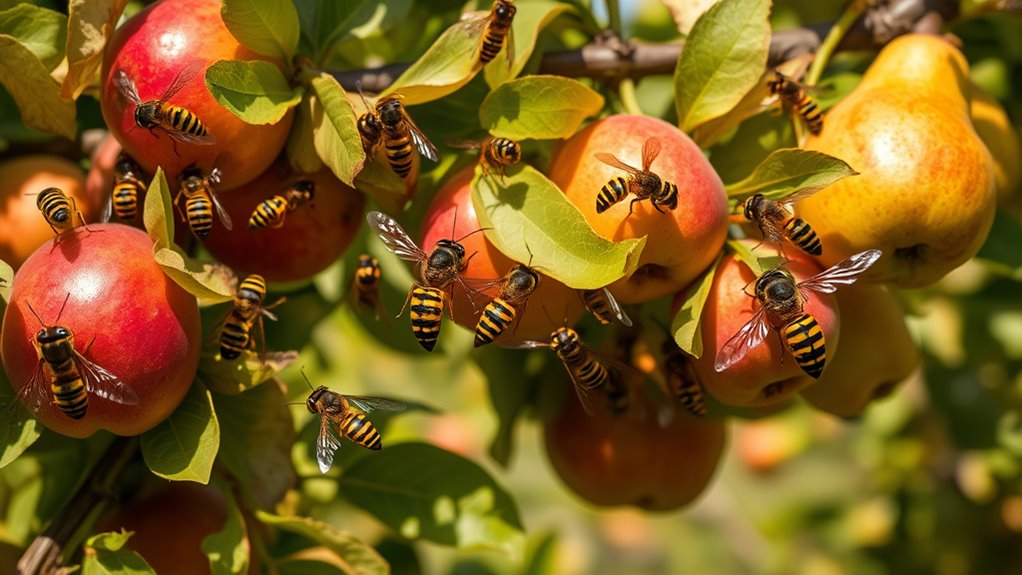

In late season, wasps and hornets become more active in orchards as they forage intensely for sugary foods and proteins to support their colonies. You’ll notice more insects around fruit trees, vegetables, and picnic areas, especially as colonies reach their peak size. Be cautious near nests often found in trees, shrubs, or under eaves, since activity and defensiveness increase. Staying alert and knowing how to safely manage these insects can help protect you—learn more to stay prepared.
Key Takeaways
- Wasps and hornets become more active in late season, foraging for sugary foods and proteins to support their colonies.
- Nests are larger and more visible in late season, often found in trees, shrubs, or under eaves near orchards.
- Increased insect activity around ripe fruit and sweet drinks attracts wasps and hornets to orchards.
- Defensive behavior heightens as colonies grow, making nests more dangerous; approach with caution or seek professional removal.
- Preventative measures like covering trash and removing fallen fruit reduce attractants and help manage late-season insect presence.

As summer winds down, you might notice an increase in wasps and hornets buzzing around your yard. During this late-season period, these insects become more active as they prepare for the end of their life cycle. Their seasonal behavior includes foraging more aggressively to gather food for their colonies, which are often at their peak size now. You might see them darting around fruit trees, vegetable patches, or picnic areas, especially if there’s ripe fruit or sweet drinks attracting them. It’s essential to stay alert, as their stings can be painful and sometimes cause allergic reactions. Recognizing these behavioral patterns can help you time your removal efforts more effectively. You might be tempted to handle these pests on your own, but it’s vital to understand safe DIY removal methods. First, avoid swatting at the insects, as sudden movements can provoke aggressive stings. Instead, try to stay calm and move away slowly. If you decide to use a wasp or hornet spray, choose a product labeled for these insects and apply it during the cooler evening hours when they’re less active. Always wear protective clothing—long sleeves, gloves, and eye protection—to minimize the risk of stings. Keep a safe distance and aim your spray directly at the nest or the insects when they’re gathered nearby. Remember, late-season nests are often abandoned or less active, but it’s better to remove them before they pose a bigger threat. Understanding their seasonal behavior helps you plan your removal efforts effectively. Wasps and hornets are less aggressive in the early parts of their lifecycle, but as the season progresses and colonies reach their maximum size, their defensive instincts heighten. They’re more likely to sting if disturbed, especially near their nests. Nests, often found in trees, shrubs, or under eaves, may be easier to locate now because the colony is at its largest. If you notice a nest, approach with caution and consider professional removal if it’s in a difficult or dangerous spot. DIY removal can work if done carefully, but never take unnecessary risks. Late-season activity also means these insects are more focused on foraging for sugary foods and protein sources to sustain their colonies. This explains their increased presence around fruit trees and outdoor dining areas. By understanding their seasonal behavior, you can better anticipate their movements and take preventative measures, such as covering trash cans or removing fallen fruit. Staying vigilant and acting promptly with safe DIY removal techniques can help keep your orchard and yard safe from unwelcome late-season visitors.
Frequently Asked Questions
How Can I Identify Different Wasp and Hornet Species?
To identify different wasp and hornet species, start with wasp identification by examining their size, color, and markings. Hornet species often have larger bodies and distinctive head shapes. Look for unique color patterns, such as black and yellow stripes or reddish hues. Pay attention to nest types and locations. By comparing these features, you can distinguish between various wasp and hornet species more easily and accurately.
Are Late-Season Wasps More Aggressive Than Earlier Ones?
Yes, late-season wasps tend to be more aggressive due to their seasonal behavior. As summer ends, they become more protective of their nest, especially if it’s near your orchard. You might notice increased agitation and defensive actions if you approach their nest location. It’s best to keep a safe distance and avoid disturbing them during this time, as their heightened activity can lead to stings.
What Are Safe Methods to Remove Wasp Nests?
To safely remove wasp nests, you should wear protective clothing and use a long-handled tool to minimize risk. Apply pesticide safely, following label instructions, ideally at dusk when wasps are less active. Beekeeping practices suggest avoiding aggressive removal during late-season. Always prioritize pesticide safety by choosing approved products and keeping children and pets away. If unsure, consider calling a professional pest control service to handle the removal safely.
Do Wasps and Hornets Pose Health Risks to Orchard Workers?
Did you know that wasps and hornets can sting multiple times and pose serious health risks? Yes, they can cause allergic reactions or even anaphylaxis. As an orchard worker, wearing protective clothing is essential to minimize risks. Always follow pesticide safety guidelines when dealing with nests, and avoid disturbing them without proper precautions. Staying vigilant helps protect your health from these aggressive insects during late-season activity.
When Is the Best Time to Control Late-Season Wasps?
You should control late-season wasps during early fall when their nest removal timing is most effective. As fall wasp behavior increases, they become more aggressive and aggressive, making it safer to handle the nest before populations peak. Addressing nests early reduces risks to orchard workers and minimizes damage. Keep monitoring and plan nest removal before temperatures drop considerably, ensuring you’re not caught off guard by unexpected late activity.
Conclusion
As summer fades, these wasps and hornets become the last guardians of your orchard’s bounty. They symbolize both nature’s resilience and its unpredictable fury, reminding you that even in decline, life clings fiercely. Respect their presence, for they are the final sentinels of the season’s cycle. Protect your harvest with care, understanding that these tiny warriors embody the enduring spirit of growth and the delicate balance of nature’s reign.