
TL;DR

Get garden gear delivered free with Prime
- Fast, free delivery on millions of items
- Prime Video, Amazon Music and more included
- Member-only deals all year
A marionberry is a particular trailing blackberry cultivar developed through a program involving the USDA and Oregon State University and released in 1956. It is closely associated with Oregon’s Willamette Valley, where the growing conditions suit its long canes and summer fruit. Production totals and some claims about where marionberries are grown depend on the time period and source.
A marionberry is a named blackberry cultivar developed in Oregon, not a separate species of berry. A Grow Organic guide traces it to a cooperative breeding program involving the U.S. Department of Agriculture and Oregon State University; the cultivar was released in 1956 and became closely associated with the Willamette Valley.
The cultivar’s parent varieties were ‘Chehalem’ and ‘Olallie’, according to the guide. The name “Marion” was inspired by Marion County, where early testing took place. The fruit is a trailing blackberry: its canes grow along the ground or on a support rather than forming the upright shape associated with some other blackberry plants.
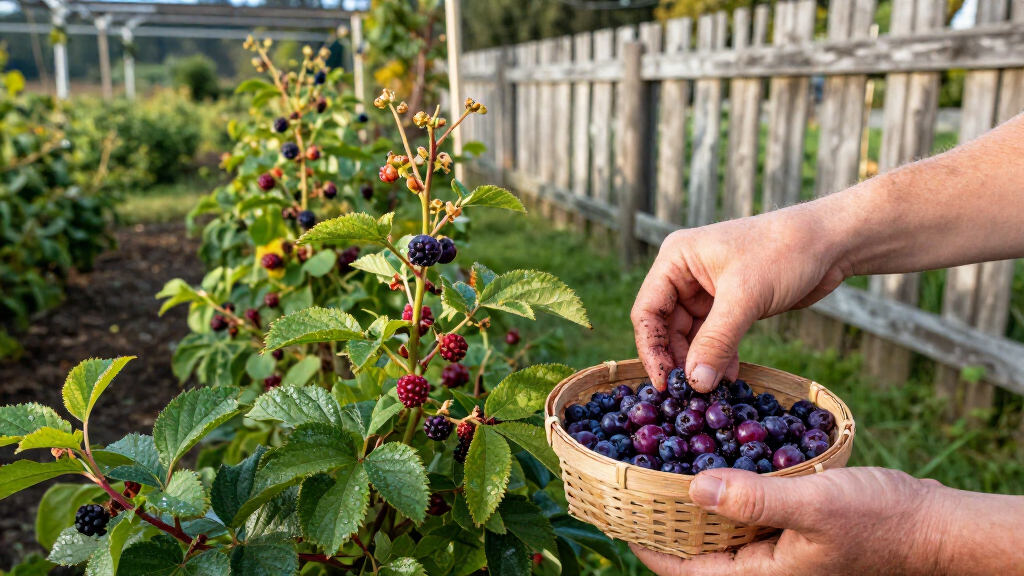
Ripe marionberries are typically deep purple to nearly black, with a rich aroma and a balance of sweetness and tartness. The guide describes the fruit as juicy and flavorful both fresh and cooked. It is used in jam, sauce, baked goods and pie. Because the berries are relatively soft, the source says they can require careful handling and may be less common in distant grocery stores than firmer varieties.
The guide reports that historical Oregon sources put annual production at about 28 million to 33 million pounds during the periods those sources covered. That is a historical range, not a current annual estimate. It does not provide the years behind the figures, a recent production count or a comparison with other blackberry cultivars.
Why Oregon Suits Marionberries
The marionberry’s regional identity is tied to both its breeding history and its growing needs. The guide says western Oregon’s conditions are favorable for trailing blackberries, helping explain the cultivar’s close association with the Willamette Valley and the Pacific Northwest. Oregon is described as the center of commercial marionberry production, though the source does not provide a current, independently verified production breakdown.
For consumers, knowing that “marionberry” names one cultivar helps distinguish it from blackberries as a broad group. Every marionberry is a blackberry, but not every blackberry is a marionberry. Its flavor and use in regional foods make the cultivar recognizable, while its softness helps explain why fresh fruit may be easier to find near growing areas or at local farmers markets during the harvest season.
The distinction also matters for gardeners. Marionberries need space for long, trailing canes, a sturdy trellis and suitable seasonal conditions. A plant may be possible outside Oregon, but success depends on local climate and site factors, not a state label alone.
marionberry live plant trailing blackberry
As an affiliate, we earn on qualifying purchases.
As an affiliate, we earn on qualifying purchases.
From Oregon Breeding to Harvest
The guide dates the release of ‘Marion’ to 1956, after development through a cooperative program involving federal agricultural researchers and Oregon State University. The breeding drew on two blackberry cultivars, ‘Chehalem’ and ‘Olallie.’ Marion County, Oregon, is associated with early testing and the cultivar’s name.
Marionberries grow on a two-year cane cycle. First-year canes, called primocanes, produce stems and leaves. In their second year, they become floricanes and bear fruit. After harvest, spent floricanes are removed while healthy new primocanes are retained, according to the guide. A trellis supports the trailing canes, which can grow very long in suitable conditions.
In Oregon, trailing blackberries generally ripen in summer, but the exact harvest period varies with location, cultivar, weather and the growing season. Ripe fruit should be fully dark and come away with a gentle pull. The guide recommends handling berries carefully and cooling them soon after picking.
“‘Marion’ is a named type of blackberry known for dark fruit, rich aroma, and a sweet tart flavor.”
— Grow Organic guide
blackberry trellis for trailing canes
As an affiliate, we earn on qualifying purchases.
As an affiliate, we earn on qualifying purchases.
Current Production Figures Are Missing
The source gives a historical annual production range of about 28 million to 33 million pounds but does not identify the years covered or state how much Oregon produces now. The figure should not be read as a current total. The guide also repeats a claim attributed to the Oregon Department of Agriculture that all the world’s marionberries are grown in Oregon, but it does not link to or quote the underlying department material. The current scope and basis of that claim are not established by the supplied source.
Growing recommendations also depend on local conditions. The guide gives a general range of USDA hardiness Zones 6–9, while cautioning that hardiness zones alone do not describe whether a site is suitable. It does not provide a location-specific planting calendar or guarantee that marionberries will thrive in every area within that range.
As an affiliate, we earn on qualifying purchases.
Check Local Harvest and Growing Advice
Readers looking for fresh fruit can check local farmers markets and regional growers during the summer harvest period. Exact dates vary by season and location, so the guide does not set a single calendar window. Gardeners considering a planting should consult local Extension advice for climate, soil and care recommendations, then plan for a trellis and the plant’s two-year cane cycle.
For a current picture of commercial production, readers would need a dated production report or updated figures from an agricultural authority. The supplied guide does not name a next release or reporting milestone.
berry picking containers for delicate blackberries
As an affiliate, we earn on qualifying purchases.
As an affiliate, we earn on qualifying purchases.
Key Questions
Is a marionberry the same as a blackberry?
A marionberry is one specific blackberry cultivar. “Blackberry” refers to a wider group that includes many varieties.
What does a marionberry taste like?
The guide describes ripe marionberries as aromatic, juicy, sweet and noticeably tart. Flavor can vary with ripeness and growing conditions.
Where do marionberries grow?
They are especially associated with western Oregon and nearby parts of Washington. Growing them elsewhere depends on local climate, sunlight, drainage, summer moisture and winter conditions.
When are marionberries in season?
In Oregon, trailing blackberries generally ripen in summer. The exact timing changes with location, weather and the growing season.
Are marionberries related to mulberries or huckleberries?
No. A marionberry is a cultivated blackberry. Mulberries grow on trees, while huckleberries belong to different plant groups.
Source: rss
Halloween Picks
halloween
As an affiliate, we earn on qualifying purchases.