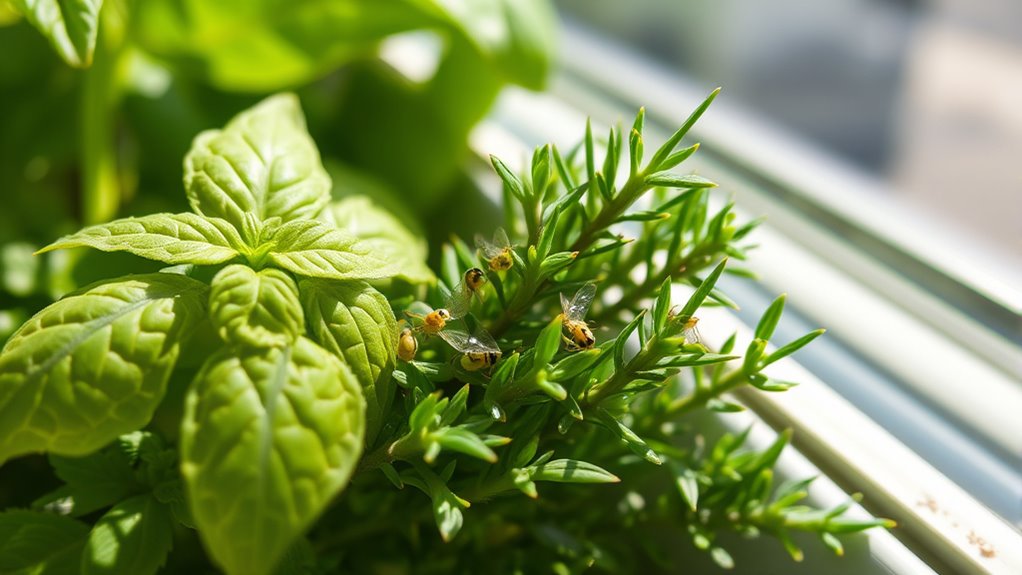
If you notice aphids on your windowsill herbs, act quickly to prevent their spread. These tiny pests are attracted to soft, new growth and can weaken your plants by sucking sap. Use natural methods like spraying a strong jet of water, applying neem oil, or introducing beneficial insects like ladybugs. Growing garlic, chives, or marigolds nearby can also help deter future infestations. To keep your herbs healthy and pest-free, explore more effective strategies.
Key Takeaways
- Inspect windowsill herbs regularly for tiny green or black aphids, especially on new growth.
- Use a strong jet of water to dislodge aphids and reduce infestation.
- Apply neem oil or insecticidal soap to naturally eliminate aphids without harming plants.
- Introduce beneficial insects like ladybugs or lacewings if feasible indoors.
- Plant garlic, chives, or marigolds nearby to repel aphids and prevent future infestations.
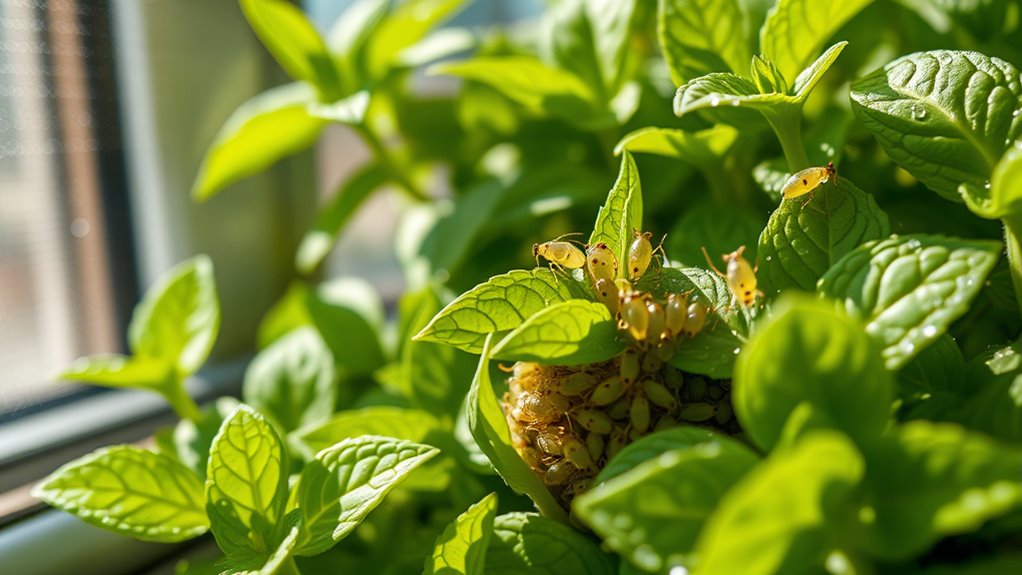
Have you noticed tiny green or black insects crawling on your windowsill herbs? If so, you’re likely dealing with aphids, small pests that can quickly infest your plants and compromise their health. These tiny pests latch onto the soft new growth of herbs like basil, mint, or parsley, sucking out plant sap and causing leaves to curl, yellow, or distort. Left unchecked, aphids can spread disease and weaken your plants, making it indispensable to address the problem promptly.
Tiny green or black aphids can quickly infest your herbs, causing damage and spreading disease.
The good news is that there are effective methods for natural pest control that don’t involve harsh chemicals. One of the most eco-friendly approaches is to introduce beneficial insects like ladybugs or lacewings, which prey on aphids naturally. You can also use a strong jet of water to dislodge these pests from your herbs, washing them away without harming your plants. Neem oil, a natural insecticide, is another potent option; it disrupts aphid life cycles and is safe for both your herbs and the environment. Applying these solutions consistently can keep the infestation under control without resorting to chemical pesticides.
Another highly effective strategy is companion planting, which involves growing certain plants together to deter pests naturally. For instance, planting garlic or chives near your herbs can repel aphids due to their strong scent. Marigolds are also known to repel many pests, including aphids, and can serve as a natural barrier around your windowsill garden. By incorporating these companion plants into your windowsill herb setup, you create a natural pest control system that reduces the likelihood of aphid infestation from the start. Plus, companion planting can enhance the overall health of your herbs, making them more resilient to pests and diseases.
Maintaining good plant health is vital in preventing aphids. Ensure your herbs aren’t stressed by overwatering or poor soil conditions, as healthy plants are less attractive to pests. Regularly inspecting your herbs allows you to catch aphids early before they multiply excessively. When you do spot these pests, act quickly with natural remedies, and consider planting companion species that naturally repel aphids. Incorporating preventive measures such as proper watering and soil care can significantly reduce the chances of infestation. Combining natural pest control methods with companion planting creates a sustainable, chemical-free way to protect your windowsill herbs. This approach not only keeps your herbs thriving but also makes your gardening more environmentally friendly and rewarding.
Frequently Asked Questions
What Natural Predators Help Control Aphids on Herbs?
You can use natural predators for effective pest management against aphids on your herbs. Ladybugs, lacewing larvae, and parasitic wasps are excellent natural predators that target aphids. Introducing or encouraging these beneficial insects helps control the pest population without chemicals. Keep your herbs healthy and attract these predators by planting companion plants like fennel and dill. This natural approach promotes a balanced garden ecosystem and keeps your herbs healthy and pest-free.
How Often Should I Inspect My Herbs for Aphids?
You should inspect your herbs at least twice a week to catch aphids early. Regular pest monitoring helps you spot any signs of infestation before they spread. Keep a keen eye on new growth and undersides of leaves, where aphids love to hide. Skipping inspections can let the pests multiply unnoticed, making control harder later. Stay vigilant and proactive to keep your herbs healthy and thriving.
Are There Specific Herbs More Susceptible to Aphids Indoors?
Some herbs are more susceptible to aphids indoors, especially those with tender, new growth like basil, mint, and parsley. These herbs have higher indoor risk because their soft leaves attract pests easily. To protect your herbs, regularly inspect these vulnerable plants and maintain good airflow. By staying vigilant and understanding herb susceptibility, you can prevent infestations and keep your indoor garden healthy and thriving.
Can Aphids Spread to Other Houseplants From Herbs?
Yes, aphids can spread from your herbs to other houseplants like a cunning wildfire. Think of indoor pest transfer as a sneaky river flowing between your plants, carrying tiny invaders. Some herb plant vulnerabilities, like tender new growth, serve as open invitations for pests. Keep a close eye, isolate infested herbs, and act quickly to prevent these pesky invaders from turning your entire indoor garden into a battleground.
What Environmental Conditions Encourage Aphid Infestations Indoors?
You encourage aphid infestations indoors when humidity levels are high and sunlight exposure is inadequate. Aphids thrive in moist environments, so keeping humidity elevated creates ideal conditions. Additionally, if your herbs don’t get enough sunlight, they weaken and become more vulnerable to pests like aphids. To prevent infestations, make certain proper airflow, reduce humidity, and provide sufficient sunlight, ideally 6 hours daily, to keep your plants healthy and pest-free.
Conclusion
If you spot aphids on your windowsill herbs, don’t panic. Regularly inspecting your plants and gently removing pests can keep them healthy. Did you know that just one aphid can produce up to 80 offspring in a month? That tiny number of pests can quickly become a big problem. Stay vigilant and act early to protect your herbs so you can enjoy fresh, vibrant greens all season long.