
If you notice distorted new leaves on your indoor plants, it often means tiny pests are feeding on their tender tissue. These pests, like aphids or thrips, cause curling, twisting, or misshapen foliage as they damage the plant from the inside out. Often, you’ll also see signs like sticky residue or tiny insects on the undersides of leaves. Paying close attention to these clues helps catch infestations early—keep exploring to learn more ways to protect your plants.
Key Takeaways
- Distorted new leaves often indicate pest feeding on tender tissue, common with pests like aphids or thrips.
- Tiny pests such as aphids or spider mites cause leaf curling and deformation.
- Sticky residues or webbing on leaves suggest pest activity damaging new growth.
- The pattern of distortion helps identify specific pests and tailor control methods.
- Early detection of leaf deformation can prevent pest populations from spreading.
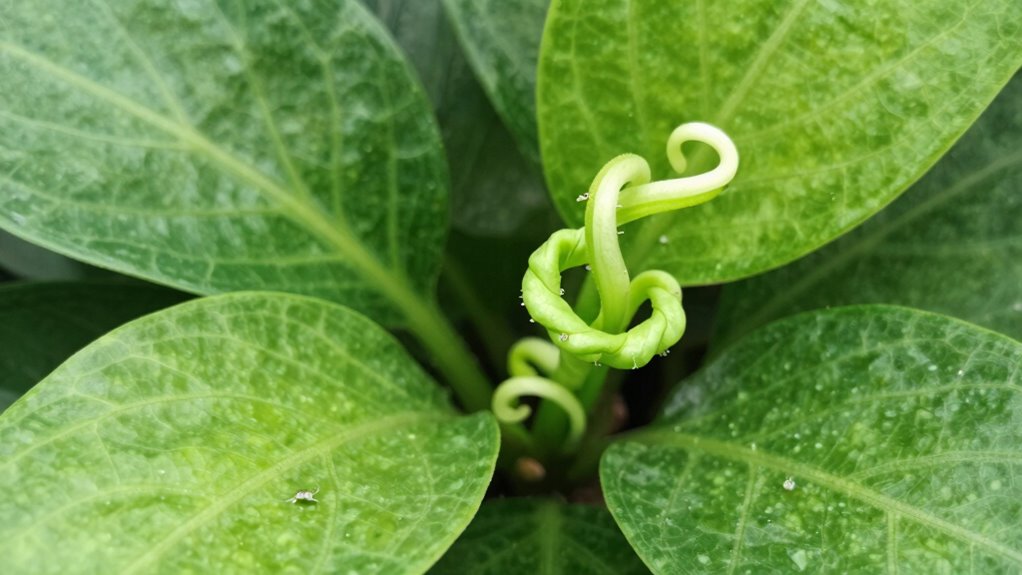
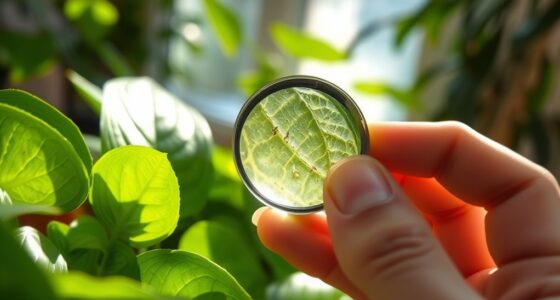
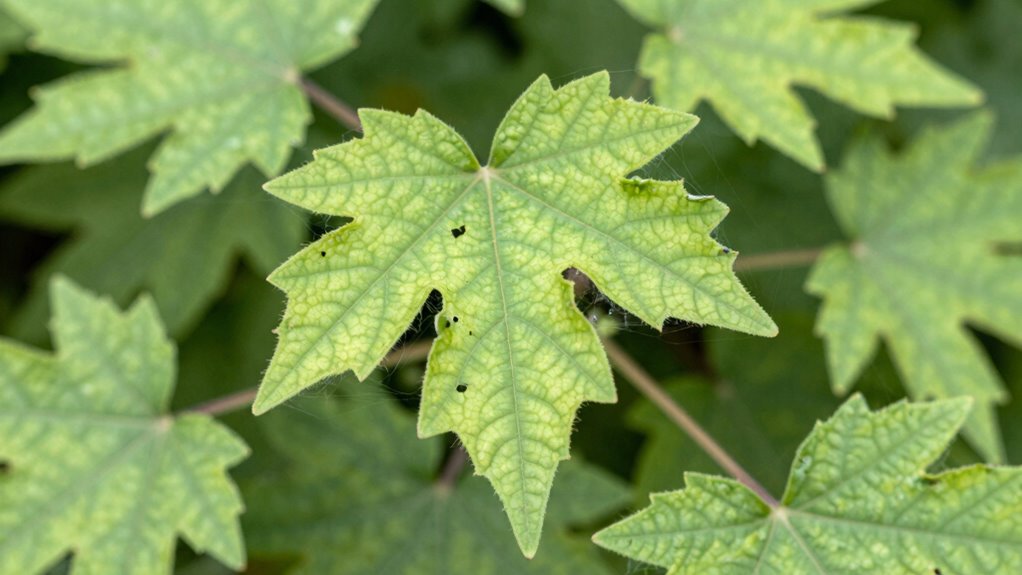
When you notice new leaves sprouting on your indoor plants, it’s a sign of healthy growth. But if those leaves appear distorted or misshapen, it’s time to look closer. Tiny indoor pests can sometimes cause these issues, and recognizing what’s happening involves pest identification and understanding leaf damage patterns. The first step is to examine your plants carefully. Are the leaves curled, twisted, or deformed? Do they have unusual spots, holes, or sticky residues? These signs point toward specific pests, like aphids, spider mites, or thrips, each leaving distinctive damage patterns on your plants.
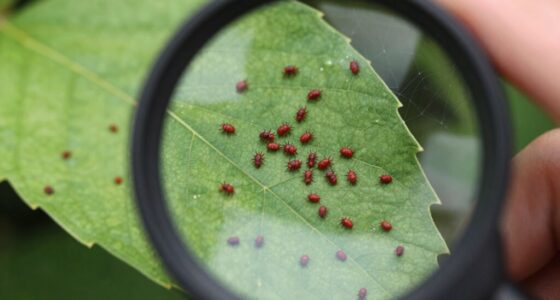
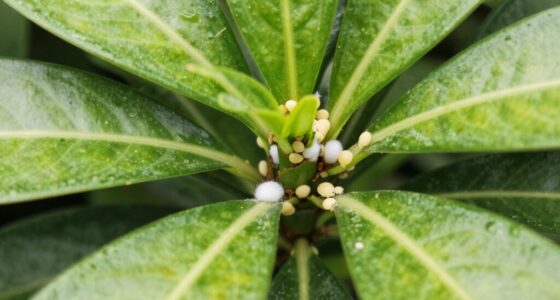
Pest identification is crucial because different pests produce different types of damage. For example, if you notice tiny, soft-bodied insects clustered on the undersides of leaves, you’re likely dealing with aphids. They often cause leaves to curl or distort as they suck out plant sap. Spider mites, on the other hand, are much smaller and tend to produce fine webbing between leaves and stems. Their feeding results in tiny speckled or stippled damage, making leaves look mottled or bleached. Thrips are slender insects that scrape at the surface of new leaves, leading to silvery streaks, scarring, or distorted growth. Recognizing these patterns helps you identify which pest is at work, enabling you to take targeted action.
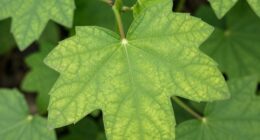
The leaf damage patterns tell a story about what’s happening beneath the surface. When new leaves are distorted, it usually indicates that pests are feeding on the tender, developing tissue. Such damage often appears as misshapen, crinkled, or curled leaves. Sometimes, the damage is more subtle—tiny specks or stippling that might be mistaken for nutritional deficiencies. But if you notice a pattern of deformation, especially on new growth, it’s a sign pests are interfering with your plant’s development. Sticky residues—honeydew from pests like aphids or whiteflies—also point toward pest activity. These residues can encourage mold growth, further harming your plant. Regular monitoring and understanding damage patterns can help you catch issues early before they become severe. Additionally, understanding the life cycle of pests can support more effective control methods. Familiarity with pest behavior can also help you anticipate and prevent future infestations.
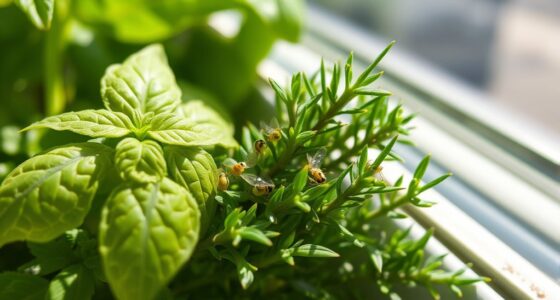
Understanding these leaf damage patterns helps you catch problems early. When new leaves are distorted, your instinct should be to investigate immediately. Look for signs of pests on the undersides of leaves, stems, and even soil surfaces. Recognizing the signs of pest infestation is essential for early intervention. Catching these issues early means you can act before the pests multiply and cause more extensive damage. Whether you opt for natural remedies like neem oil or introduce beneficial insects, recognizing pest signs and damage patterns puts you in control. Your plants will thank you for paying attention to the subtle clues, ensuring they continue growing healthy and vibrant.
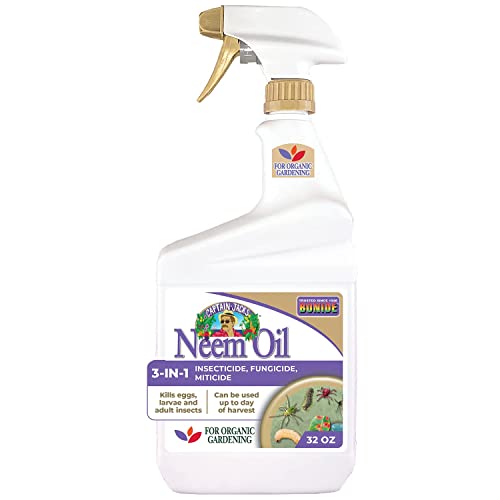
Bonide Captain Jack's Neem Oil, 32 oz Ready-to-Use Spray, Multi-Purpose Fungicide, Insecticide and Miticide for Organic Gardening
- Multi-Purpose Pest Control: Fungicide, miticide, and insecticide
- Ready-to-Use Spray: Convenient and easy to apply
- Kills All Insect Stages: Eggs, larvae, and adults
As an affiliate, we earn on qualifying purchases.
As an affiliate, we earn on qualifying purchases.
Frequently Asked Questions
Can Distorted Leaves Indicate Nutrient Deficiencies Instead of Pests?
Yes, distorted leaves can indicate a nutrient deficiency rather than pests. When your plant shows leaf deformation, it’s often a sign that essential nutrients like calcium, magnesium, or nitrogen are lacking. You should check your plant’s soil and consider supplementing with appropriate fertilizers. While pests cause damage, nutrient deficiencies lead to abnormal growth patterns and distorted leaves, so diagnosing correctly helps you give your plant the right care it needs.
Are All Pests That Cause Leaf Distortion Visible to the Naked Eye?
Think of pests as tiny artists, some leaving bold, visible strokes while others hide in shadows. Not all pests that cause leaf distortion are visible to the naked eye; many are hidden pests, like microscopic mites or eggs, which act as subtle signs or natural pest signs. You might see distorted leaves, but the pests behind them could be concealed, making it essential to look for hidden pest indicators alongside obvious damage.
How Quickly Do Pests Typically Cause Visible Damage to New Leaves?
Pests can cause visible damage to new leaves within a few days to a week, depending on the pest type and infestation level. For accurate pest identification and understanding the damage timeline, closely examine your plant regularly. Early detection helps prevent severe damage. Keep an eye out for distorted, discolored, or deformed leaves, and act promptly to control pests before they multiply and cause more extensive harm.
Do Certain Indoor Plants Resist Pest Damage Better Than Others?
Certain plant species show better pest resistance than others. For example, snake plants and pothos are generally more resilient, making them less attractive to pests. You’ll notice fewer issues with pests on these species compared to more delicate plants like ferns or orchids. By choosing plant species known for their pest resistance, you can reduce the likelihood of damage and make indoor pest management easier.
Can Environmental Factors Cause Leaf Distortion Similar to Pests?
Yes, environmental factors can cause leaf distortion similar to pests. Poor air circulation can lead to humidity buildup, which stresses plants and results in curled or warped leaves. High humidity levels promote fungal growth, causing damage that mimics pest damage. To prevent this, guarantee good airflow around your plants and maintain appropriate humidity levels. Regularly monitor these conditions to keep your indoor plants healthy and avoid misdiagnosing pest issues.

BioAdvanced Houseplant Insect and Mite Control Spray – 24 fl oz Bottle
- Indoor and outdoor plant care: Protects houseplants, flowers, and herbs
- Effective insect killer: Kills aphids, gnats, whiteflies, lace bugs
- Disease control: Controls powdery mildew, leaf spot, rust
As an affiliate, we earn on qualifying purchases.
As an affiliate, we earn on qualifying purchases.
Conclusion
So, next time your new leaves look wonky, don’t rush to spray or toss the plant. Instead, thank those tiny pests for their subtle warning. They might be small, but their message is loud and clear—your indoor oasis isn’t as pest-free as you thought. Ironically, it’s their tiny presence that reveals the bigger problem, reminding you that sometimes, the smallest signs speak the loudest truths. Keep an eye out; your garden’s secrets are hidden in plain sight.
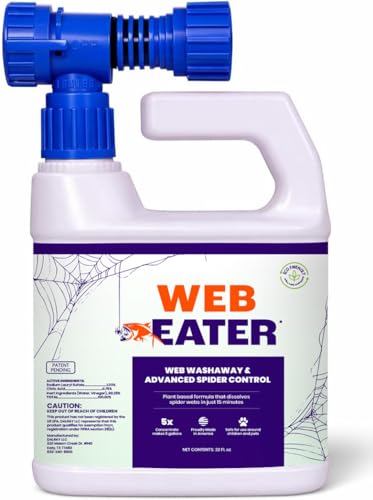
Web Eater Spider Web Dissolver & Outdoor Spider Repellent Spray, 32 oz
- Advanced Web Dissolving Formula: Penetrates tough spider webs effectively
- Triple Action Spider Control: Targets spiders, breaks webs, repels future spiders
- Eco-Friendly & Safe: Non-toxic, safe around pets and plants
As an affiliate, we earn on qualifying purchases.
As an affiliate, we earn on qualifying purchases.

Dr. Killigan's Aphid Spray for Plants – Kills Aphids, Mites, Thrips 16 oz
- Effective Pest Control: Kills aphids, spider mites, thrips on contact
- Mechanical Action: Physically destroys pests' outer layer
- Indoor & Outdoor Use: Suitable for indoor and outdoor gardening
As an affiliate, we earn on qualifying purchases.
As an affiliate, we earn on qualifying purchases.