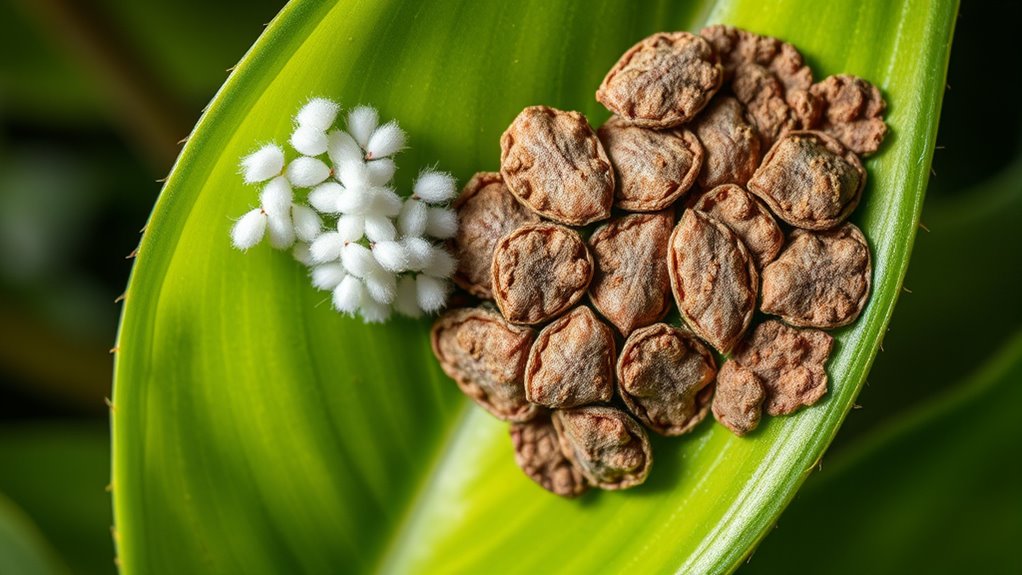

Soft scales hide on the undersides of leaves or stems and have a soft, removable shell that secretes honeydew, leading to mold problems, while armored scales have a hardened shell that’s more visible and firmly attached to the plant. Soft scales tend to move around and reproduce quickly, making them easier to control with natural predators or insecticidal soap, whereas armored scales are more resistant, often needing systemic insecticides. Understanding these differences helps you choose the right approach to protect your houseplants.
Key Takeaways
- Soft scales have soft, movable shells that secrete honeydew, while armored scales have hard, shell-like coverings that are firmly attached.
- Soft scales often remain hidden under leaves or stems, making them less visible initially, whereas armored scales are more noticeable due to their hardened shells.
- Soft scales produce honeydew that can lead to sooty mold, damaging plant surfaces; armored scales weaken plants by sap-sucking over time.
- Biological controls like ladybugs target soft scales more effectively; systemic insecticides are often needed for armored scales.
- Proper identification of the scale type guides effective treatment, with soft scales responding better to natural predators and oils, and armored scales requiring systemic insecticides.
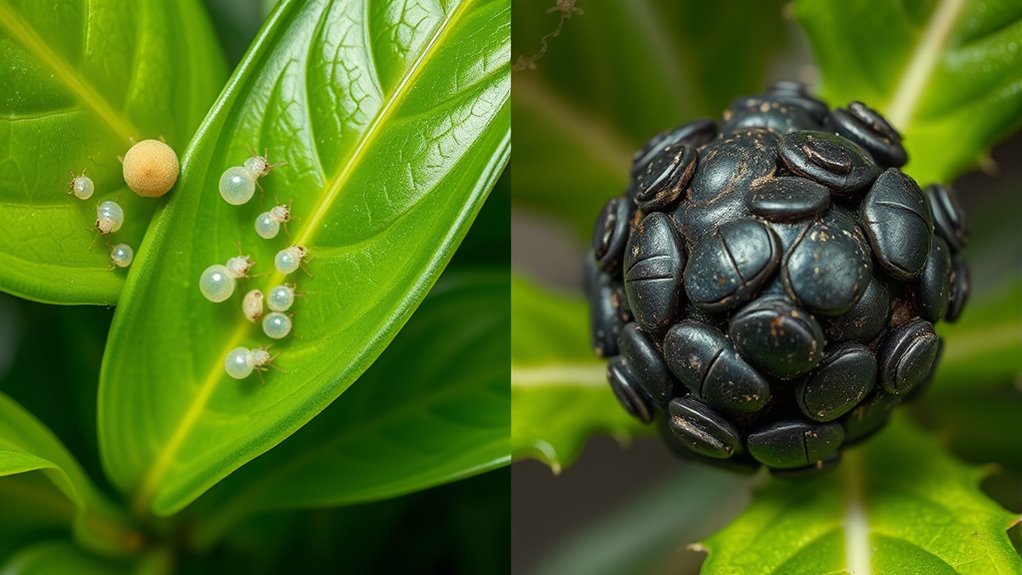
You’ll find that soft scales are more likely to be found on the undersides of leaves or stems, where they remain relatively hidden and can reproduce rapidly if left unchecked. Their soft shell allows them to secrete honeydew, which can lead to sooty mold growth—an unsightly and damaging problem. Armored scales, however, tend to be more stationary, attaching firmly to the plant’s surface, and are often easier to spot because of their hardened, shell-like covering. Their presence may be less obvious initially, but they can cause serious harm by sucking sap and weakening the plant over time. Understanding appliances connection can help in managing pest outbreaks by ensuring proper care and maintenance of your houseplants. When managing these pests, it’s vital to tailor your approach. For soft scales, biological control agents like ladybugs or parasitic wasps can effectively reduce populations without risking chemical resistance or harming your plant. If these natural predators aren’t enough, chemical treatments such as insecticidal soaps or horticultural oils can be used carefully to target soft scales. With armored scale, chemical treatments are often necessary because biological controls are less effective. Systemic insecticides can be applied to the soil or directly to the plant to help penetrate their hard shells, but you should always follow the instructions carefully to avoid damage to your houseplant or your household environment.
Frequently Asked Questions
How Do I Distinguish Between Soft and Armored Scale Pests Visually?
You can distinguish between soft and armored scale pests through visual identification by examining their pest morphology. Soft scales appear as small, oval, or round bumps that are often yellow or brown and secrete a sticky, honeydew-like substance. Armored scales look similar but have a hard, protective shell that’s more rigid and waxy. Soft scales are more vulnerable, while armored scales have a tough exterior, making them easier to spot with careful observation.
Are There Natural Predators That Control Scale Infestations?
Think of beneficial insects as tiny guardians patrolling your houseplants, naturally keeping pests in check. Yes, there are natural predators like ladybugs, parasitic wasps, and lacewings that control scale infestations effectively. These beneficial insects prey on soft and armored scales, reducing the need for chemical treatments. Introducing or encouraging these natural pest control allies can help maintain healthy, pest-free plants, just like a well-balanced ecosystem in your home.
Can Scale Pests Damage the Overall Health of My Houseplants?
Yes, scale pests can damage your houseplants’ overall health. During their lifecycle, scales suck sap from leaves and stems, weakening the plant and causing yellowing or stunted growth. To protect your plants, practice pest prevention by regularly inspecting for early signs of infestation and removing affected areas. Acting early helps control scale populations before they cause significant damage, ensuring your houseplants stay healthy and vibrant.
How Often Should I Inspect My Plants for Scale Pests?
You should inspect your plants weekly to catch scale pests early. Regular pest monitoring helps you identify infestations before they cause serious damage. During each inspection, look closely at stems, leaves, and undersides for soft or armored scale. Consistent inspection frequency guarantees you can act quickly, applying treatments or removing pests before they spread. Staying vigilant is key to maintaining healthy houseplants and preventing pest-related problems.
What Are the Best Environmentally Friendly Treatment Options?
Like a guardian of your green domain, you seek eco-friendly remedies. Opt for biological control agents like ladybugs or parasitic wasps—they’re nature’s pest fighters. You can also use neem oil or insecticidal soap, both safe and effective. These environmentally friendly options target scale pests without harming beneficial insects or your houseplants, making your pest management both responsible and sustainable. Embrace nature’s own solutions for a healthier, greener home.
Conclusion
Now that you know the subtle differences between soft and armored scale, you’ll be better equipped to spot trouble early. But beware—these pests can hide in plain sight, waiting for the perfect moment to strike. Will your vigilant eye catch the signs before damage escalates? Stay alert, nurture your plants carefully, and the battle against scale pests remains in your hands. The next move could make all the difference—are you ready?