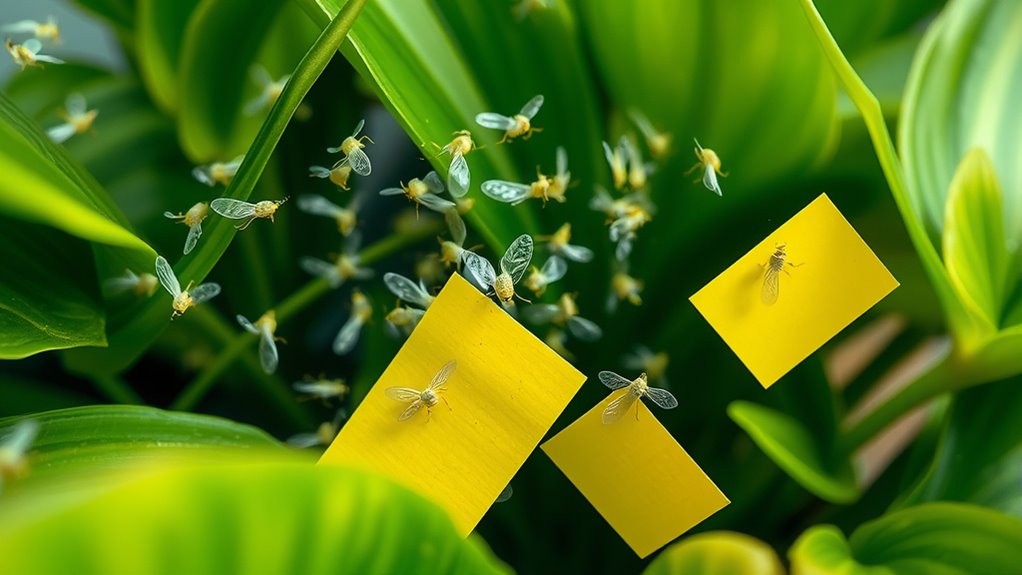

To monitor whiteflies on your houseplants, use bright yellow sticky cards placed near the plants, especially on leaf undersides. These yellow traps attract flying pests, making it easy to see early signs of infestation. Check the traps weekly for insects or sticky buildup. If pests are detected, you can act quickly with targeted treatments or natural predators. Keep going to discover more effective tips to keep your plants healthy and whitefly-free.
Key Takeaways
- Yellow sticky traps attract whiteflies, making early detection of infestations easier.
- Place traps near houseplants to monitor pest activity effectively.
- Regularly check traps for trapped insects to assess infestation levels.
- Replace or reposition traps weekly, especially during peak pest seasons.
- Use trap data to determine when to implement additional control measures.

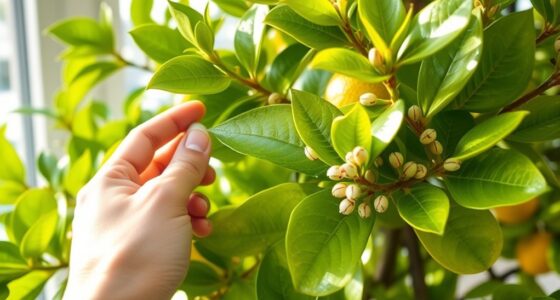
Whiteflies are a common pest that can quickly infest your houseplants, causing damage and weakening their overall health. These tiny insects tend to gather on the undersides of leaves, feeding on plant sap and producing a sticky honeydew that promotes mold growth. Early detection is vital to preventing a full-blown infestation, and monitoring with yellow cards offers an effective, low-maintenance solution. Yellow cards are simply bright yellow sticky traps that attract whiteflies and other flying pests, making it easy to see their presence before they cause significant harm. By placing these cards near your plants, you can monitor pest activity regularly and catch early signs of infestation.
Monitor houseplants for whiteflies using yellow sticky traps to detect early infestations easily.
Using yellow cards is a proactive step in your integrated pest management plan. When you notice whiteflies on the traps, it’s a clear indicator that your plants need attention. This simple method helps you determine the severity of the infestation and decide on appropriate action. To enhance your monitoring efforts, combine yellow cards with preventative measures, such as inspecting new plants before bringing them indoors or maintaining proper humidity levels, which can discourage whitefly development. Preventative measures also include avoiding overwatering and ensuring good airflow around your plants, creating an environment less welcoming to pests.
Biological control is another essential component of managing whiteflies effectively. Introducing natural predators, like Encarsia formosa or certain lady beetles, can keep whitefly populations in check without the need for chemical pesticides. These beneficial insects target whiteflies directly, reducing their numbers sustainably. When used alongside yellow cards, biological control creates a multi-layered approach: the cards help you detect early activity, while the predators handle the pests actively reducing their population. This integrated method minimizes chemical use, making it safer for your household and the environment.
Additionally, understanding the life cycle of whiteflies can help you time your control measures more effectively and prevent future infestations. Regularly replacing or repositioning yellow cards ensures continuous monitoring. You should check the traps weekly, especially during peak growing seasons or if you notice signs of whiteflies. If the traps become covered with insects, it’s a sign to increase your control efforts. If you’re using biological controls, keep an eye on the effectiveness of the predators and supplement with manual removal or insecticidal soap if needed. Combining vigilant monitoring with preventative measures and biological control creates a balanced, eco-friendly approach that keeps your houseplants healthy and whitefly-free.
Frequently Asked Questions
Are Yellow Cards Effective Against All Whitefly Species?
Yellow cards are effective for monitoring many whitefly species, but their effectiveness depends on species specificity. Some whiteflies are more attracted to yellow than others. You should place the cards strategically around your houseplants, ensuring they’re visible and accessible. Regularly check and replace the cards to catch early infestations. While yellow cards are helpful, combining them with other pest control methods provides the best overall protection against diverse whitefly species.
How Often Should I Check Yellow Cards for Whiteflies?
Think of your yellow cards as your plant’s health radar. You should inspect them at least twice a week, especially during peak whitefly seasons. Regular inspection frequency helps catch infestations early, preventing a full-blown invasion. Seasonal monitoring is key—more frequent checks during warm months can save your houseplants from damage. Stay vigilant, and your yellow cards will be your best allies in whitefly management.
Can Yellow Cards Attract Beneficial Insects?
Yellow cards can attract beneficial insects, especially during their active seasons, but they’re designed primarily to monitor pests like whiteflies. To encourage beneficial insect attraction without hindering your whitefly monitoring, maintain your yellow cards properly by replacing or cleaning them regularly. Consistent yellow card maintenance guarantees they effectively attract pest insects while minimizing unintentional attraction of beneficial insects, helping you keep a balanced and healthy houseplant environment.
What Should I Do if Yellow Cards Don’T Catch Any Whiteflies?
If yellow cards don’t catch any whiteflies, don’t put all your eggs in one basket. Instead, try alternative monitoring methods like sticky traps or visual inspections to catch those sneaky pests. Also, reinforce whitefly prevention techniques such as removing infested leaves and using insecticidal soap. Consistent monitoring and diverse strategies will help you keep whiteflies at bay and protect your houseplants effectively.
Are Yellow Cards Safe for All Types of Houseplants?
Yellow cards are generally safe for most houseplants, but you should always consider plant safety and chemical concerns. They are a non-chemical, physical monitoring tool, so they pose minimal risk. However, if your plant has sensitive leaves or is already stressed, monitor for any adverse reactions. Always test a small area first and follow manufacturer instructions to make certain the yellow cards don’t cause damage or interfere with your plant’s health.
Conclusion
Think of your houseplants as a peaceful garden, and whiteflies as tiny invaders trying to take over. By using yellow cards, you’re like a vigilant sentinel, catching these pests before they spread chaos. Your quick action turns you into a gardener guard, protecting your green oasis. Stay alert and monitor regularly. With this simple tool, you keep your indoor jungle thriving, ensuring your plants remain a serene sanctuary rather than a battleground.