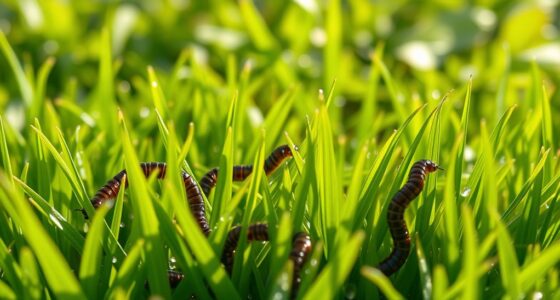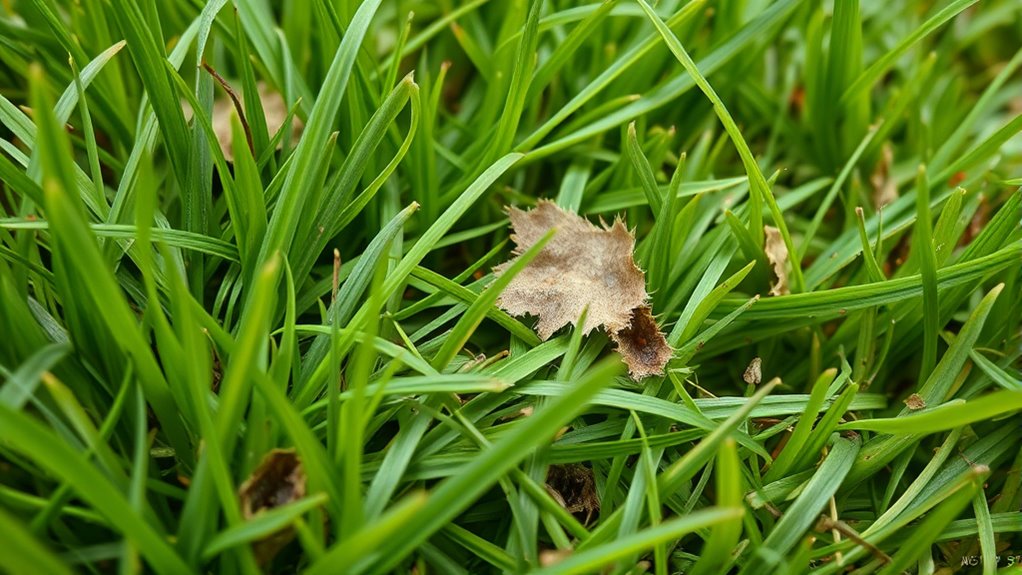

If you notice patchy brown areas, thinning grass, or lawns that pull up easily, billbug damage might be the cause. These pests feed on grass roots and crowns, weakening your turf quickly. In cool-season lawns, damage can develop fast during the growing season. Early detection and targeted treatments like insecticidal soaps, combined with cultural practices such as maintaining a healthy turf, can help manage these pests. To protect your lawn, understanding billbug behavior is key—keep going to learn more about effective control strategies.
Key Takeaways
- Billbug damage causes irregular brown patches and thinning in cool-season lawns, weakening turf and making areas easily pulled up.
- Early detection through regular inspections helps prevent widespread damage and allows timely targeted treatments.
- Promoting a healthy, dense lawn with proper mowing, watering, and fertilization strengthens turf resistance.
- Natural predators like nematodes and birds can help control billbug populations sustainably.
- An integrated approach combining biological control, cultural practices, and targeted treatments offers the best management.
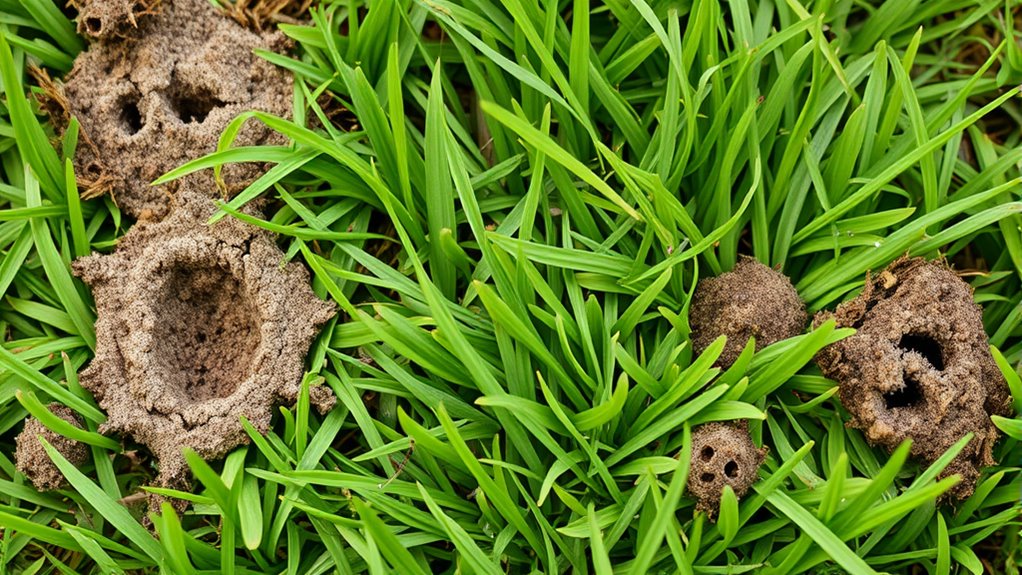
Billbug damage can quickly turn a lush, healthy lawn into a patchy, uneven mess if left unchecked. These tiny insects are notorious for their ability to cause extensive damage by feeding on grass roots and crowns, weakening turf and leading to dead patches. If you notice thinning grass, irregular brown spots, or areas that pull up easily, billbugs might be the culprit. The good news is that understanding their behavior and natural control options can help you manage an infestation before it gets out of hand.
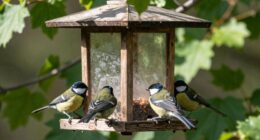
One effective approach involves encouraging natural predators of billbugs. Birds, beneficial nematodes, and certain predatory beetles naturally prey on billbug larvae and adults. Birds, in particular, can be attracted to your yard by providing birdhouses or feeders nearby, which in turn helps keep billbug populations in check. Beneficial nematodes are microscopic worms that you can apply to your lawn as a soil drench; they seek out and infect billbug larvae in the soil, disrupting their lifecycle without the need for chemical pesticides. These natural predators can considerably reduce billbug numbers when used correctly, making them a sustainable and eco-friendly pest control method.
In addition to promoting natural predators, integrating other pest control methods can improve your chances of maintaining a healthy lawn. Regularly inspecting your grass for early signs of billbug activity allows you to take action before damage becomes widespread. If you detect billbugs, targeted treatments such as insecticidal soaps or horticultural oils can help manage populations with minimal environmental impact. Applying these treatments during the larvae stage, when they’re most vulnerable, increases their effectiveness.
Another key pest control method involves cultural practices. Maintaining a healthy lawn through proper mowing, watering, and fertilization can make your turf less attractive to billbugs. A dense, vigorous lawn resists damage better and recovers more quickly from minor infestations. Avoid overwatering, which can create ideal soil conditions for billbug larvae, and remove thatch buildup, which can harbor pests and hinder natural predators from reaching their prey. Additionally, understanding the behavior of billbugs can help you time your interventions more effectively for better control.
Ultimately, controlling billbug damage in your lawn requires a balanced approach that combines natural predators with targeted pest control methods and sound cultural practices. By fostering a healthy ecosystem in your yard and staying vigilant, you can mitigate billbug problems effectively without relying solely on chemical solutions. This strategy not only protects your lawn but also promotes a more sustainable, resilient landscape overall.
Frequently Asked Questions
How Can I Prevent Billbug Infestations in My Lawn?
To prevent billbug infestations, you should promote native predators like beneficial nematodes that target billbug larvae. Keep your lawn healthy through proper fertilization and watering, making it less attractive to pests. Consider applying organic insecticides, such as neem oil or insecticidal soaps, at the first sign of infestation. Regular monitoring and early intervention help protect your cool-season lawn from billbug damage effectively.
What Natural Methods Control Billbug Populations Effectively?
Did you know beneficial nematodes can reduce billbug populations by up to 80%? To control them naturally, you should introduce beneficial nematodes into your lawn, which target billbug larvae underground. Additionally, applying organic barriers like neem oil or diatomaceous earth creates a hostile environment for billbugs, preventing infestations. These methods are eco-friendly, safe for your pets, and help maintain a healthy, pest-free lawn without chemicals.
Are There Specific Lawn Types More Susceptible to Billbug Damage?
You’ll find that warm-season grasses and shady lawns are more susceptible to billbug damage. Billbugs thrive in these environments because they prefer the conditions these turf types offer, such as dense foliage and cooler, shaded areas. If you have these lawn types, stay vigilant for signs of damage, like thinning patches or dying grass. Regular monitoring and early intervention can help prevent extensive billbug problems in these vulnerable lawns.
How Long Does It Take to See Results After Treatment?
You’ll typically see results within 7 to 10 days after treatment, but timing expectations can vary based on the product used. Keep an eye out for symptom recognition, like thinning or irregular patches, which indicate billbug activity. Notably, early detection can improve control—so act quickly. If you don’t notice improvement in two weeks, consider a follow-up application for ideal lawn recovery.
Can Overwatering or Drought Influence Billbug Activity?
Overwatering or drought stress can definitely influence billbug activity. If your irrigation patterns lead to overly moist soil, billbugs may thrive, as they prefer damp environments. Conversely, drought stress weakens your lawn, making it more vulnerable to infestations. Maintaining consistent, proper watering helps reduce billbug attraction and activity, keeping your lawn healthier and less prone to damage. Proper irrigation is key to managing billbug problems effectively.
Conclusion
If you notice patches or thinning in your cool-season lawn, billbugs might be the culprit. Did you know that a single billbug female can lay up to 300 eggs in her lifetime? That means a small infestation can quickly turn into a big problem. Keep an eye on your lawn’s health and act early to prevent extensive damage. Staying vigilant can save you time, money, and the lush green yard you want to enjoy this season.