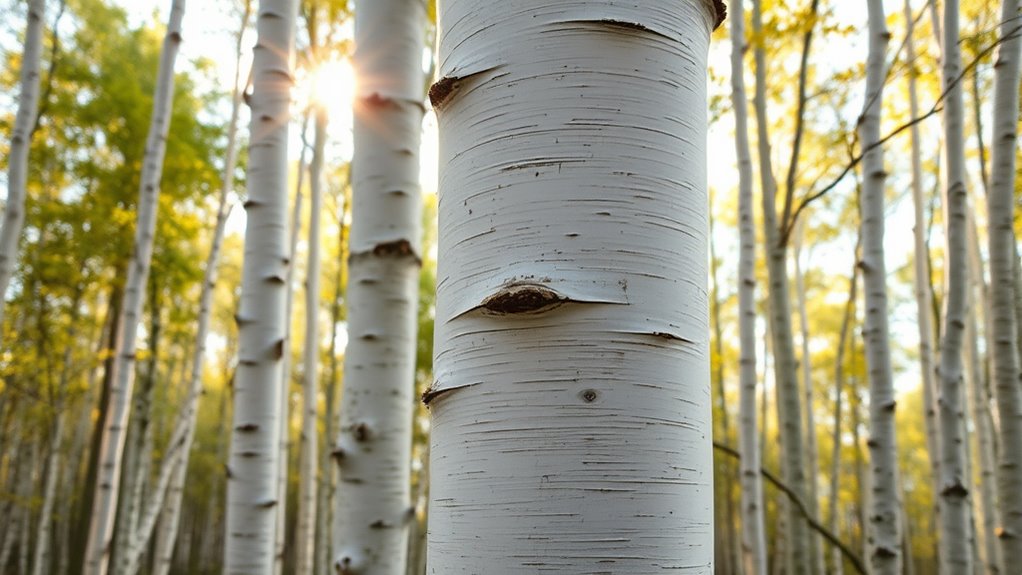
Bronze Birch Borer risks increase when your trees are stressed, weakened, or in decline due to drought, poor soil, or injury. Beetles target trees that emit stress signals, especially those with wounds, cracks, or previous damage. Environmental factors like drought or being isolated from other trees can also make them more vulnerable. If your trees are unhealthy or compromised, they are more likely to fall prey. To learn how to protect your trees effectively, keep exploring this topic.
Key Takeaways
- Stressed or declining trees are more attractive to bronze birch borers.
- Weakened trees with wounds or damage provide entry points for beetle infestation.
- Trees in isolated or edge locations are more vulnerable than those in dense forests.
- Environmental stresses like drought weaken tree defenses, increasing susceptibility.
- Regions with warmer climates tend to have higher beetle activity and infestation risk.
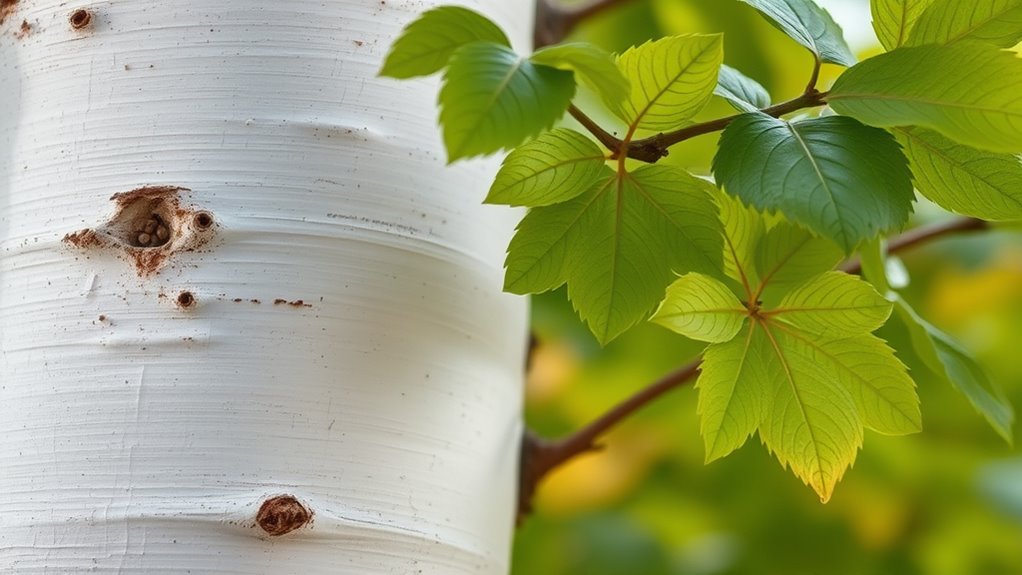
Understanding the risk factors for bronze birch borer is essential if you want to protect your birch trees from this destructive pest. These beetles can cause extensive damage, but recognizing the conditions that make your trees vulnerable helps you take preventative steps. One of the most critical factors is the overall tree health. When your birch trees are stressed, weakened, or declining, they become prime targets for bronze birch borers. Factors like drought, poor soil conditions, root damage, or improper pruning can compromise a tree’s vitality. A healthy tree, with strong roots and vigorous growth, can better withstand insect attacks because it’s more resilient and less attractive to pests. On the other hand, trees that are already weakened or stressed are more likely to be infested because the insects can more easily bore into and establish themselves.
Insect behavior plays a vital role in understanding how bronze birch borers target trees. These beetles are attracted to weakened or compromised trees, sensing the stress signals they emit. They often prefer trees that are in decline due to disease, injury, or environmental stressors. Once a tree is compromised, the borers lay their eggs under the bark, and the larvae tunnel inward, disrupting nutrient flow and further weakening the tree’s health. The timing of insect activity also matters; adult beetles tend to emerge in late spring to early summer, seeking suitable hosts. If your trees are already stressed during this period, the likelihood of infestation increases. Additionally, the beetles tend to colonize trees that are isolated or on the edge of a landscape rather than in dense, healthy forests, where competition and natural defenses might be stronger.
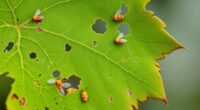
Another risk factor is previous damage or existing infestations. If your trees have been affected by other pests or diseases, they become more susceptible to bronze birch borer attacks. The presence of wounds, cracks, or pruning cuts can also serve as entry points for the beetles. Moreover, certain environmental conditions, such as prolonged drought or water stress, exacerbate the situation by weakening tree defenses. The geographic location can influence risk levels too, as bronze birch borers are more prevalent in warmer, southern regions where the insects thrive.
Frequently Asked Questions
How Can I Prevent Bronze Birch Borer Infestations?
To prevent bronze birch borer infestations, you should regularly apply preventive treatments such as insecticides, especially if your trees show early signs. Keep your landscape diverse by planting different tree species to reduce vulnerability. Additionally, maintain tree health through proper watering, mulching, and pruning, which makes them less attractive to borers. These steps help protect your birch trees and minimize the risk of infestation.
Are Certain Birch Species More Susceptible Than Others?
Like a fragile glass ornament, some birch species are more susceptible than others. You’ll find that paper birch and river birch have higher susceptibility differences, making them more prone to bronze birch borer infestations. Quaking aspen and white birch tend to be more resistant. When selecting trees, consider these susceptibility differences to reduce your risk and keep your landscape healthy and vibrant.
What Signs Indicate Early Bronze Birch Borer Damage?
You’ll notice early bronze birch borer damage through leaf discoloration and wilting branches. The leaves may turn yellow or brown, even when the soil is adequately moist, indicating internal stress. Wilting branches are a sign that the borers are disrupting the tree’s ability to transport nutrients and water. Keep an eye on these symptoms to catch the infestation early and take prompt action to protect your birch.
Can Healthy Trees Recover From Borer Attacks?
Did you know that healthy trees can sometimes recover from borer attacks? While their resilience varies, trees with strong borer resistance often bounce back if you catch infestations early. Your tree’s ability to recover depends on the extent of damage and prompt treatment. By maintaining tree health and addressing issues quickly, you give your trees the best chance to fight off borers and regain their strength.
How Does Climate Influence Bronze Birch Borer Activity?
Climate variability and seasonal patterns greatly influence bronze birch borer activity. Warmer temperatures and mild winters can increase their activity, leading to more infestations. Conversely, cold winters may slow their development. You’ll notice higher emergence rates during spring and early summer when temperatures are ideal. Staying aware of these patterns helps you anticipate potential problems, so you can take preventive measures to protect your birch trees from damage caused by these pests.
Conclusion
Just as the phoenix’s rise signals renewal or ruin, your trees’ fate hinges on recognizing risk factors early. By staying vigilant—monitoring for signs of stress, damage, or poor health—you can act before the bronze birch borer takes hold. Remember, prevention is your best armor against this silent predator. Don’t wait for the ash to fall; instead, take proactive steps now to safeguard your trees and keep your landscape thriving.