Many believe an 8-foot fence is enough to keep deer out, but that’s a common misconception. Deer can jump between 6 to 8 feet, and some exceptional jumpers reach 10 feet or more. Factors like diet, predator presence, and local behavior influence their jumping ability. It’s not just about height—proper design, materials, and maintenance matter too. Want to know the best strategies to prevent your deer fence from failing? Keep exploring to learn more.
Key Takeaways
- The “jump rule” that fences must be at least 8 feet tall to prevent deer breaches is a misconception.
- Deer can sometimes clear fences shorter than 8 feet, especially when motivated or in good condition.
- Proper fence height depends on local deer behavior and natural jumping ability, not a fixed rule.
- Testing and reinforcing fences are more effective than relying solely on height to prevent deer entry.
- A combination of adequate height, durable materials, and strategic placement is essential for effective deer fencing.
Why the “Jump Rule” for Deer Fencing Is a Common Misconception

Many people believe that a deer fence must be tall enough for deer to jump over, but this “jump rule” is actually a misconception. Deer behavior shows that height alone doesn’t guarantee they’ll clear the fence. Deer may test fences and find weaknesses regardless of height, especially if the fence design isn’t effective. Overestimating the importance of height can lead to unnecessarily high and expensive fences. Understanding deer behavior helps you realize that other elements, like fence design and placement, are just as vital as height. Additionally, deer motivation plays a significant role in whether they attempt to jump, regardless of fence height. Recognizing the role of fence testing behavior can further improve your fencing strategy and prevent costly overbuilding. Moreover, considering fence design factors such as materials and netting can significantly influence a deer’s likelihood of attempting to breach the barrier.
How High Do Deer Jump? The Science Behind Their Leaps

Deer are surprisingly agile jumpers, and understanding how high they actually leap can help you design better fences. On average, a deer can clear heights between 6 to 8 feet, with some exceptional jumpers reaching up to 10 feet or more. Their deer agility allows them to launch themselves with remarkable power and precision, making it essential to contemplate height when planning your barrier. While taller fences are effective, they can sometimes compromise fence aesthetics, making your yard look less appealing. Knowing the science behind their leaps helps you strike a balance—ensuring your fence is high enough to deter deer without sacrificing the visual appeal of your landscape. Proper height, based on their jumping ability, is key to effective deer control. Additionally, understanding the cutting-edge technology behind fencing can offer innovative solutions for more effective deer deterrence.
What Factors Affect How Far Deer Can Jump

Your deer’s body size influences how far they can jump, with larger deer often covering more ground. Fence material durability also plays a role, as stronger materials can impact a deer’s confidence and approach. Understanding these factors helps you better gauge how high your fence needs to be. Additionally, knowing deer behavior patterns can provide insights into how different factors influence animal movement and decision-making. Recognizing habitat connectivity can further inform how deer navigate landscapes and may affect their jumping behavior, especially when considering landscape corridors that facilitate or hinder movement. Being aware of deer movement tendencies can also help in designing more effective fencing strategies to prevent escapes.
Deer’s Body Size
A deer’s body size plays a significant role in determining how far it can jump. Larger deer, with greater body length, generally have more leverage and strength, allowing them to cover longer distances. Deer anatomy includes powerful leg muscles that are proportional to their size, impacting their jumping ability. A bigger body provides better propulsion, which can help propel them farther. Conversely, smaller deer might not generate the same force, limiting their jump length. Keep in mind, body size also affects how quickly they can accelerate and the angle at which they leap. Additionally, muscle strength directly influences their jumping power. Understanding these differences helps you gauge the necessary fence height to prevent deer from jumping over. Ultimately, a larger, more robust deer tends to jump farther than a smaller one, influencing fence design decisions.
Fence Material Durability
The durability of fence materials directly influences how well a fence can withstand repeated impacts from jumping deer. Strong, resilient fence material reduces the risk of damage and maintains effectiveness over time. During durability testing, materials like galvanized steel, vinyl-coated wire, or composite panels are evaluated for strength and flexibility. Consider how different materials perform under stress:
| Fence Material | Durability Testing Results |
|---|---|
| Galvanized Steel | High impact resistance, long-lasting |
| Vinyl-Coated Wire | Good flexibility, resistant to corrosion |
| Composite Panels | Excellent strength, weatherproof |
Choosing a fence material with proven durability ensures your fence stands up to deer jumps and harsh weather conditions, keeping your property protected for years. Additionally, understanding material resilience helps in selecting options that are less prone to cracking or breaking over time.
What Is the Best Deer Fence Height to Keep Animals Out?
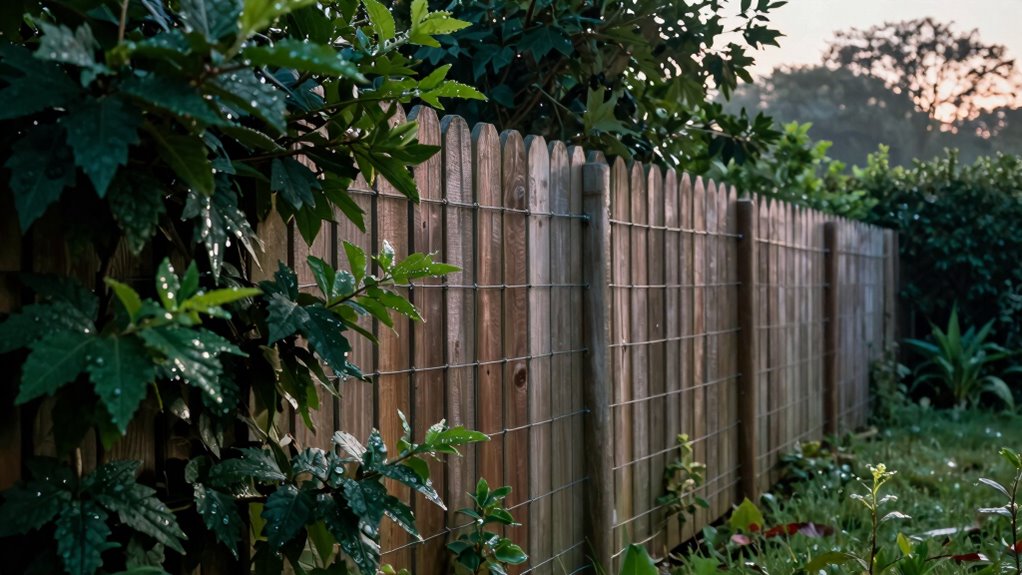
Determining the right height for a deer fence is vital to effectively keep animals out of your garden or property. Based on deer behavior and fence design, a height of at least 8 feet is recommended for most situations. Deer are capable jumpers, so shorter fences often fail unless reinforced. To optimize your fence, consider these points:
- Height: Aim for 8 feet or taller to prevent jumping over.
- Material: Use sturdy, smooth materials that deer can’t grip or climb.
- Design: Incorporate angled or overhanging sections to deter jumping.
- Placement: Ensure the fence extends a few inches below ground to block burrowing attempts.
- Proper fencing should also take into account wildlife movement to avoid unintended barriers for other animals.
Getting the height right is vital — a well-designed fence matching deer behavior increases your chances of keeping animals out effectively.
Can Shorter Fences Fail? How to Reinforce Them
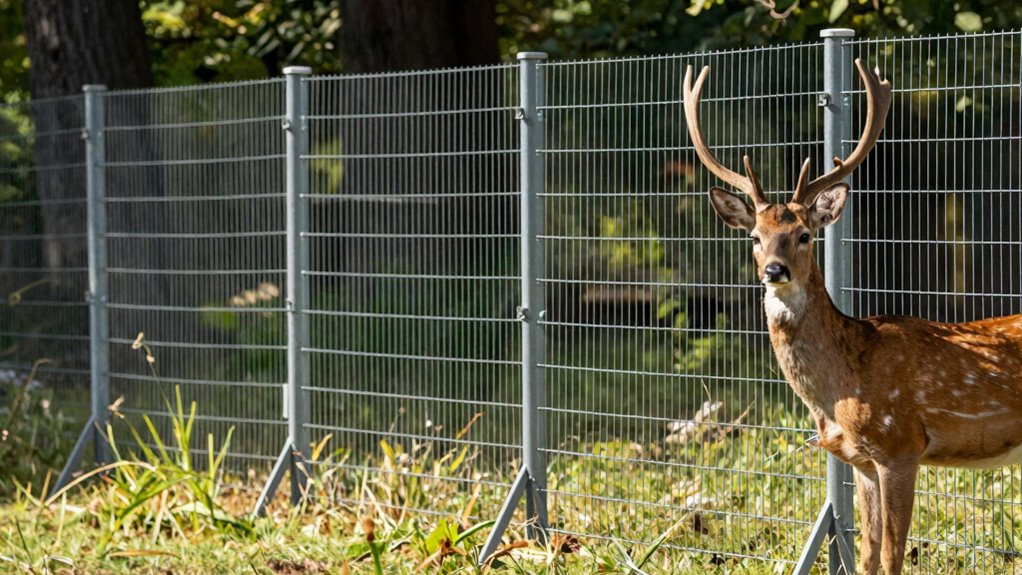
Shorter fences can fail to keep deer out, especially if they’re not properly fortified, because deer are strong jumpers and persistent. To prevent breaches, consider adding fence reinforcement at vulnerable spots, such as the bottom or corners, where deer might squeeze through or push against the barrier. Installing safety barriers, like mesh or electrified wires, can bolster the overall strength of your fence. Reinforcing height alone isn’t enough if the structure isn’t sturdy; a well-constructed fence with reinforced sections will better withstand deer’s attempts to breach it. Remember, even a shorter fence can be effective if it’s properly reinforced and designed to deter deer from pushing or jumping over. Reinforcement ensures your safety barriers act as a reliable line of defense. Trusted reputation in the market highlights the importance of investing in high-quality materials and professional installation for maximum effectiveness. Additionally, considering fence durability can help ensure your barrier remains effective over time against deer’s persistent efforts. A comprehensive approach, including proper support and anchoring, will further improve the stability and longevity of your fence. Properly maintaining your fence also plays a crucial role in its long-term effectiveness and resistance to deer attempts. Moreover, understanding deer behavior can help you design fences that are less likely to be tested or breached.
Designing a Deer Fence That Works: Behavior and Environment Matter
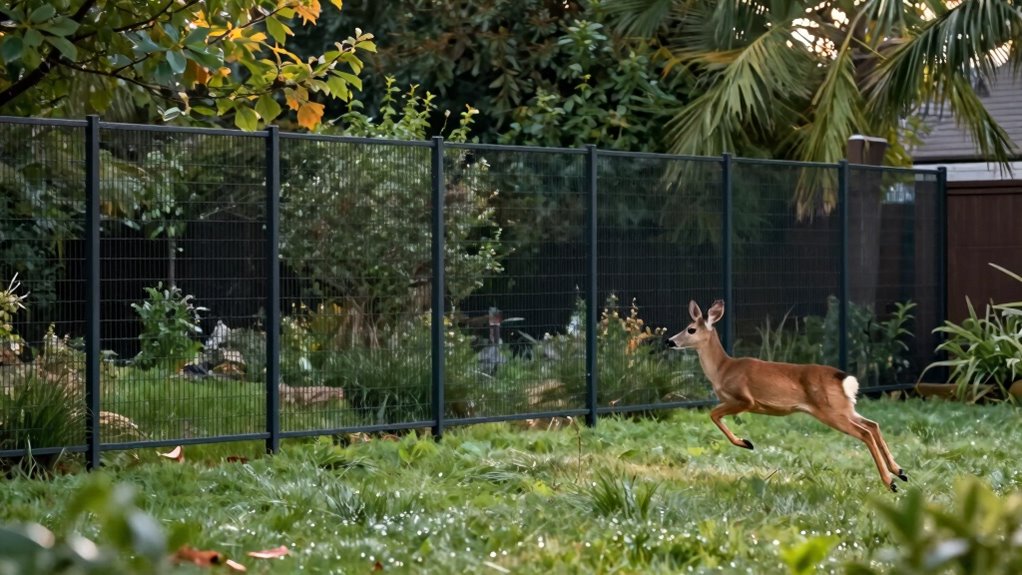
Understanding deer behavior patterns helps you design a fence that genuinely deters them. Environmental barriers and terrain also influence how deer approach your property, so placement matters. Additionally, considering the best lifestyle products that support outdoor living can enhance your overall approach to deer prevention. Recognizing deer movement tendencies can help you anticipate their behavior and improve your fencing strategy. For example, knowledge of biographical details of key figures can provide insights into behavioral patterns that inform fencing designs. Incorporating water sources and food availability into your planning can further help you create a more effective and tailored fencing solution. Moreover, understanding precious metals investment strategies can inform how you allocate resources toward effective deer fencing solutions and related outdoor enhancements.
Local Deer Behavior Patterns
Because deer behavior varies based on their environment, observing how local deer interact with their surroundings is essential when designing an effective fence. Understanding deer migration and seasonal patterns helps you predict their movement and jumping tendencies. During migration periods, deer may travel in groups and attempt to cross barriers, so higher fences are often needed. Seasonal patterns influence feeding and crossing habits, with deer more active during dawn and dusk. By studying local deer activity, you can identify key crossing points and behaviors. This knowledge allows you to tailor your fence height and design to prevent breaches. Recognizing these patterns ensures your fence effectively deters deer, especially during peak migration and seasonal activity times.
- Deer migration routes and crossing habits
- Seasonal feeding and activity peaks
- Times of day when deer are most active
- Common jumping locations and behaviors
Environmental Barriers Impact
Environmental barriers crucially influence how deer interact with your fence, making it vital to consider their natural surroundings when planning your design. Wildlife corridors often guide deer movement, so a fence that blocks these pathways can force them to find alternative routes or attempt to jump higher. Urban barriers, like roads and buildings, also shape deer behavior, sometimes funneling them into specific areas or increasing their stress levels. When designing your fence, account for these environmental factors to guarantee it effectively deters deer without unintentionally redirecting them into dangerous zones. Understanding these barriers helps you create a more strategic approach, reducing the likelihood of deer bypassing or damaging your fence, and ultimately increasing its overall effectiveness. Additionally, researching companies thoroughly and verifying their credentials can help ensure that your fencing solution is both effective and compliant with local regulations. Considering natural deer movement patterns can further inform your fencing height and placement, making it more resilient against deer attempts to breach it. Recognizing how environmental features shape deer behavior allows for better planning and placement of your fencing to enhance its durability.
Fence Placement Strategies
To guarantee your deer fence effectively keeps animals out, you need to carefully plan its placement based on their natural behaviors and the surrounding environment. Consider how deer migrate through your area and identify their frequent paths. Placing the fence along these routes reduces the chance of breaches. Be aware of predator presence, which can influence deer movement and behavior, causing them to approach or avoid certain areas. Strategic placement can also prevent deer from jumping over weak points or finding gaps. Additionally, avoid placing fences near brush or dense cover that deer use for hiding. Proper placement makes your fence more effective and less likely to be bypassed.
- Map deer migration corridors and install the fence accordingly
- Position the fence away from dense cover or hiding spots
- Adjust placement based on predator activity patterns
- Ensure the fence follows natural deer movement paths
Real-Life Deer Fence Successes and Failures

Real-life experiences with deer fencing reveal a mix of successes and failures that can guide your own efforts. Some homeowners find success by understanding deer behavior and choosing effective fencing materials. For example, a sturdy, smooth-surfaced fence often deters jumpers, while weak or textured fences fail. Here’s a quick comparison:
| Successes | Failures |
|---|---|
| Using smooth, tall fences (8+ feet) | Short fences (less than 8 feet) |
| Reinforcing weak points with netting | Neglecting to secure fence bottoms |
| Employing deer-resistant fencing materials | Relying on flimsy or inappropriate materials |
Knowing how deer behave and selecting the right fencing materials can make all the difference in preventing escapes or breaches.
Additional Strategies to Keep Deer From Jumping Over Your Fence
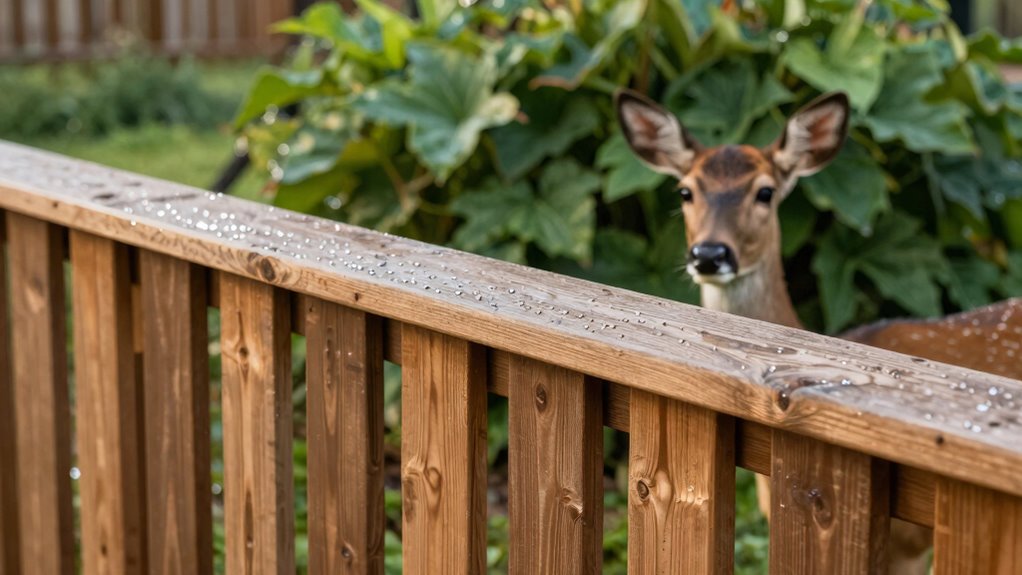
To improve your fence’s effectiveness, consider planting dense vegetation near its base to create a natural barrier. You can also use visual deterrents like reflective tape or decoys to scare deer away. Combining these strategies with your existing fence can markedly reduce the chances of deer jumping over.
Plant Dense Vegetation
Planting dense vegetation along the base of your deer fence creates a natural barrier that can prevent deer from jumping over. Native plants are ideal because they blend seamlessly into the landscape and support local ecosystems. They also help establish wildlife corridors that encourage animals to move naturally without risking your garden. Dense shrubs or tall grasses can obstruct a deer’s view, making it less likely to attempt a jump. Additionally, thick vegetation discourages deer from approaching the fence closely, reducing the chances of a leap. To maximize effectiveness, choose plants that grow quickly and densely, and maintain them regularly. Incorporating native plants into your landscape provides an eco-friendly, aesthetic solution that complements your fencing efforts.
Use Visual Deterrents
Adding visual deterrents to your deer fence can substantially enhance its effectiveness by discouraging deer from attempting to jump. Bright, reflective objects like aluminum foil strips, old CDs, or wind chimes create movement and shine that deer find intimidating. Placing these along the fence line makes it less inviting for them to approach. Some people also combine visual deterrents with scent repellents, such as commercial sprays or homemade garlic solutions, to increase their effectiveness. Deer rely heavily on sight and smell, so disrupting both senses helps keep them away. Regularly changing the location or type of visual deterrent prevents deer from becoming accustomed to them. Using a combination of visual deterrents and scent repellents creates a multi-layered defense that’s more likely to keep deer from jumping your fence.
Top Mistakes to Avoid When Installing a Deer Fence

One common mistake homeowners make when installing a deer fence is choosing a height that’s too short, which deer can easily jump over. This overlooks the fact that deer’s jumping ability depends on their diet and predator threats, which influence their behavior. If the fence isn’t tall enough, deer will see it as an easy escape route. To avoid this, ensure your fence is at least 8 feet high. Additionally, avoid these mistakes:
- Using weak or flimsy fencing material that deer can break through
- Not burying the fence underground to prevent digging underneath
- Failing to consider nearby predator threats that might encourage deer to jump
- Ignoring local deer behavior and their natural jumping height capabilities
These errors compromise your fence’s effectiveness and waste your investment.
Tips for Maintaining Your Deer Fence Over Time
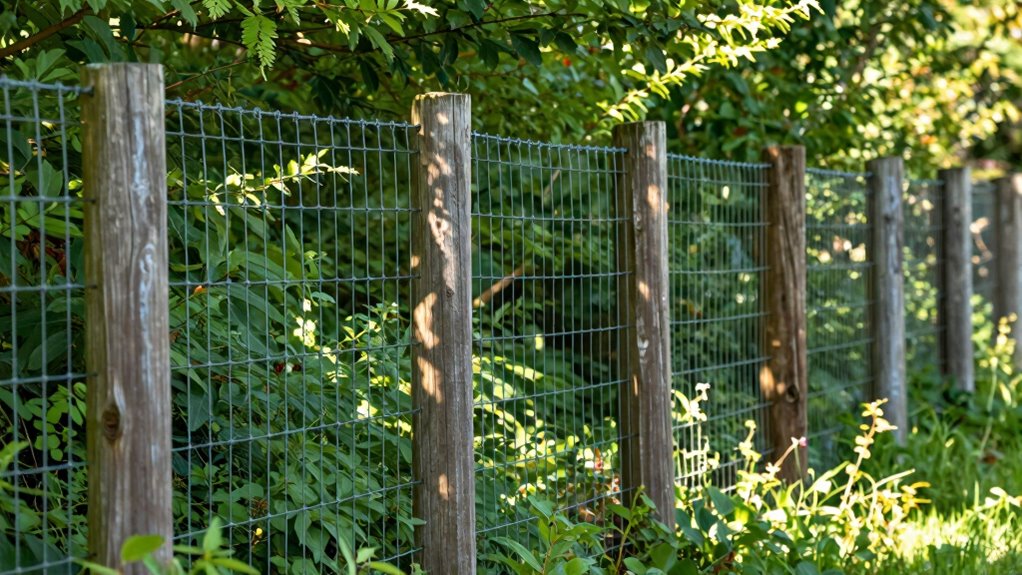
Regularly inspecting your deer fence is essential to guarantee it remains effective over time. Overgrown vegetation or fallen branches can weaken the barrier, so trim plants near the fence and clear debris. During seasonal migrations, wildlife corridors may shift, so check for gaps or damage caused by animals or weather. Keep a close eye on sections that experience high stress, especially where deer might attempt to jump or push through. Repair any broken or sagging parts promptly to maintain height and integrity. Proper maintenance helps ensure your fence continues to deter deer while allowing safe passage for other wildlife. Regular checks also prevent small issues from escalating, saving you time and money in the long run. Consistent upkeep is key to a reliable, long-lasting deer fence.
Frequently Asked Questions
What Are Alternative Methods to Prevent Deer From Entering My Property?
You can use natural deterrents like planting deer-resistant plants or installing motion-activated sprinklers to keep deer away. Wildlife repellents, such as ultrasonic devices or spray repellents, also work effectively. Combining these methods with proper fencing strategies enhances protection. Remember, diversifying your approach makes it harder for deer to find ways into your property, giving you a better chance to maintain a deer-free yard without solely relying on fence height.
How Do Seasonal Changes Affect Deer Jumping Behavior?
As seasons shift, deer activity and seasonal migration influence their jumping behavior. During spring and fall, deer become more active, enthusiastic to explore new territories, often attempting higher jumps to cross fences. In winter, they’re less inclined to jump, conserving energy. You notice this shift as their motivation to breach barriers fluctuates with seasonal hunger and migration patterns, so adjusting your fencing strategy accordingly ensures your property stays protected year-round.
Can Fencing Materials Influence a Deer’s Ability to Jump?
Fencing materials can definitely influence a deer’s ability to jump. Smooth, slippery surfaces like vinyl or metal make it harder for deer to gain traction, reducing their jumping efficiency. Conversely, rough or textured materials may help them push off more easily. By choosing fencing materials that discourage deer jumping, you can better protect your garden or property. Remember, the right fencing surface is key to minimizing deer intrusion.
Are There Specific Deer Species That Are More Likely to Jump Higher?
Certain deer species, like mule deer and white-tailed deer, have a higher jumping ability compared to others. Mule deer, in particular, can leap over fences up to 8 feet tall when startled or chasing food. You should consider these differences when planning your fence height. Understanding the jumping ability of specific deer species helps you design an effective barrier, keeping unwanted visitors out and protecting your property.
How Long Does a Typical Deer Fence Last Before Needing Replacement?
Think of your deer fence as a trusty shield—its durability hinges on material lifespan and how well you maintain it. Typically, a good-quality fence lasts between 10 to 15 years before needing replacement. Factors like material choice, weather exposure, and maintenance influence its lifespan. To extend its life, regularly inspect for damage and clean it. Investing in durable materials guarantees your barrier remains effective longer, saving you time and money.
Conclusion
Remember, a fence isn’t just about height—it’s about understanding deer’s true jumping limits and reinforcing your defenses. Don’t fall for the “jump rule” misconception; instead, stay informed and adjust your approach. Like a steady oak withstands the storm, a well-maintained fence can keep deer out for years. Stay vigilant, learn from past mistakes, and you’ll keep your garden safe—because a wise fence is the best shield against unwelcome visitors.