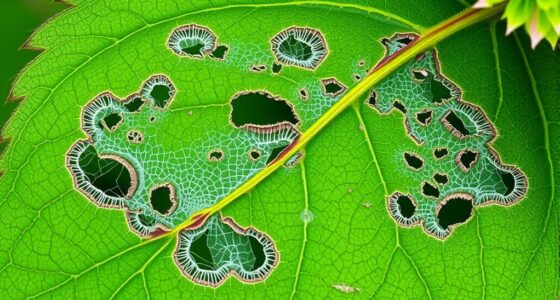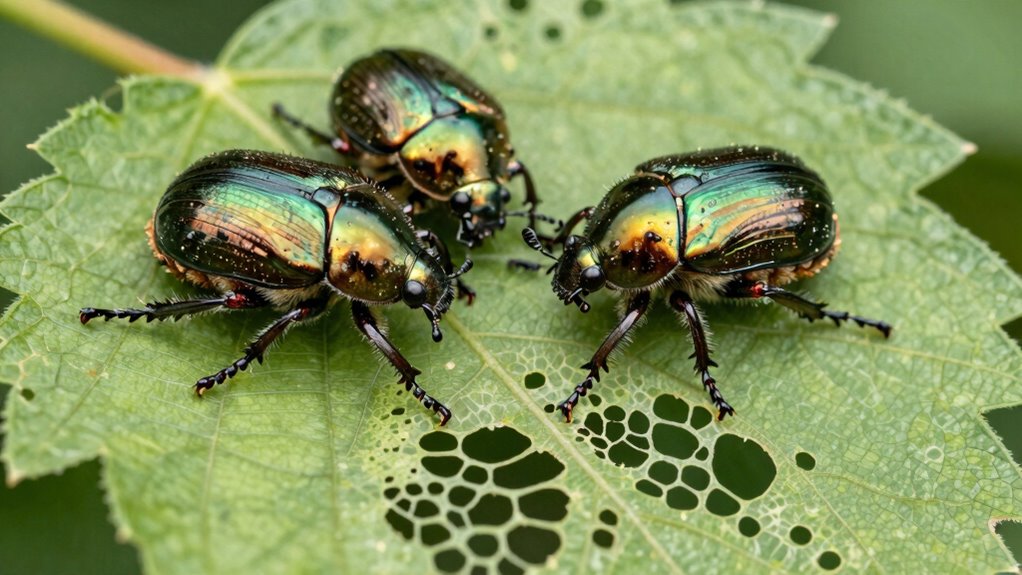
Japanese beetles feed on leaves, flowers, and fruit, creating a distinct lace-like pattern that signals their presence. During warm months, they become highly active and attack plants in large groups, skeletonizing foliage and leaving it fragile and web-like. Understanding their feeding behaviors and timing your control efforts around their peak activity can help protect your garden. Keep going to discover more about spotting and managing these pests effectively.

Get garden gear delivered free with Prime
- Fast, free delivery on millions of items
- Prime Video, Amazon Music and more included
- Member-only deals all year
Key Takeaways
- Japanese beetles cause lace-like skeletonization by feeding on leaves, reducing them to fragile, web-like structures.
- Feeding mostly occurs during warm months when beetles are highly active.
- They attack in large groups, intensifying the lace-like damage pattern.
- Peak feeding aligns with specific lifecycle stages, aiding in timing control measures.
- Regular inspection and early removal of beetles help prevent extensive lace damage.
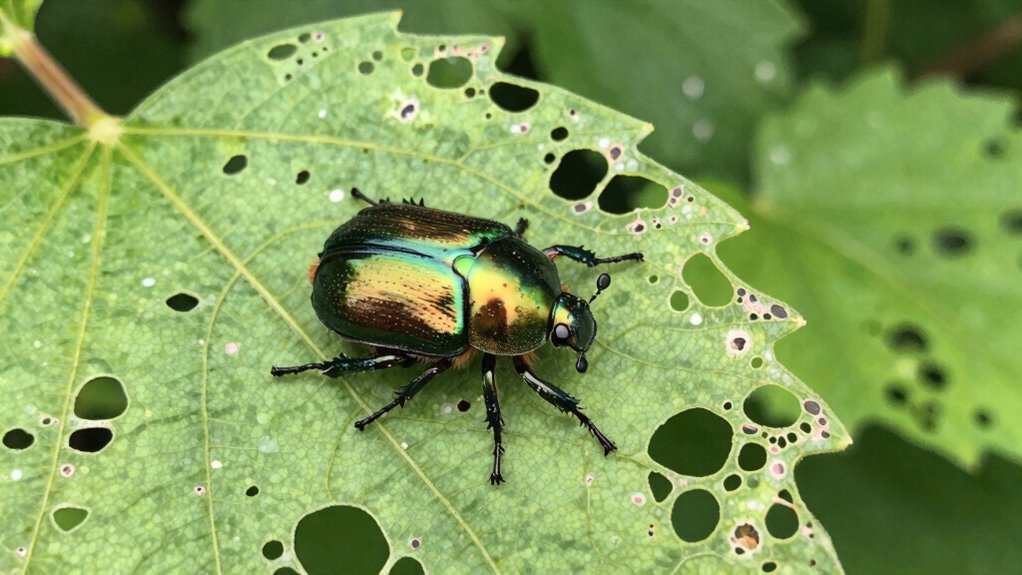
Japanese beetles are notorious for their distinctive feeding habits, which can quickly damage a wide variety of plants. As you observe these pests, you’ll notice their biological behaviors play a crucial role in how they attack and spread. They are highly active during warm months, feeding on leaves, flowers, and fruit, often in large groups. Their voracious appetite leads to the characteristic lace-like skeletonization of foliage, revealing the plant’s veins and leaving behind a fragile, web-like pattern. Understanding their biological behaviors helps you anticipate their movement patterns and feeding times, making it easier to implement effective control measures. Recognizing the feeding patterns of Japanese beetles enables gardeners to better time their interventions and protect their plants. Cultural control methods are among the most practical and environmentally friendly options to manage these beetles. You should start by inspecting your garden regularly, especially during peak feeding months, to catch infestations early. Removing or suppressing their preferred host plants, such as Japanese beetle favorites like linden, rose, and grapevine, can reduce their population in your yard. Handpicking beetles during the early morning or evening, when they’re less active, can also greatly diminish their numbers. Drop the collected beetles into soapy water to ensure they don’t return.
Another cultural control tactic involves altering your gardening practices to make your landscape less attractive to these pests. You can plant resistant or less preferred species, adding diversity to your garden so that beetles are less likely to focus on one particular plant. Maintaining healthy, vigorous plants through proper watering, fertilizing, and pruning can also help them withstand and recover from beetle feeding. Additionally, keeping the lawn well-manicured, removing debris, and cleaning up fallen leaves and plant material reduces breeding sites and discourages beetle aggregation. Being aware of their biological behaviors can also help you predict their peak activity periods and plan your control measures accordingly. For example, understanding their life cycle can help you time your interventions more effectively. Incorporating biological control agents, such as beneficial nematodes or parasitic wasps, can further bolster your efforts to naturally suppress beetle populations. Additionally, understanding their dispersal methods can help you implement more targeted control strategies to limit their spread within your garden.
Combining an understanding of their biological behaviors with proactive cultural control strategies gives you a powerful toolkit to fight back. Since Japanese beetles tend to emerge en masse during certain times of the year, timing your intervention around these periods maximizes effectiveness. Using physical barriers like row covers can prevent beetles from reaching your most valued plants during peak activity. By staying vigilant and employing these integrated practices, you can minimize the damage caused by these pests and protect your garden’s health. Ultimately, awareness of their behaviors and thoughtful cultural controls allow you to keep Japanese beetle populations in check without relying solely on chemical treatments.
As an affiliate, we earn on qualifying purchases.
Frequently Asked Questions
How Can I Distinguish Japanese Beetle Damage From Other Pests?
To distinguish Japanese beetle damage from other pests, focus on pest identification and damage differentiation. Japanese beetles leave behind a distinctive lace-like skeleton on leaves, with a chewed appearance that’s quite unique. Look for irregular holes and the characteristic webbed or lace-like pattern in the foliage. Other pests often cause different damage, like chewed edges or holes without the intricate lace, making it easier to identify Japanese beetle activity.
What Plants Are Most Attractive to Japanese Beetles?
You’ll find Japanese beetles most attracted to susceptible plants like roses, grapes, linden trees, and raspberries. These plants often show clear damage identification, such as skeletonized leaves and chewed foliage. The beetles are drawn to plants with tender, lush foliage, making them prime targets. Regularly inspecting these plants helps catch infestations early and protect your garden from extensive damage caused by these pests.
Are Japanese Beetles Active at Night or Only During the Day?
You might be surprised, but Japanese beetles are actually diurnal feeders, so they’re most active during the day, not at night. Despite their daytime activity, some people think they’re nocturnal, imagining them creeping around in the dark. In reality, their daytime foraging is when they strip leaves, creating that iconic lace look. So, if you’re battling them, be vigilant during daylight hours, not just at night.
What Natural Predators Help Control Japanese Beetle Populations?
You can rely on predator species like birds, beneficial nematodes, and certain beetles for natural control of Japanese beetle populations. These natural predators feed on the beetles at various stages, helping to keep their numbers in check. Encouraging habitats for these predators, such as planting diverse gardens or using biological controls, can effectively reduce beetle damage without chemicals. This eco-friendly approach supports sustainable pest management.
How Does Weather Influence Japanese Beetle Activity and Feeding?
Weather can turn your garden into a battleground for Japanese beetles, as climate effects considerably influence their activity. Warm, sunny days boost beetle feeding and movement, while cooler temperatures slow them down. Seasonal trends also matter—peak activity usually happens in late spring and summer. Heavy rain can suppress beetle activity temporarily, but droughts may increase plant stress, making your plants more tempting targets for these voracious pests.
beneficial nematodes for pest control
As an affiliate, we earn on qualifying purchases.
As an affiliate, we earn on qualifying purchases.
Conclusion
Just as Daedalus once crafted intricate wings to navigate a treacherous maze, understanding the Japanese beetle’s feeding patterns helps you outsmart these persistent pests. Recognize the telltale lace-like damage early, and you can protect your garden like a hero defending the labyrinth. Vigilance and knowledge are your best tools—turn the tide before the beetles dance their destructive waltz. With sharp eyes, you become the guardian of your green domain, thwarting their lacework before it’s too late.
Japanese beetle handpicking tools
As an affiliate, we earn on qualifying purchases.
As an affiliate, we earn on qualifying purchases.
plant resistant to Japanese beetles
As an affiliate, we earn on qualifying purchases.
As an affiliate, we earn on qualifying purchases.
Fall Picks
fall essentials
As an affiliate, we earn on qualifying purchases.