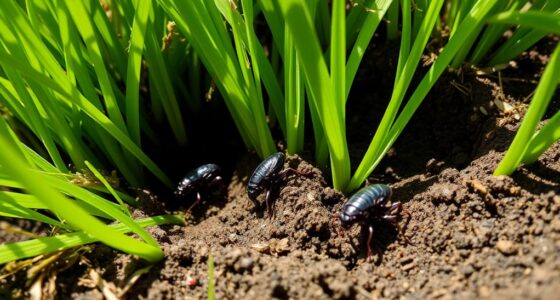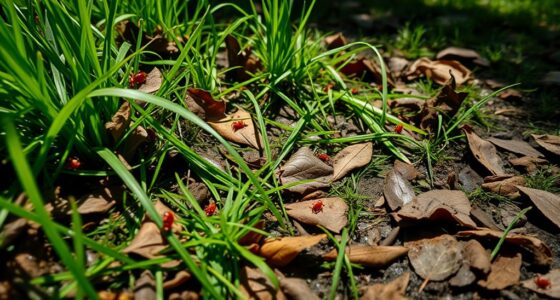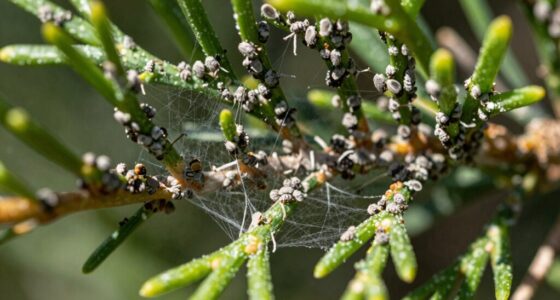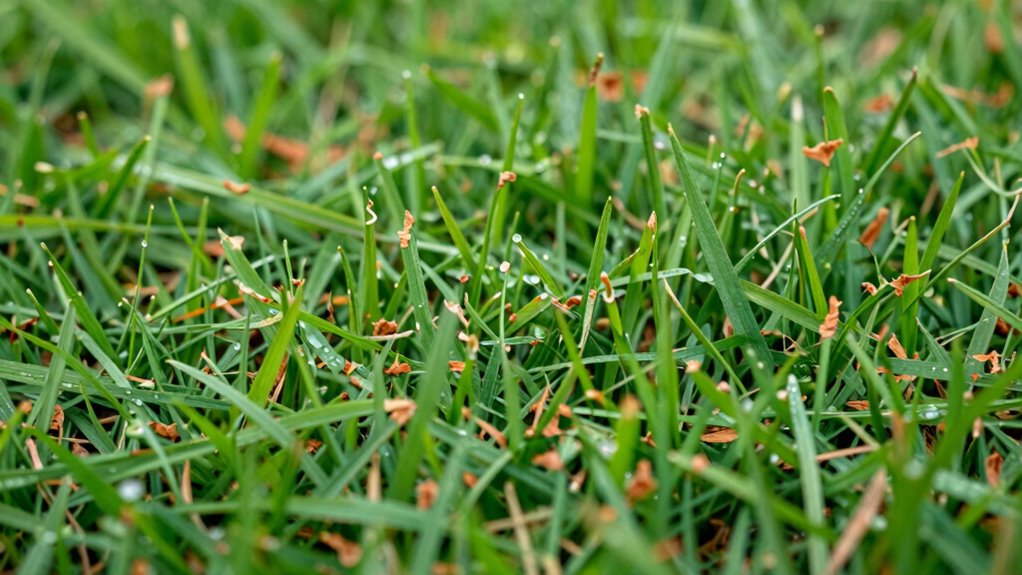

When you see a patch of lawn that looks drought-stressed, check for insect damage signs. Insect damage often appears irregular, with patchy, speckled, or dead areas, unlike uniform browning from drought. Look for signs like chewed grass, tiny insects, or silken tunnels. Spotting these clues helps distinguish pest issues from environmental stress. By paying attention to these details, you can better identify the problem. Keep reading to uncover how to protect your lawn more effectively.

Get garden gear delivered free — and shop member deals
- Fast, free delivery on millions of items
- Access to Prime Big Deal Days deals on October 6–7
- Prime Video, Amazon Music and more included
Key Takeaways
- Insect damage often appears as irregular, patchy areas, unlike the uniform browning caused by drought stress.
- Look for signs like stippled patches, chewed grass, or tiny insects to identify specific pests.
- Damage patterns may worsen seasonally, with grubs peaking in late summer and chinch bugs in spring.
- Ruling out environmental factors like poor drainage helps distinguish insect damage from other stressors.
- Accurate pest identification enables targeted, effective treatment, preventing unnecessary chemical use.
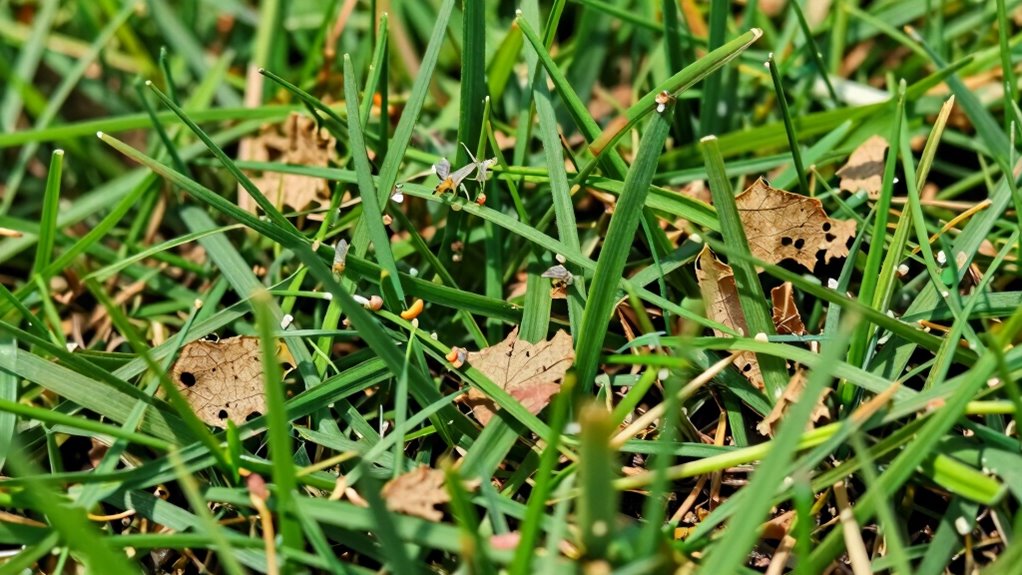
Understanding insect damage is essential for effective pest management, but misreading the signs can lead to unnecessary treatments or overlooked infestations. When you notice a patch of your lawn that looks different from the rest—perhaps a duller color, thinning grass, or irregular patterns—it’s tempting to assume drought or disease. However, recognizing insect damage requires careful observation of pest identification and damage patterns. These patterns often reveal clues about which insect is responsible, allowing you to target your efforts precisely.
Start by examining the affected area closely. Insect damage typically has distinctive damage patterns. For example, chinch bugs create irregular patches with a stippled appearance, as they suck sap from grass blades, leaving behind a speckled, unhealthy look. Grubs, on the other hand, cause patches of dead or dying grass with roots damaged below the surface, often resulting in turf lifting easily when you lift the turf. Recognizing these patterns helps differentiate between insect activity and other issues like drought stress or fungal disease. For instance, drought often causes the grass to turn brown uniformly, whereas insect damage usually shows a patchy or irregular pattern that can be traced back to the soil or root zone. Additionally, understanding damage patterns can help you distinguish between pest problems and environmental stressors more accurately. Recognizing the behavior of pests and their preferred environments further enhances your ability to identify the true cause of lawn damage. Knowing how pests behave in different conditions can also inform your prevention strategies. Observing the seasonal timing of damage can provide further clues, as certain pests are more active during specific times of the year. Being aware of environmental factors that impact pest activity can improve your diagnosis and response.
Pest identification is crucial because each pest leaves distinct signs. Look for signs like chewed grass blades, silken tunnels, or tiny insects on the grass or soil surface. If you see small brown or white grubs in the soil when you gently lift a section of turf, you’re likely dealing with white grubs, which target the roots. Conversely, if you notice tiny, moving insects on the grass blades, you may have chinch bugs or sod webworms. Knowing what to look for saves you from applying unnecessary chemicals and helps you choose the right treatment method.
Pay attention to the progression of damage over time. Insect damage often worsens during certain periods, such as late summer or early fall for grubs or spring for chinch bugs. Tracking these patterns assists in pest identification and confirms whether an infestation is ongoing or subsiding. Also, consider environmental factors—poor soil drainage or compacted soil can mimic damage patterns caused by insects, so ruling out other causes ensures you don’t misinterpret the signs. Recognizing environmental stressors is equally important to avoid unnecessary treatments or misdiagnosis.
In short, understanding damage patterns and pest identification enables you to read your lawn’s signals accurately. Instead of jumping to conclusions or applying blanket treatments, observe the signs carefully. This approach not only saves you money but also promotes healthier turf by targeting the real problem directly. Properly reading insect damage transforms your lawn care routine into a precise, effective process that keeps pests in check and your grass thriving.
lawn insect damage detection kit
As an affiliate, we earn on qualifying purchases.
As an affiliate, we earn on qualifying purchases.
Frequently Asked Questions
How Can I Prevent Insect Damage Before It Occurs?
To prevent insect damage, you should encourage natural predators like ladybugs and birds by planting native plants and providing shelter. Use organic repellents such as neem oil or insecticidal soaps regularly to deter pests before they arrive. Keep your lawn healthy with proper watering and mowing, which makes it less attractive to insects. These steps create a balanced ecosystem that naturally controls pests and keeps your lawn thriving.
Are There Eco-Friendly Methods to Treat Insect-Infested Lawns?
Yes, you can treat insect-infested lawns with eco-friendly methods. Use natural pest control options like beneficial insects—ladybugs and nematodes—that target pests without chemicals. Organic treatments such as neem oil or insecticidal soaps also work effectively while being safe for the environment. Regularly inspecting your lawn and maintaining healthy grass through proper watering and mowing encourages resilience, reducing the need for chemical interventions.
What Are the Signs of Early Insect Infestation in Grass?
You can spot early insect infestation by watching for irregular patches of yellow or thinning grass, which suggest pest activity. Pay attention to insect life cycles—larvae or nymph stages are often more active and damaging. Accurate pest identification helps you determine the specific insects involved, like grubs or chinch bugs. Regular inspection, especially in early spring or late summer, allows you to catch infestations before they become severe.
How Long Does It Take for Insects to Cause Noticeable Damage?
Insects can turn your lush lawn into a patchwork quilt faster than you might think. Typically, damage appears within a few weeks, depending on their life cycles and environmental conditions. The damage timeline varies: some insects, like grubs, take a month or more, while others, like chinch bugs, can cause visible harm in just a few weeks. Acting quickly helps prevent extensive damage.
Can Insect Damage Be Mistaken for Fungal or Disease Issues?
Yes, insect damage can be mistaken for fungal or disease issues. To avoid confusion, focus on insect identification by examining the damage closely—look for chewed edges, holes, or signs of insects themselves. Implement pest prevention strategies, like maintaining healthy grass and removing debris, to minimize insect problems. Proper identification guarantees you treat the right issue, preventing unnecessary use of fungicides or pesticides that won’t address insect damage effectively.
As an affiliate, we earn on qualifying purchases.
Conclusion
By learning to identify insect damage accurately, you can better protect your lawn and save water during droughts. Did you know that over 70% of lawn issues are caused by insects rather than drought or disease? Recognizing the signs early allows you to target pests effectively, avoiding unnecessary watering or chemical use. Keep a keen eye on your lawn’s health, and you’ll enjoy a lush, vibrant yard even in dry conditions.
As an affiliate, we earn on qualifying purchases.
As an affiliate, we earn on qualifying purchases.
Fall yard work Picks
leaf blowers
As an affiliate, we earn on qualifying purchases.